

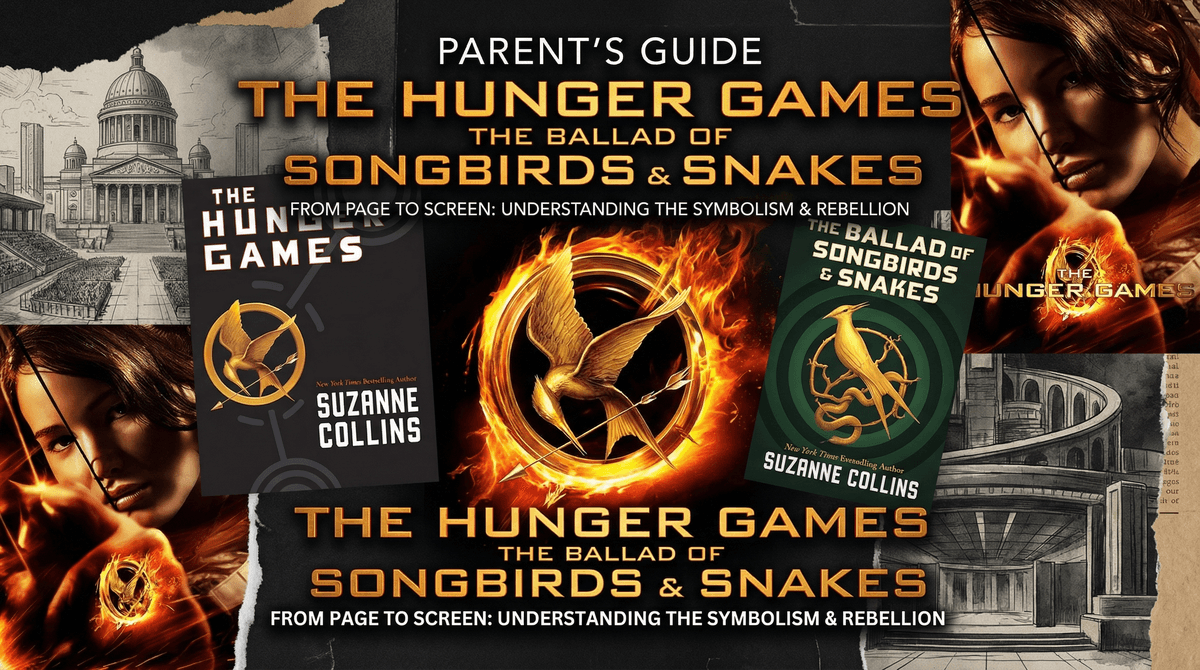
Is The Hunger Games Too Violent? A Parent's Guide to the Movies and Books
The Hunger Games is violent — that's the point. Kids killing kids in a televised arena is the central horror that drives Suzanne Collins' dystopian critique. But the violence serves a purpose, not spectacle. The books (ages 12+) are less graphic than the movies (ages 13+), which earned PG-13 ratings for "intense violent thematic material and disturbing images." If your teen can handle discussions about government control, media manipulation, and the cost of war, they're probably ready. If they're still covering their eyes during intense Marvel fight scenes, hold off.
Quick age guidance:
- Books: Ages 12+ (some mature 11-year-olds)
- Movies: Ages 13+ (the arena scenes are genuinely intense)
- Prequel (The Ballad of Songbirds and Snakes): Ages 14+ (darker themes, more morally ambiguous)
The premise is brutal: In the nation of Panem, 24 teenagers (12-18 years old) are forced into an arena to fight to the death while the entire country watches on TV. It's Battle Royale meets reality TV, and Collins doesn't shy away from the horror of children being used as political pawns and entertainment.
In the books, the violence is described but not lingered on. Katniss narrates deaths matter-of-factly — a tracker jacker sting, a spear to the chest, a broken neck. Collins writes with purpose: each death matters, has weight, and Katniss carries the trauma throughout the trilogy. The most disturbing moments (Rue's death, the mutts in the finale, the bombing in Mockingjay) are emotionally devastating but not gratuitously graphic.
In the movies, director Gary Ross (and later Francis Lawrence) walk a careful line. The violence is real but not gory. The camera shakes and cuts away during kills. Blood is minimal. But the intensity is high — the Cornucopia bloodbath, Cato's final moments, the jabberjay torture in Catching Fire. The PG-13 rating holds, but barely.
Let's be specific about what happens:
The Arena Deaths: Kids die from weapons (arrows, swords, spears), environmental hazards (tracker jackers, fire), and each other. In the first movie, 11 tributes die in the opening minutes. The books describe these; the movies show quick flashes and aftermath.
Rue's Death: This is the emotional gut-punch of the series. A 12-year-old girl is speared, and Katniss holds her as she dies, then covers her body in flowers. It's heartbreaking, not gratuitous, but it will wreck your kid (and you).
The Mutts: Genetically engineered creatures that hunt tributes. In the book, they're designed to look like dead tributes, which is psychologically horrifying. The movie tones this down but keeps them terrifying.
War Violence in Mockingjay: The final book/movies shift from arena combat to full-scale war. Bombing of civilians, execution squads, child soldiers, and a particularly brutal death of a major character in the Capitol sewers. This is where the series gets darkest.
Psychological Trauma: Katniss has PTSD, nightmares, and panic attacks throughout the series. Peeta is tortured and brainwashed. Finnick reveals he was sex-trafficked by the Capitol. The books don't flinch from the lasting damage of violence.
Here's what separates The Hunger Games from empty action movies: the violence is the critique. Collins, daughter of a Vietnam War veteran, wrote this as an anti-war story about desensitization, propaganda, and the cost of violence.
The Capitol makes the Games entertaining — flashy outfits, dramatic interviews, slow-motion kills. The point is that we, the readers/viewers, are meant to feel uncomfortable being entertained by children killing each other. It's a mirror held up to reality TV, war coverage, and how we consume violence as entertainment.
Katniss never enjoys killing. She's traumatized, angry, and broken by what she's forced to do. The "winners" don't celebrate — they're destroyed by survivor's guilt. The series ends with Katniss choosing a quiet life, not glory.
If your teen can engage with this meta-commentary — "Why does the Capitol make this entertaining? How is this different from reality TV? What does this say about us?" — they're ready for the material.
Ages 10-11: Probably too young for most kids. The concept of children hunting children is nightmare fuel. Some very mature 11-year-olds who read above level and can handle heavy themes might manage the first book, but wait on the movies.
Ages 12-13: This is the sweet spot for the books. The violence is there but not graphic, and the themes of injustice, resistance, and found family resonate with middle schoolers. The movies are more intense — I'd wait until 13 unless your kid is a seasoned action movie viewer.
Ages 14+: Teens this age can fully engage with the political themes, the love triangle (which is actually about trauma bonding, not romance), and the moral complexity of rebellion. The Ballad of Songbirds and Snakes (the prequel) is better suited for this age anyway — it's darker and more morally ambiguous.
Red flags your kid isn't ready:
- They're sensitive to animal harm (Katniss hunts, and Buttercup the cat has a rough time)
- They struggle with character deaths in books/movies
- They're not ready for discussions about government oppression, war, or systemic injustice
- They take violent content literally rather than symbolically
Green lights they might be ready:
- They've handled Harry Potter books 4-7 (which also get dark)
- They can discuss themes in books, not just plot
- They're asking questions about news events, politics, or social justice
- They've watched Marvel movies or similar action content without nightmares
Start with the books if your kid is a reader. The first-person narration gives you Katniss's internal processing of violence — her horror, guilt, and survival instinct. You understand why she does what she does. The books also let kids control pacing (they can put it down if it's too much) and use their imagination rather than seeing graphic images.
The movies add intensity through visuals and sound design. The score during the arena countdown is anxiety-inducing. Seeing the Capitol's opulence contrasted with District 12's poverty hits harder on screen. But the violence is more visceral — even with cuts and shaky cam, you're watching kids fight.
For reluctant readers, the movies are fine, but be prepared to pause and discuss. "How do you think Katniss feels right now? Why do you think the Capitol does this? What would you do?"
The love triangle is secondary: Peeta vs. Gale isn't really about romance — it's about Katniss choosing between two versions of herself. Peeta represents peace and healing; Gale represents anger and revenge. By the end, she chooses the person who doesn't remind her of war. This is actually a sophisticated narrative choice worth discussing.
The Capitol is fascist: Collins draws from Roman history (panem et circenses — bread and circuses) and 20th-century totalitarian regimes. If your teen is learning about WWII or authoritarianism in school, this connects beautifully.
Mental health rep matters: Katniss's PTSD is realistic and ongoing. She doesn't "get over it." This is valuable representation for teens understanding trauma and mental health.
The ending is intentionally bittersweet: Katniss doesn't ride off into the sunset. She's alive but scarred, choosing a quiet life over fame. Some kids find this unsatisfying; it's worth discussing why Collins made that choice.
There's a reason this is assigned in schools: Many middle and high schools teach The Hunger Games in ELA classes because it's rich thematic material about power, media literacy, and resistance. If your school assigns it, trust that educators have vetted it for age-appropriateness.
Co-viewing/reading is ideal for ages 12-13. You can gauge reactions in real time and pause for discussions. Some conversation starters:
- "Why do you think the Capitol makes the tributes dress up and do interviews?"
- "How is this similar to reality TV shows today?"
- "Do you think Katniss had a choice? What would you have done?"
- "Why does Katniss cover Rue in flowers?"
For older teens (14+), they can probably handle it solo, but check in afterward. "What did you think? Which character's death hit you hardest? Do you think the rebellion was justified?"
Content warnings to prep them for:
- Kids dying (obviously, but be specific: "There's a scene where Katniss's friend dies, and it's really sad")
- Injury detail (burns, wounds, tracker jacker stings)
- Psychological torture (especially in Mockingjay)
- Implied sexual exploitation (Finnick's backstory in the third book)
If your kid wants dystopian action but isn't ready for The Hunger Games:
Lighter dystopia:
- The Giver by Lois Lowry (ages 10+) — dystopia without graphic violence
- Hatchet by Gary Paulsen (ages 10+) — survival story without the death match
- Percy Jackson (ages 9+) — adventure with monsters, not kids killing kids
Similar themes, different packaging:
- The City of Ember (ages 10+) — dystopia focused on problem-solving
- Among the Hidden by Margaret Peterson Haddix (ages 10+) — totalitarian government, less violence
For teens who loved it:
- Divergent (ages 13+) — similar dystopian vibes, slightly less dark
- Red Rising by Pierce Brown (ages 15+) — Hunger Games meets space opera, more violent
- [Battle Royale by Koushun Takami](https://screenwiseapp.com/media/battle-royale-movie (ages 16+) — the Japanese novel that inspired Collins, much more graphic
The Hunger Games is violent, but it's not gratuitously violent. The violence serves a narrative and thematic purpose: to horrify us, to make us question entertainment culture, and to show the cost of war and oppression. If your teen is mature enough to engage with those themes and can handle intense action sequences, they're ready.
Age 12+ for books, 13+ for movies is a solid guideline, but you know your kid best. If they're sensitive to character deaths or struggle with heavy themes, wait a year or two. If they're devouring dystopian fiction and asking big questions about the world, they'll probably love it — and it'll give you a lot to talk about.
And honestly? If your teen reads The Hunger Games and comes away thinking critically about media manipulation, government control, and the ethics of violence as entertainment, that's a parenting win. Just maybe have tissues ready for Rue's death. We all ugly-cried at that one.
Want to dig deeper? Get tips on talking to your teen about violence in media or explore other dystopian books for teens.