

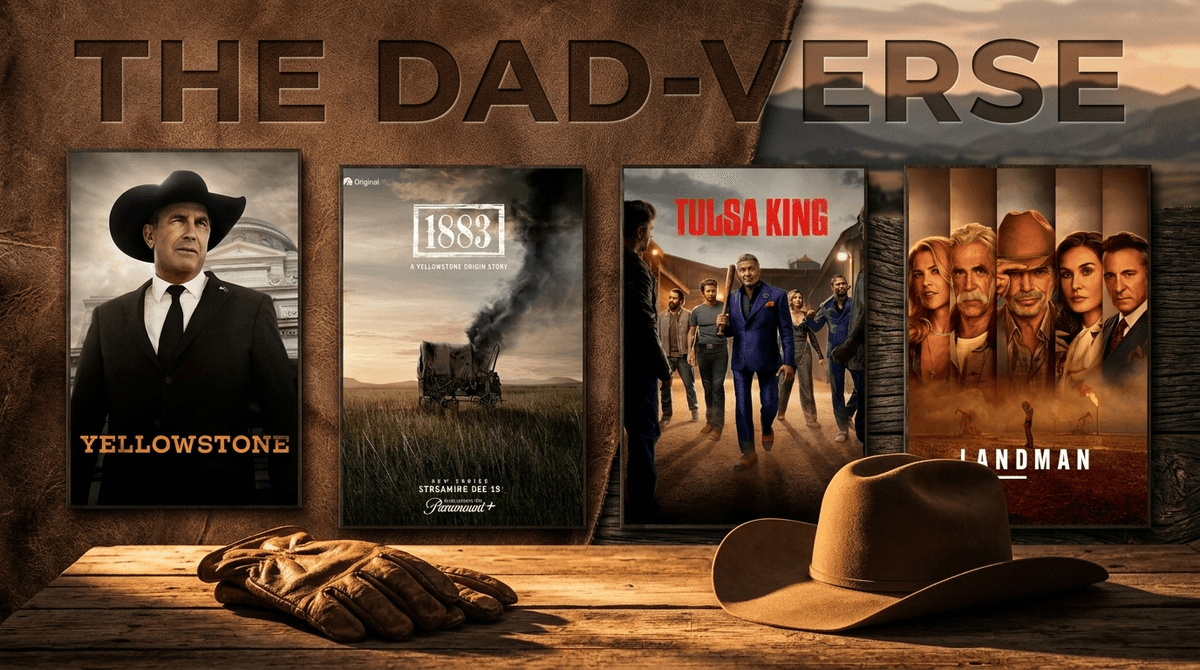
Taylor Sheridan didn't just create a TV show; he built a sovereign nation of content often called the "Dad-Verse," where the men are stoic, the stakes are existential, and the property lines are written in blood. If your teen is asking to start Yellowstone or is hyped for the upcoming premiere of The Madison, you’re looking at a world of TV-MA storytelling that is essentially prestige soap opera for people who own trucks. It’s high-quality, addictive, and almost entirely unsuitable for anyone still navigating middle or early high school.
TL;DR: Taylor Sheridan’s "Dad-Verse"—anchored by Yellowstone and the expansion into Landman—is a masterclass in modern Western grit, but it’s built on graphic violence, nihilistic morality, and "might makes right" power dynamics. While the aesthetic is iconic, the TV-MA ratings are heavily earned. For most families, these are "after the kids go to bed" watches. If your teen wants that Western vibe without the trauma, check out our best shows for kids list for better entry points.
Sheridan has a very specific "vibe": rural landscapes, hyper-competent protagonists, and a total lack of interest in traditional "good guy" tropes. Whether it’s the oil fields of West Texas or the ranches of Montana, the theme is always Legacy at Any Cost.
For a teen, this can be a confusing sell. The shows often celebrate an "alpha" mentality that borders on the toxic, where problems are solved with a "trip to the train station" (Sheridan-speak for murder). It’s not just the violence—though there is a lot of it—it’s the crushing weight of the grudges. These characters don't just disagree; they destroy each other over decades.
The flagship. By now, the main story of John Dutton has likely reached its conclusion, but the cultural footprint is massive. It’s essentially Succession with horses and a much higher body count.
- The Reality: It’s famous for "cowboy grit," but the content is relentless. Graphic violence, pervasive "F-bombs," and sexual situations are the baseline.
- The Teen Angle: Most teens will find the property-law subplots boring, but the "Rip and Beth" romance has a toxic allure that’s worth discussing if they’re already watching.
These are the prequels, and weirdly, they are some of Sheridan's best work. 1883 is a brutal Oregon Trail survival story. It’s poetic, beautifully shot, and incredibly depressing. 1923 brings in heavy hitters like Harrison Ford and Helen Mirren to deal with Prohibition and the Great Depression.
- The Reality: 1883 is probably the most "educational" in terms of historical hardship, but it features some of the most traumatic character deaths in recent TV history.
Sheridan’s "city" shows. Tulsa King with Sylvester Stallone is actually the most "fun" of the bunch—it has a fish-out-of-water mobster energy that feels lighter than the others. Mayor of Kingstown, however, is arguably the bleakest show on television. It deals with the prison-industrial complex and features extreme, jarring violence. This is the one to skip for teens, period.
As of June 2026, the Sheridan machine shows no signs of slowing down. Here is what is on the horizon:
Set to be the next major chapter in the Yellowstone universe, reportedly starring Michelle Pfeiffer. Based on the early production buzz, it will follow a family from New York City moving to the Madison River valley in Montana. Expect "fish-out-of-water" tropes mixed with the usual Sheridan brand of high-stakes land disputes. From the teaser material, it looks like it will attempt to bridge the gap between the original series and a new generation of viewers.
Landman Season 2
With the first season having established the rough-and-tumble world of Texas oil rigs, the second season is expected to double down on the "boomtown" chaos. Billy Bob Thornton plays a crisis manager for an oil company, and the show is basically a crash course in how the world's energy is actually secured—through dirt, sweat, and ethically questionable deals.
The long-gestating spin-off set at the real-life Four Sixes Ranch in Texas. This is expected to be the most "authentic" cowboy show yet, focusing more on the actual trade of ranching. Because it’s a Sheridan production, you can bet there will still be plenty of bar fights and high-octane drama, but it might—might—be slightly more grounded than the Dutton saga.
The "Dad-Verse" is built on a specific type of adult wish fulfillment: the idea that you can protect your family through sheer force of will and a disregard for the law. For a teen still developing their own moral compass, the "heroism" in these shows is extremely murky.
- The Violence is Visceral: This isn't Marvel "disappearing in a puff of smoke" violence. It’s messy, painful, and often involves torture or executions.
- The Nihilism: There is a sense that the world is out to get you, and the only response is to strike first. That’s a heavy worldview to marinate in for 50 hours of television.
- The Language: If you’re a family that avoids "the big ones," Sheridan is your nightmare. The dialogue is saltier than a Texas cattle lick.
If your 16-year-old is already deep into the Dutton family tree because their friends are watching it, don't just ban it—that ship has sailed. Instead, use it to talk about the myth of the West.
- Ask about the "Train Station": "Why do the characters feel like they can't go to the police? What happens to a society when people stop trusting the law and start 'handling things' themselves?"
- Discuss the Cost of Legacy: "John Dutton says everything he does is for his kids. Do his kids actually seem happy? Is the ranch worth the lives it has ruined?"
- Deconstruct the "Alpha": Sheridan loves a "man’s man." Ask your teen what they think real strength looks like versus the version they see on screen. Is Rip Wheeler a hero, or a victim of his own loyalty?
If they want the Western aesthetic or the high-stakes drama but aren't ready for the TV-MA trauma of the Dad-Verse, try these:
- Longmire: It’s a modern Western procedural. It’s gritty and has great atmosphere, but it’s much more grounded in traditional morality and generally stays in the TV-14 lane.
- Justified: Features one of the best "cool under pressure" protagonists in TV history (Raylan Givens). It’s violent and smart, but it has a sense of humor that Sheridan often lacks.
- Wind River: If you want to see Sheridan's best writing in a contained format, this movie (which he wrote and directed) is a powerful, albeit very intense, murder mystery. It’s a "one and done" watch that handles heavy themes with more grace than the long-running shows.
Q: What age is Yellowstone appropriate for? Yellowstone is firmly for viewers 17 and up. The combination of graphic violence, sexual content, and pervasive profanity makes it a "mature audiences" show in every sense.
Q: Is Landman as violent as Yellowstone? Yes, though the violence in Landman is often more industrial or related to the rough culture of oil towns. It maintains the same TV-MA edge as the rest of the Sheridan catalog.
Q: Are the prequels like 1883 okay for middle schoolers? No. While 1883 looks like a historical drama, it features intense depictions of death, including smallpox, wagon accidents, and frontier violence that can be deeply upsetting for younger viewers.
Q: Why is it called the "Dad-Verse"? It’s a cultural shorthand for media that appeals to traditional masculine interests—ranching, military, law enforcement, and "protecting the home"—often featuring older male protagonists who are "the best at what they do."
Taylor Sheridan is the reigning king of the "modern Western," and his shows are undeniably well-made. But they are built for an adult psyche that can handle—and perhaps enjoys—the cynicism of a world where the "good guys" are just the "bad guys" we happen to be following. For teens, the grit can quickly turn into gloom. If you decide to let them in, do it with your eyes open and a remote ready to pause for some very necessary conversations.
Find more shows with this vibe Get a personalized guide for your teen