

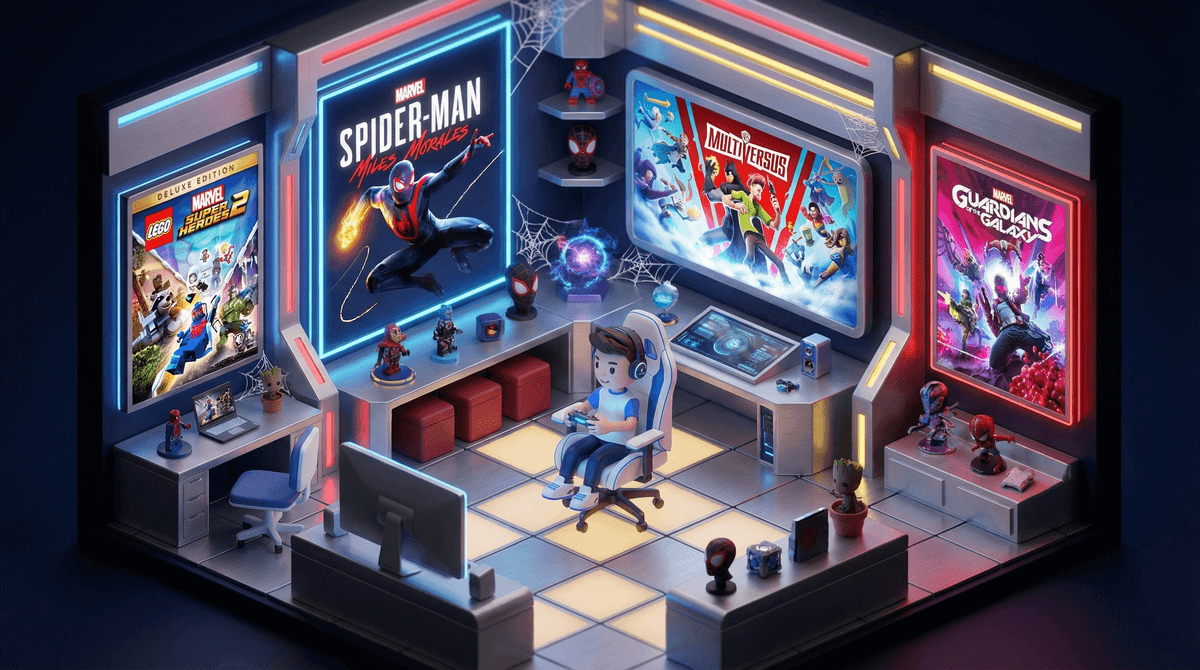
Superhero games are exactly what they sound like—video games where kids can play as their favorite caped crusaders, web-slingers, and super-powered heroes. We're talking everything from the blocky charm of LEGO Marvel Super Heroes to the cinematic spectacle of Marvel's Spider-Man, from the chaotic multiplayer fun of MultiVersus to the deep RPG mechanics of Marvel's Midnight Suns.
The superhero game landscape is massive right now, spanning every platform and age range. Your 5-year-old might be obsessed with LEGO DC Super-Villains, while your middle schooler is begging for Marvel's Guardians of the Galaxy. And honestly? This is one gaming genre where there really ARE good options for every age—if you know what to look for.
The appeal is pretty straightforward: power fantasy meets beloved characters. Kids don't just want to watch Spider-Man swing through New York—they want to BE Spider-Man swinging through New York. They want to smash things as the Hulk, solve problems as Batman, and save the world as their favorite hero.
But there's more to it than just the cape and the punching. Good superhero games tap into something deeper:
- Heroic identity: Kids are figuring out their own values, and superheroes model courage, responsibility, and standing up for what's right
- Problem-solving: Many superhero games involve puzzles, strategy, and using different powers creatively
- Social currency: Superhero media is everywhere right now—movies, shows, toys—so playing the games keeps kids connected to playground conversations
- Mastery and progression: Unlocking new suits, abilities, and characters scratches that achievement itch in a satisfying way
Let's address the elephant in the Batcave: superhero games involve combat. Full stop. The question isn't whether there's fighting—it's what kind of fighting, how it's portrayed, and whether your kid is ready for it.
Here's the spectrum:
Cartoonish and consequence-free (Ages 5-8): The LEGO games are the gold standard here. Yes, characters "fight," but enemies just break apart into LEGO bricks and rebuild themselves. Nobody bleeds, nobody dies, nobody even seems particularly upset about getting punched. It's slapstick violence in the Looney Tunes tradition. Games like LEGO Batman or LEGO Marvel Avengers are perfect starter superhero games.
Comic book action (Ages 10-13): Games like Marvel's Spider-Man: Miles Morales have more realistic graphics but still maintain that comic book aesthetic. Bad guys get webbed up and knocked out, not killed. The violence is stylized and heroic—you're stopping criminals, not executing them. There's tension and stakes, but it still feels like a Saturday morning cartoon brought to life.
Darker and grittier (Ages 14+): The Batman: Arkham series is incredible, but it's also genuinely intense. Darker themes, scarier villains, more brutal combat animations. Injustice 2 is a fighting game where superheroes literally beat each other unconscious with X-ray bone-breaking moves. These are Teen or Mature-rated for good reason.
Your family's comfort level matters here. Some families are fine with stylized superhero combat at younger ages. Others want to wait until kids can clearly distinguish fantasy from reality and understand consequences. Neither approach is wrong—it's about knowing your kid and your values.
Ages 5-8: LEGO Everything
Start with the LEGO superhero games. They're co-op friendly (great for playing together), genuinely funny, and have zero concerning content. LEGO Marvel Super Heroes 2 lets kids play as dozens of characters, and the worst thing that happens is someone gets covered in cartoon goo.
Ages 8-11: Spider-Man and Friends
This is the sweet spot for Marvel's Spider-Man on PlayStation. Yes, it's rated T for Teen, but the actual content is more like a PG-13 Spider-Man movie. Web-swinging through Manhattan is genuinely joyful, and the game emphasizes stopping crime rather than violence. The story deals with some heavier themes (loss, responsibility), which makes it perfect for kids ready for more emotional depth.
Marvel's Avengers is also in this range—more combat-heavy, but still comic book style.
Ages 12-14: Expanding the Universe
Marvel's Guardians of the Galaxy is a legitimately great story-driven game with humor, heart, and yes, alien-blasting action. The dialogue is witty and occasionally crude (think MCU-level jokes), but it's also about found family and redemption.
MultiVersus is a Smash Bros-style fighting game featuring DC heroes alongside other Warner Bros characters. It's free-to-play, which means you'll want to understand the monetization , but the actual gameplay is more cartoonish brawling than violence.
Ages 14+: The Full Experience
The Batman: Arkham series is genuinely some of the best superhero gaming ever made. Complex stories, incredible gameplay, but definitely darker and more mature. Marvel's Midnight Suns is a tactical RPG with supernatural horror elements—think demonic possession and dark magic alongside the Avengers.
Not all superhero games are created equal: A game featuring the same character can vary wildly. Spider-Man in a LEGO game is completely different from Spider-Man in Marvel's Spider-Man. Always check the ESRB rating and read actual parent reviews.
The monetization trap: Many superhero games, especially mobile ones and free-to-play titles, are designed to extract money through character unlocks, costumes, and battle passes. Marvel Strike Force and Marvel Contest of Champions are notorious for this. If your kid is playing a free superhero game on their phone, have a conversation about in-app purchases.
Co-op is your friend: Playing together lets you experience the content firsthand AND turns gaming into family time. Most LEGO games have excellent couch co-op. Spider-Man games are single-player, but taking turns and discussing the story together works great.
The "hero's journey" is actually valuable: Despite the punching, many superhero games genuinely explore themes of responsibility, sacrifice, and using power wisely. Spider-Man games are basically interactive lessons in "with great power comes great responsibility." These aren't just mindless button-mashers—though some definitely are, and that's okay too.
Superhero games can be fantastic for kids—they're engaging, they promote problem-solving, and they let kids embody values like courage and justice. But the genre spans everything from preschool-friendly LEGO games to genuinely intense M-rated experiences.
Your job isn't to ban superhero games or to let your kid play anything with a cape on the cover. It's to match the game to your child's age, maturity, and your family's comfort with stylized violence.
Start with LEGO games for younger kids. Graduate to Spider-Man for tweens. Save the dark and gritty Batman stuff for actual teenagers. And always, always check the rating and watch some gameplay footage before saying yes.
- Check your current games: If your kid already plays superhero games, look up the actual content. You might be surprised either way.
- Play together: Pick up a LEGO superhero game and make it family game night. You'll understand the appeal AND get quality time.
- Set spending boundaries: If they're playing free-to-play superhero games, have the monetization conversation now before the $50 charge appears.
- Use it as a conversation starter: After they play, ask about the choices their hero made. Why did Spider-Man save that person? What would they do with super powers?
Want to dig deeper into a specific game? Check out our full guide to age-appropriate gaming or learn more about ESRB ratings and what they actually mean.