

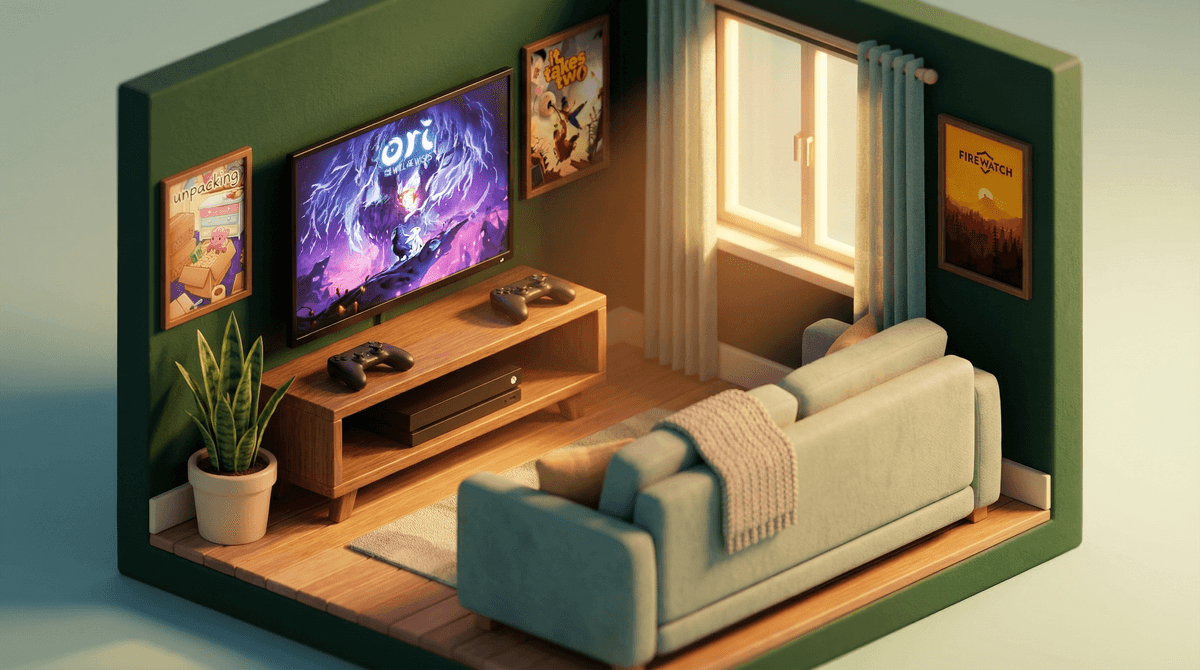
Story-driven games are basically interactive movies where your kid is the main character. Think of them as the video game equivalent of a really good chapter book – there's a beginning, middle, and end. Unlike Minecraft or Roblox that can go on forever, these games have natural stopping points built right in.
Here's the thing: about 55% of families in our community have gaming consoles, and 92% use TVs for entertainment. So if you're going to have screen time anyway, story-driven games on your Xbox through your smart TV can actually be one of the better options. They're contained, they have endings, and there's zero pressure to buy cosmetics or compete with strangers online.
These games work great on your existing setup – your Xbox plugs into your smart TV, and you're done. No need for a gaming monitor or fancy equipment. Just the console, the TV you already have, and a controller.
Kids love story games because they're genuinely engaging. They get to make choices that matter, solve puzzles, and experience a narrative that responds to their decisions. It's not just button-mashing – it's more like being inside a story.
Parents love them because they actually end. When your kid says "just one more level," you can see exactly how much game is left. There's no daily login streak, no battle pass expiring, no friends waiting online. The game will be there tomorrow, exactly where they left it.
Also? These games tend to spark real conversations. After playing It Takes Two or A Way Out together, you'll have stuff to talk about at dinner that isn't about Skibidi Toilet.
For Younger Kids (Ages 7-10)
Ori and the Blind Forest and Ori and the Will of the Wisps – Absolutely gorgeous platformers with emotional stories about friendship and courage. Fair warning: these can get challenging, but there's an easy mode. About 8-12 hours each.
Unpacking – This is brilliant for kids who aren't ready for combat games. You literally just unpack boxes and arrange items in different homes throughout someone's life. It's meditative, creative, and tells a whole story without words. Perfect for 30-minute sessions. Takes about 3-4 hours total.
Stardew Valley – Okay, this one can be endless, but it has natural day/night cycles that make great stopping points. "You can play until the end of summer" is a clear boundary. Farming, relationships, and zero violence.
For Tweens and Teens (Ages 11+)
Firewatch – A mystery set in the Wyoming wilderness. You're a fire lookout communicating with your supervisor via walkie-talkie. No combat, just exploration and choices. About 4-5 hours total. Great for kids who love mysteries.
Life is Strange – Time-travel mystery with real emotional weight. Deals with friendship, bullying, and tough choices. Episodic structure means built-in stopping points. Rated T for Teen for good reason – check if it's right for your family .
.
What Remains of Edith Finch – Explores a family's history through different vignettes. Beautifully done but deals with death and loss. About 2-3 hours. Better for mature tweens and teens.
For Co-Op Family Play
It Takes Two – Requires two players working together. You can't play this solo, which is actually perfect for family game time. About 12-14 hours, but chapters make natural session breaks. Some mild language and relationship themes (it's about a divorcing couple), so preview first.
Unravel Two – Two adorable yarn creatures solving puzzles together. Cooperative without being competitive. Gorgeous and wholesome. About 6-8 hours.
The average screen time in our community is 4.2 hours per day, with kids getting about 4 hours on weekdays and 5 on weekends. Story-driven games can actually help you reduce that because they're not designed to be addictive in the same way.
Here's what these games DON'T have:
- No daily login rewards
- No battle passes or FOMO mechanics
- No in-game purchases or microtransactions (mostly)
- No online multiplayer pressure
- No endless progression systems
When the story ends, the game ends. Your kid can replay it if they want, but there's no algorithm trying to keep them hooked.
Use Xbox's built-in features: The Xbox has great parental controls where you can set screen time limits, approve games before they're played, and see exactly what your kid is playing. Learn how to set up Xbox parental controls.
Try chapter-based limits: Instead of "30 more minutes," try "finish this chapter." Story games are designed with natural breaks. This respects the game's structure and teaches your kid to find good stopping points.
Play together first: Especially for tweens, play the first hour together. You'll immediately know if the themes and content work for your family. Plus, it's actually fun.
Use Game Pass: Xbox Game Pass is like Netflix for games – about $10-15/month for access to hundreds of games. Most of the games I mentioned are included. You can try stuff without committing to $60 purchases.
Story-driven games on Xbox aren't just "better than nothing" – they're actually a solid choice for families trying to be intentional about screen time. They respect your time, they end, and they often deliver genuinely meaningful experiences.
The key is being selective. Not every game marketed as "story-driven" is actually good for limited screen time families. Stick with games that have clear endings, avoid online features, and match your family's values.
And remember: 55% of families in our community are doing some form of gaming. You're not alone in trying to figure this out.
- Check what you already have: If you have Xbox Game Pass, search for the games mentioned above
- Start with one: Pick a game that matches your kid's age and interests
- Set clear boundaries: Decide together how you'll handle save points and stopping times
- Explore other gaming alternatives if you want more options beyond Xbox
Need help figuring out if a specific game is right for your family? See if any game is appropriate for your child.