

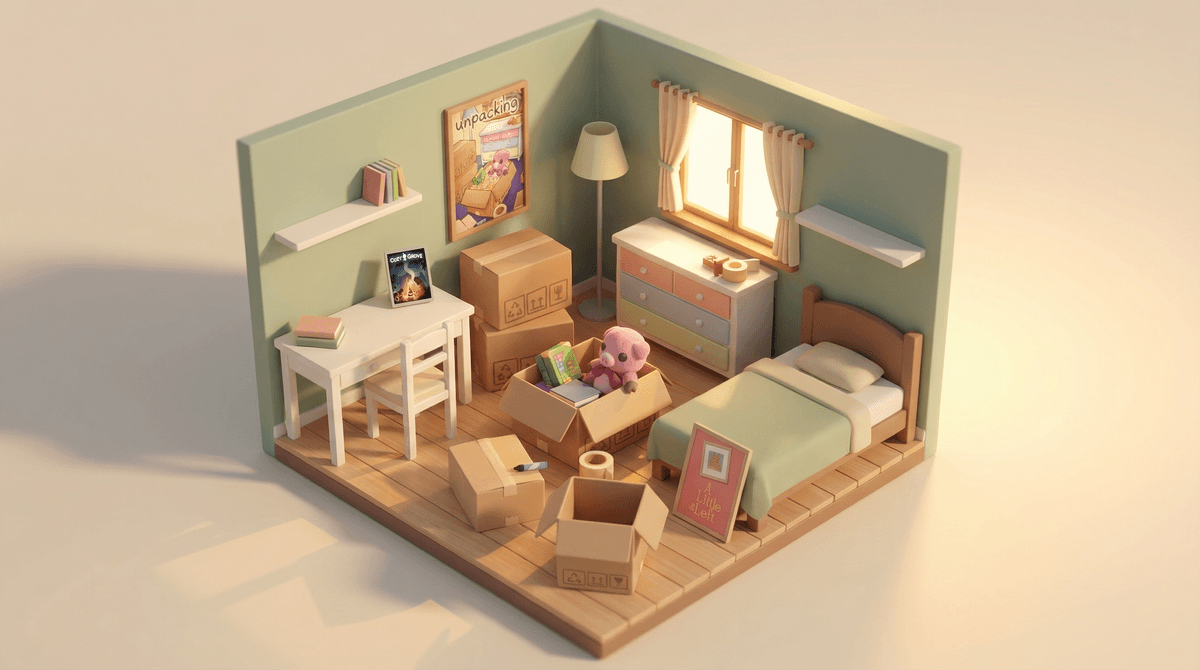
Unpacking is one of those rare games that feels more like interactive poetry than typical entertainment. Released in 2021, it's a puzzle game where you literally unpack boxes and arrange items in various rooms across different life stages—from a childhood bedroom to college dorms to shared apartments and beyond. There's no dialogue, no score, no timer. Just you, some cardboard boxes, and the quiet satisfaction of finding the perfect spot for a beloved stuffed pig.
The game follows one person's life through eight moves over about 20 years. Each level presents a new living space and a collection of belongings that tell a story without words. That photo album? It appears in every single move. The diploma, the breakup evidence, the gradual accumulation of kitchen gadgets—it's all there, waiting to be discovered and placed.
Here's what makes Unpacking surprisingly compelling:
It's genuinely relaxing. In a gaming landscape dominated by battle royales and competitive multiplayer, Unpacking offers something radically different: calm. The soundtrack is gentle, there are no enemies, and you can't really "fail." If something doesn't fit quite right, the game gently suggests you try again. It's the digital equivalent of organizing your sock drawer, except somehow deeply meaningful.
The storytelling is brilliant. Without a single word of dialogue, you piece together major life events. Kids are surprisingly good at reading these environmental clues—they notice when the protagonist's art supplies get pushed into a corner during one particular move, or when familiar items suddenly appear in duplicate. It's teaching narrative literacy in the sneakiest possible way.
It scratches the organization itch. If your kid is the type who loves arranging their Minecraft inventory or organizing their Animal Crossing house, Unpacking is basically that feeling distilled into its purest form. There's a right place for everything, but also room for personal expression in how you arrange things.
It's genuinely educational. Kids are learning spatial reasoning, organization skills, and even life skills like "where do dish towels actually go?" One parent told me their 10-year-old started asking questions about why someone would move so many times, which led to conversations about college, relationships, and career changes.
Ages 6-8: The game mechanics are simple enough for early readers, but much of the emotional storytelling will go over their heads. They'll enjoy the puzzle aspect and the satisfaction of fitting things into spaces. Great for developing spatial reasoning and categorization skills. Might need help with some of the trickier items.
Ages 9-12: This is the sweet spot. Kids this age can follow the life story, pick up on the emotional beats, and genuinely engage with the narrative. They're old enough to understand why certain moves feel cramped or why some spaces feel like home. Many kids in this age range have experienced moving themselves, which adds resonance.
Ages 13+: Teens often find Unpacking surprisingly moving. They're at an age where they're thinking about their own future moves—to college, to independence—and the game's themes of identity, relationships, and finding your place really land. It's also short enough (3-4 hours) that it doesn't require a massive time commitment.
It's genuinely short. Unlike games that demand 100+ hours of commitment, Unpacking can be completed in one sitting or spread across a few evenings. This makes it perfect for families with screen time limits or kids who struggle with stopping open-ended games.
There's subtle LGBTQ+ representation. Without spoiling anything, the protagonist's story includes a same-sex relationship. It's handled matter-of-factly and beautifully, but some families will want to know this going in. For many kids, it's a lovely example of inclusive storytelling.
It sparks real conversations. The wordless format means kids often narrate what they think is happening, which creates natural openings for discussions about relationships, independence, compromise in shared spaces, and what "home" means. These aren't forced teaching moments—they emerge organically from gameplay.
The difficulty is just right. Unlike frustrating puzzle games that can lead to rage-quitting, Unpacking's challenges are satisfying without being stressful. Items that are placed incorrectly get a subtle outline, and there's no penalty for taking your time or experimenting.
It's available everywhere. You can find Unpacking on Nintendo Switch, PC, Xbox, PlayStation, and even mobile. It's also included with Xbox Game Pass, making it accessible without an additional purchase for many families.
In a digital landscape often dominated by what we might call "brain rot" content, Unpacking is a breath of fresh air. It's a game that respects its players' intelligence, teaches organization and spatial skills, tells a genuinely touching story, and creates space for meaningful family conversations—all while being actually enjoyable to play.
Is it going to replace Fortnite or Roblox in your kid's rotation? Probably not. But it's an excellent example of what games can be when they prioritize thoughtfulness over stimulation. It's also a perfect entry point for parents who want to understand why games can be meaningful art, not just entertainment.
For families looking to diversify their gaming diet beyond the usual suspects, Unpacking offers something genuinely special: a quiet, contemplative experience that both kids and parents can enjoy together. And honestly? Watching your kid carefully arrange a digital bookshelf while debating whether books should be organized by color or size is pretty delightful.
Try it together first. The first level makes a great family activity—take turns placing items and discussing where things should go. Want more cozy games like this?
Use it as a conversation starter. After playing, ask what they noticed about the character's life. What made them think certain things happened? It's a low-pressure way to practice inference and empathy.
Consider it for reluctant readers. The visual storytelling makes it accessible for kids who struggle with text-heavy games while still building narrative comprehension skills.
And if your kid gets really into it, you might also want to check out A Little to the Left (organizing household items) or Cozy Grove (another gentle, story-driven experience). The "cozy gaming" genre is having a moment, and it's one trend worth embracing.