More than a walking simulator
If you’ve heard the term "walking simulator" used as a pejorative, this is the game people are usually defending. Developed by Giant Sparrow, it sits at the top of the genre because it refuses to let the player just passively observe. While the IGDB score of 83.5 is high, it doesn't quite capture how much this game redefined story-based video games by making the narrative and the controls inseparable.
In most games, you press a button to jump or shoot. Here, you might use the thumbsticks to mimic the motion of a child pumping their legs on a swing or a factory worker mindlessly chopping fish. It’s tactile. By the time the tragedy hits, you aren't just watching a character die; your hands were the ones keeping them moving. That’s the "friction" that makes this game stick in your ribs long after the two-hour runtime is over.
The Lewis Finch masterclass
If you need one reason to let your teen play this, it’s the sequence involving Lewis, a young man working at a cannery. It is arguably the most brilliant piece of interactive storytelling in the last decade.
As the player, your right hand performs the repetitive task of decapitating fish on a conveyor belt, while your left hand navigates a vibrant, growing fantasy world inside Lewis’s head. It perfectly illustrates the concept of dissociation and how we use imagination to escape a soul-crushing reality. It’s the kind of moment that proves story games count as literacy because it communicates a complex psychological state in a way a static page or a film simply cannot.
The Gregory problem
We need to talk about the bathtub. While the verdict mentions it, the reality of playing it is a specific kind of heavy. You play as a baby, Gregory, splashing in a tub. The game turns the environment into a colorful, underwater fantasy with a toy frog. It is whimsical and beautiful until the moment it isn't.
For an adult, this is often the hardest part of the game to stomach. For a teen, it’s a litmus test for emotional maturity. If your kid is the type to "speedrun" games or skip dialogue, they will find this sequence boring or weird. But for a teen who is already exploring how this game uses magical realism to process grief, this scene is the emotional anchor of the entire experience. It isn't "fun," but it is effective.
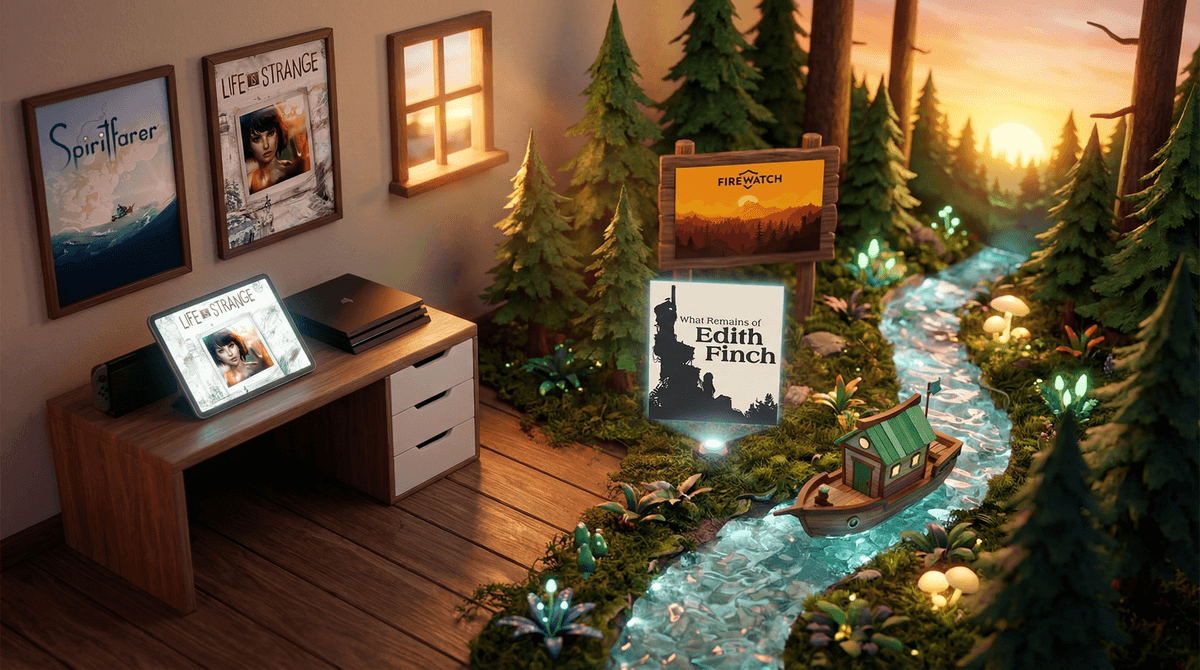
If your kid liked Firewatch or Life is Strange
This is the natural next step for fans of those titles, but it’s much more literary. There are no dialogue choices here and no branching paths. You are on a rail, heading toward an inevitable conclusion.
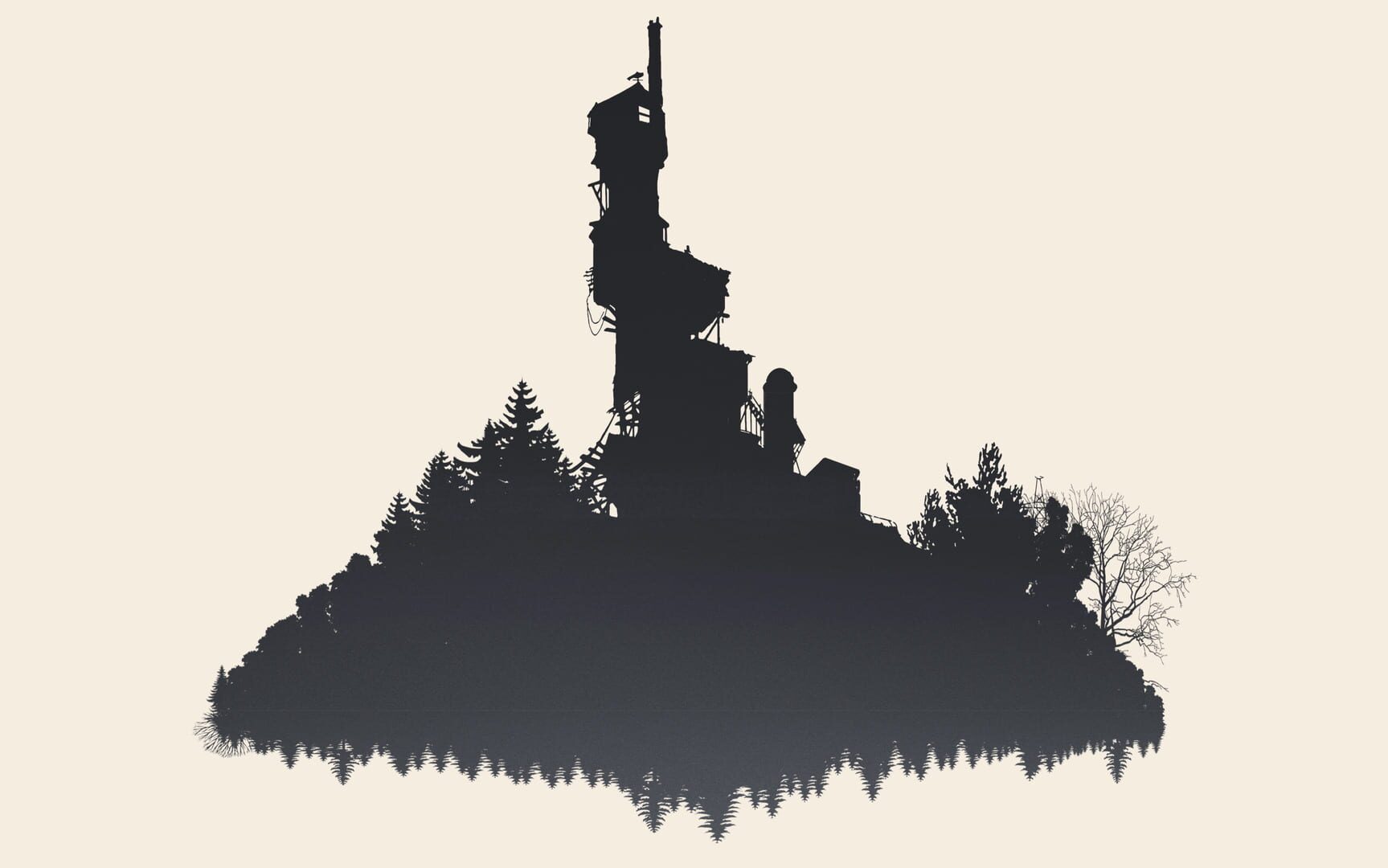
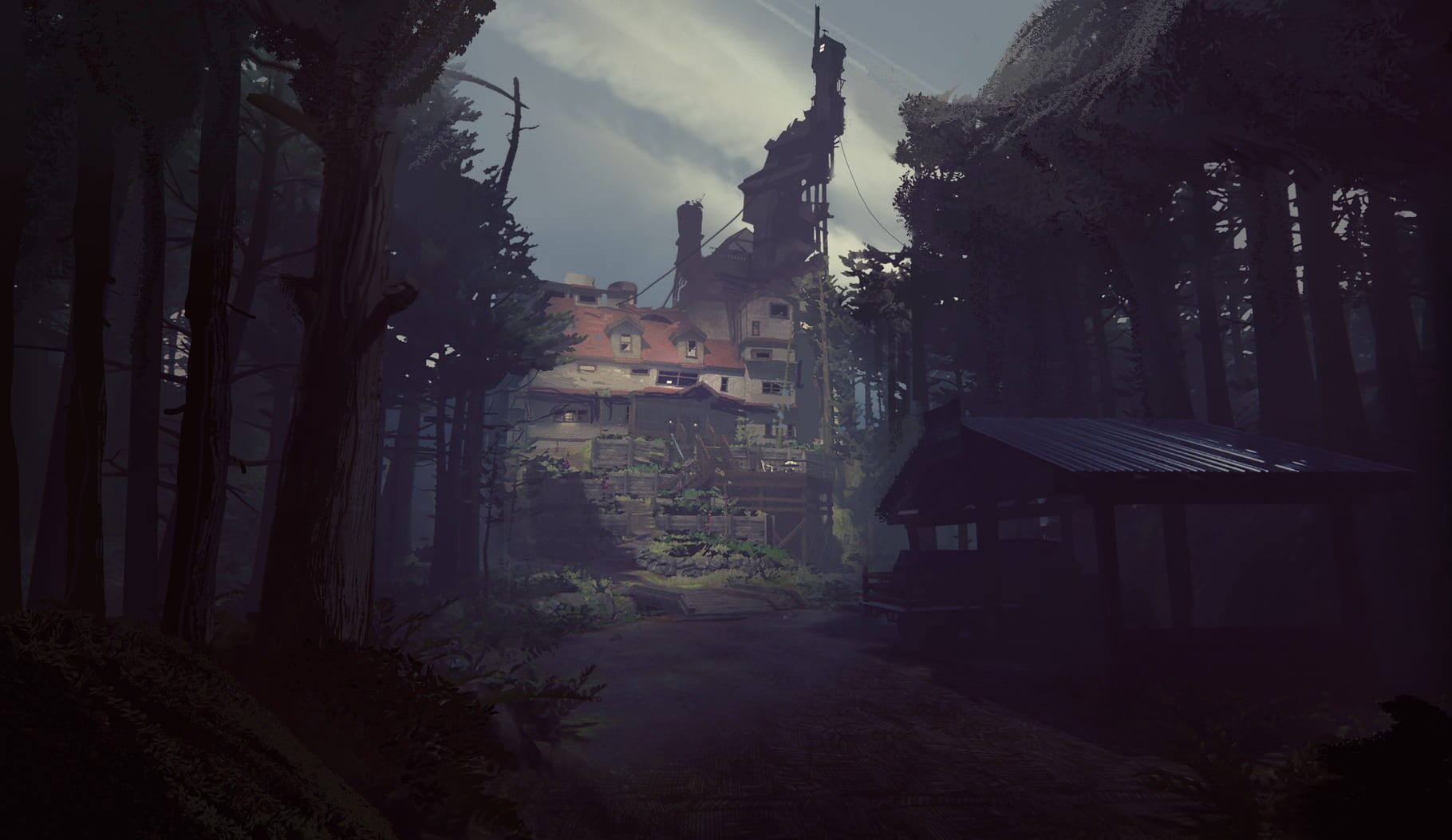
If your teen is a reader who gravitates toward authors like Gabriel García Márquez or Ray Bradbury, they will find a lot to love in the Finch house. The architecture of the house itself is a character—a sprawling, nonsensical tower of additions built on top of additions. It’s a physical manifestation of a family that couldn't let go of the past. If they’re looking for a game that feels like a "win," this isn't it. But if they want a game that feels like a memory, this is the gold standard.