

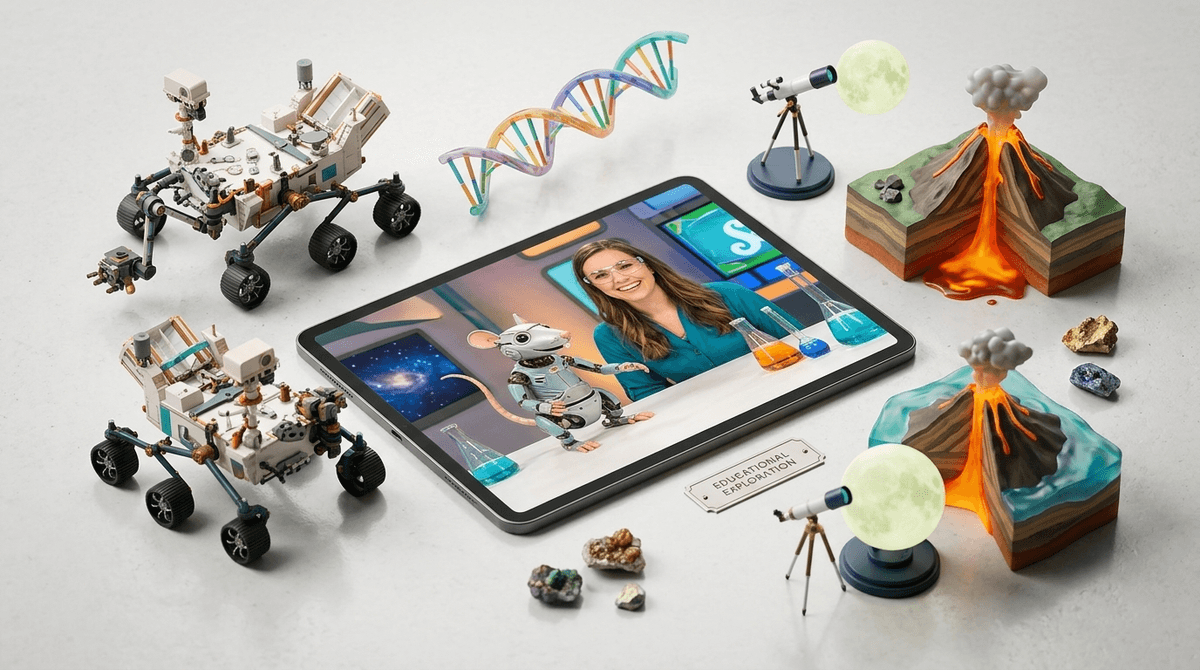
TL;DR: SciShow Kids is the gold standard for early elementary STEM content on YouTube. It’s hosted by a real human (Jessi) and a robot rat (Squeaks), focusing on real scientific inquiry without the manic, over-stimulated energy of typical "kid-fluencer" channels. It’s safe, high-quality, and perfect for the "Why?" phase of parenting.
Quick Links:
- SciShow Kids YouTube Channel
- YouTube Kids App
- Guide: How to manage YouTube rabbit holes
- Mystery Doug (A great companion for curious kids)
If you’ve spent any time in the "educational" corner of YouTube, you know it’s a mixed bag. For every masterpiece, there are ten videos of a grown man screaming while unboxing plastic eggs. SciShow Kids is the antidote to that.
Part of the larger SciShow empire (founded by Hank Green), this channel is specifically designed for the K-3 crowd. It’s hosted by Jessi Knudsen Castañeda, who has that "favorite teacher" energy—warm, enthusiastic, and genuinely knowledgeable. Her co-host is Squeaks, a robot rat who "talks" in squeaks (translated by Jessi). Together, they tackle everything from why we have snot to how a rover lands on Mars.
Unlike many "brain rot" channels that rely on fast cuts and loud noises to keep kids' attention, SciShow Kids relies on actual curiosity. It’s the kind of content that makes your kid run into the kitchen to explain the water cycle while you’re trying to figure out what to do with a wilted head of kale.
Kids in the 5-to-8-year-old range are professional skeptics and amateur detectives. They want to know how the world works, and they have a very low tolerance for being talked down to.
Jessi and Squeaks
The dynamic works because it mirrors how kids learn. Squeaks represents the "learner"—he’s curious, he makes mistakes, and he asks the questions kids are thinking. Jessi is the guide. It’s a classic formula, but it’s executed with a level of respect for the audience that you don't see in something like Blippi.
High-Value Visuals
They use a mix of live-action, clear animations, and real footage from NASA or wildlife photographers. It helps bridge the gap between "cartoon world" and the "real world." When they talk about a Naked Mole Rat, they show you a real one, not just a drawing.
The "Squeaks' Questions" Format
Many videos start with a specific "Why?" or "How?" This matches the search intent of a kid’s brain. They aren't just dumping facts; they are solving mysteries.
If you’re setting up a "Watch Later" list or a curated playlist on the YouTube Kids app, here are the categories where SciShow Kids really shines:
This is the gateway drug for most kids. They cover the weird stuff—animals that glow, animals that live in the deep sea, and animals with "superpowers." It’s a great alternative to Wild Kratts if you want something a bit more grounded in direct science rather than a fictional narrative.
If your house is currently a graveyard of half-finished LEGO projects, these videos are essential. They explain pulleys, levers, and wheels in a way that encourages kids to go build something. It’s the perfect digital supplement to toys like Magnatiles or Snap Circuits.
Space is a big topic for early elementary kids. SciShow Kids does an excellent job of explaining things like "Why is the moon changing shape?" without getting bogged down in complex astrophysics that would make a 7-year-old's eyes glaze over.

Ages 4-6: This is the sweet spot. The pacing is gentle enough that it won't overstimulate them, but the information is "big kid" enough to make them feel smart. You might need to explain some of the bigger vocabulary words, but the show usually does a great job of defining them in context.
Ages 7-9: Still very relevant, though some kids on the older end might start to find Squeaks a little "babyish." If they start to outgrow the "Kids" version, they can eventually graduate to the main SciShow channel, though be warned that the main channel moves much faster and covers more "mature" science (like medical oddities or complex chemistry).
Ages 10+: They’ve probably moved on to Mark Rober or Veritasium. SciShow Kids will feel too slow for them.
Even though the content of SciShow Kids is 100% safe, the platform it lives on is... well, you know. YouTube is designed to keep you watching, and the "Up Next" sidebar doesn't always have your child's best interests at heart.
- Use YouTube Kids: If you haven't already, move your elementary-age kids to the YouTube Kids app. You can set it to "Approved Content Only" mode and literally just select SciShow Kids as one of the only allowed channels.
- Watch Out for "Copycat" Content: There are many channels that try to mimic the "SciShow" vibe but include weird AI-generated voices or factually incorrect information. Stick to the verified channel with the checkmark.
- The Sidebar Trap: Even on the main YouTube site, the sidebar might suggest something like Skibidi Toilet or high-energy gaming videos if those are in your household's watch history.
One of the best things about SciShow Kids is that it doesn't shy away from "real" science. They talk about evolution, they talk about how the earth is billions of years old, and they talk about climate change. It’s presented as settled fact because, in the scientific community, it is.
If your family prefers to navigate these topics differently, you'll want to be aware that Jessi and Squeaks are firmly in the "pro-science" camp. For most intentional parents, this is a huge plus—it’s refreshing to have a resource that doesn't "both sides" gravity or the fossil record.
How to Talk About It
The best way to use SciShow Kids is as a conversation starter. When the video ends, ask:
- "Squeaks seemed really surprised by that—were you?"
- "How could we test that out in our backyard?"
- "What was the coolest thing Jessi showed us today?"
This moves the experience from passive consumption to active learning. It turns "screen time" into "research time."
SciShow Kids is a rare "win" in the digital parenting world. It’s high-quality, free, and actually educational. It’s the kind of content that makes you feel good about your kid having a tablet in their hands for 15 minutes while you try to finish a cup of coffee.
If you’re looking for a way to channel that "Why is the sky blue?" energy into something productive, this is your best bet. It’s not "brain rot"—it’s brain fuel.
- Subscribe to the SciShow Kids channel on your family account.
- Check out Mystery Science for more structured, school-style science lessons.
- Explore other high-quality STEM shows like Ask the StoryBots on Netflix.
- Read our guide on the best YouTube channels for elementary schoolers to find more "safe harbor" content.