

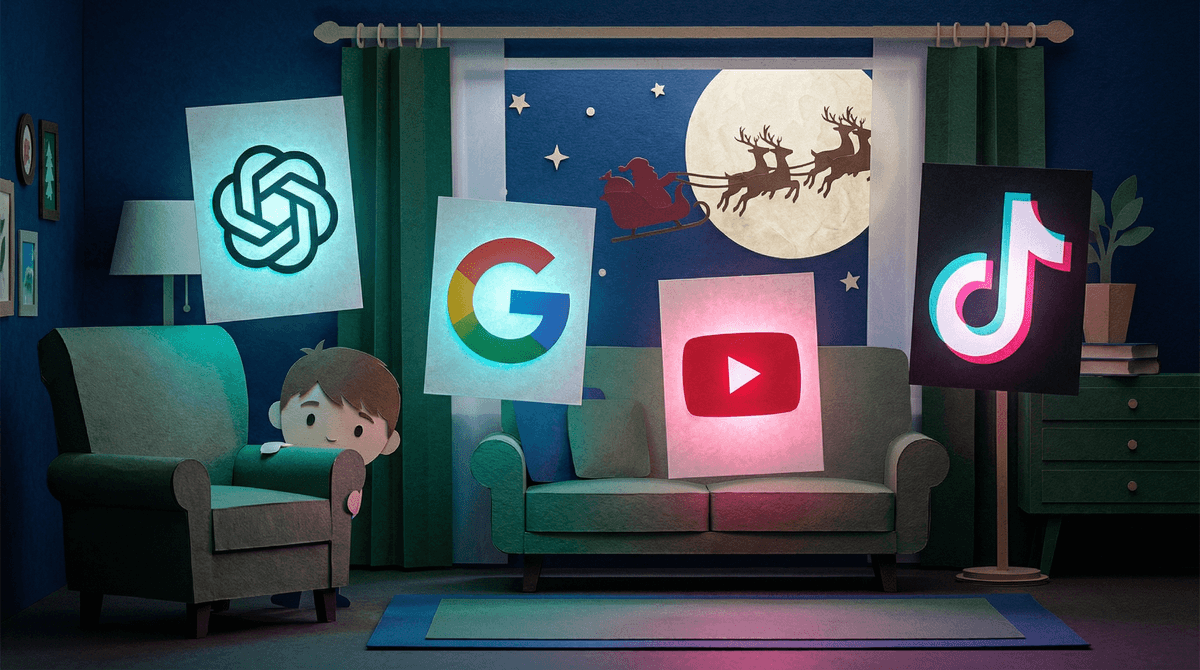
Santa Spoiler Alert: Keeping the Magic Alive in the Digital Age
Look, if you're reading this, you're probably in one of two camps: either you're trying to preserve the Santa magic for a few more years, or you're desperately hoping your older kid doesn't accidentally blow it for their younger sibling via a poorly-timed YouTube comment or group chat message.
The Santa secret has always been precarious—there's always been that one kid on the playground who "knows the truth" and feels compelled to share it. But now? Now we're dealing with algorithmic recommendations, autocomplete search suggestions, and AI chatbots that have zero chill about spoiling childhood magic.
The digital age has made keeping Santa alive approximately 47 times harder. (That's not a real statistic, but it feels accurate.)
Here's the thing: kids are online younger than ever, and they're searching for stuff independently. A completely innocent search for "how does Santa fit down the chimney" can quickly lead to autocomplete suggestions like "how does Santa deliver presents if he's not real" or a Reddit thread titled "What age did you find out Santa wasn't real?"
And it's not just search engines. Consider:
- YouTube thumbnails and titles that spoil the secret in the sidebar (even when watching completely unrelated content)
- TikTok videos from older kids doing "Santa isn't real" reveals or "how I found out" storytime content
- Group chats where one kid's older sibling drops truth bombs
- AI assistants like Alexa, Siri, or ChatGPT that will answer "Is Santa real?" with varying degrees of tact (spoiler: not much)
- Social media comments on holiday posts that your kid might glimpse over your shoulder
The magic can evaporate in a single swipe or click.
Let's be real about the timeline here:
Ages 3-6: Most kids are true believers and aren't really searching independently yet. Your biggest risk is older siblings or cousins, not digital exposure.
Ages 7-9: This is the danger zone. Kids are starting to use devices more independently, asking more logical questions, and their friends are beginning to have doubts. About 85% of kids figure it out by age 9, and digital exposure is increasingly the catalyst.
Ages 10+: Most kids either know or strongly suspect. If they're still asking questions at this age, they might be holding on because they want to believe, or because they know believing = more presents. (Respect the hustle.)
Lock Down Search Settings
If your kids have independent device access, set up SafeSearch on Google (it's not just for blocking inappropriate content—it also tends to filter out some of the Santa-spoiling content). But honestly? SafeSearch isn't foolproof for this specific issue.
Better approach: If your kids are in the younger range, don't give them independent search access yet. Use YouTube Kids instead of regular YouTube, and be present when they're using voice assistants.
The YouTube Problem
YouTube is the biggest culprit here. Even with YouTube Kids, you can get videos like "SANTA ISN'T REAL PRANK ON LITTLE BROTHER" in the recommendations.
Your options:
- Stick to curated playlists you've pre-screened
- Use the YouTube Kids app with the "Approved Content Only" setting
- Be really aggressive with the "Don't recommend this channel" button when you see sketchy content
- Read our guide on YouTube vs. YouTube Kids for a deeper dive
Voice Assistant Roulette
Test your voice assistant before your kid does. Seriously, ask Alexa "Is Santa real?" and see what happens. Different assistants have different responses, and some are more magic-preserving than others.
Pro tip: You can often adjust assistant settings to require a PIN for certain types of questions, or just unplug the thing during December if you're feeling particularly paranoid.
The Group Chat Talk
If your kid is in any group chats (and by age 8-9, many are), you need to have a conversation with them about being kind to younger kids who still believe. Frame it as:
"Some of your friends might still believe in Santa, and it's not cool to spoil that for them. If someone asks you directly, you can say 'I'm not sure' or 'you should ask your parents.'"
Also? Maybe reach out to other parents in the group chat and get everyone on the same page. Get guidance on navigating group chat dynamics with kids .
.
The Older Sibling Situation
If you have multiple kids at different belief stages, you need to have a very explicit conversation with the older one. This isn't just "don't tell your sister"—this is "your sister is going to ask you directly, and here's exactly what you should say."
Script it out with them. Role-play it. Make them feel like they're part of the magic-keeping team, not just being silenced. Kids are way more likely to cooperate when they feel like they're helping rather than being censored.
Eventually, your kid will ask you directly: "Is Santa real?"
Here's the thing—you know your kid and your family values. But here are a few approaches that work:
The Question Flip: "What do you think? Why are you asking?"
- This buys you time and helps you understand what they already know or suspect
The Magic Keeper Promotion: "You're old enough now to know the truth—Santa is the spirit of giving, and now you get to be part of keeping that magic alive for [younger sibling/cousin/kids in general]."
- This works especially well for kids who are ready but might feel sad about losing the magic
The Straight Truth: "Santa is a fun story we tell to make Christmas magical, but the presents come from people who love you."
- Some kids appreciate directness and feel respected by honesty
The Deflection: "As long as you believe, Santa will come."
- This works for younger kids who aren't really ready for the truth but are testing the waters
Yeah, so... ChatGPT and similar AI tools are becoming more accessible to kids, and they will absolutely answer the Santa question if asked. Some are more tactful than others, but none of them are going to preserve the magic the way you would.
If your kid has access to AI tools, you need to have the conversation sooner rather than later. You can't really control what they'll ask, and honestly, if they're asking AI whether Santa is real, they probably already have doubts.
The Santa secret was always going to come out eventually. Digital exposure might accelerate the timeline, but it's not the end of the world if your kid finds out at 7 instead of 9.
What matters more:
- That the discovery doesn't happen traumatically (via a mean kid or a jarring search result)
- That you're the one to have the conversation, not the internet
- That your kid doesn't immediately spoil it for every younger child they encounter
- That you've set up reasonable digital boundaries that make accidental spoilers less likely
The magic isn't just about believing in a guy in a red suit—it's about the wonder, the anticipation, the rituals, and the feeling that something special is happening. That doesn't have to end when the Santa truth comes out.
-
Audit your kid's digital access right now. What can they search for independently? What voice assistants can they talk to? What YouTube channels are they watching?
-
Have the "be kind to believers" conversation if your kid is in the 7-10 range, whether they believe or not.
-
Prep your response to "Is Santa real?" so you're not caught off-guard at Target.
-
Consider what you actually want. Is preserving Santa for another year worth the digital lockdown? Or are you kind of ready to move into the "magic keeper" phase? Both are totally valid.
-
Check out our guide on age-appropriate digital independence to think through what access makes sense for your kid's age and maturity level.
And remember: even if the Santa secret gets out earlier than you planned, you're not a failure. You're just a parent trying to navigate childhood magic in an age where the internet exists. We're all doing our best here.