

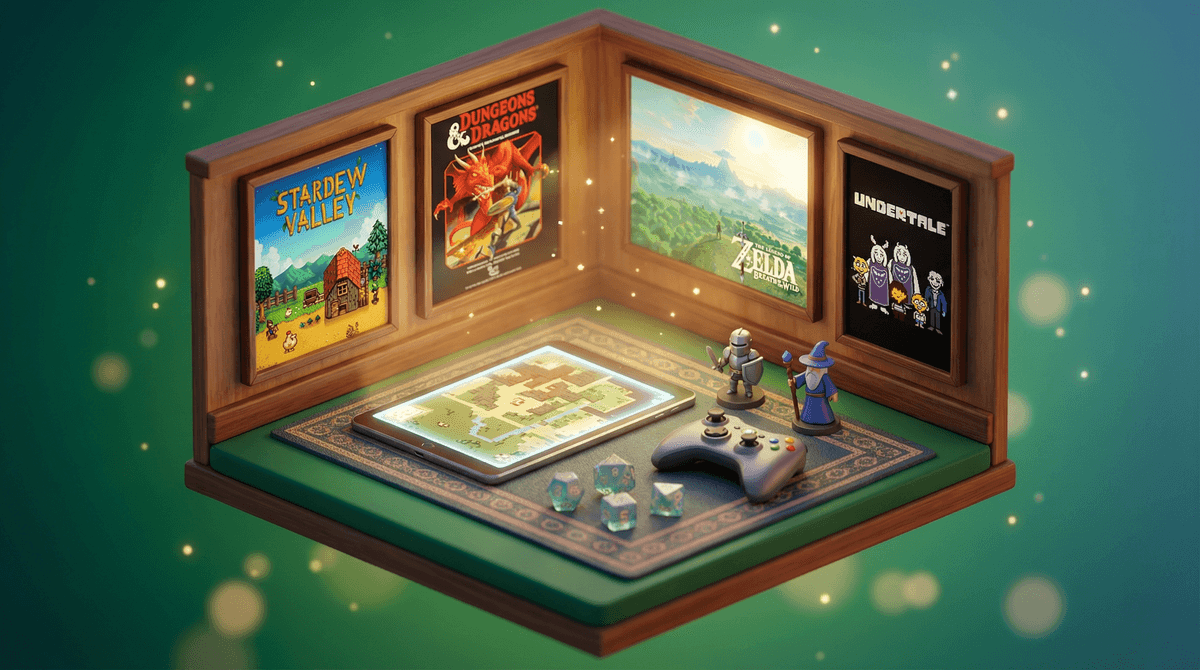
RPG stands for "role-playing game," and if you're picturing kids sitting around a table with dice and character sheets, you're not wrong—but that's only part of the picture. Modern RPGs for kids span everything from classic tabletop games like Dungeons & Dragons to video games like Pokémon, Undertale, and Stardew Valley.
The core concept? Players take on the role of a character (or multiple characters) and make choices that shape the story. They level up, solve problems, manage resources, and navigate a world where their decisions actually matter. Sometimes there's combat, sometimes there's farming, sometimes there's just a lot of talking to NPCs (non-player characters) to figure out what the heck is going on.
Unlike a lot of games where the goal is just "win" or "get the high score," RPGs are about the journey. They're narrative-driven, character-focused, and often surprisingly emotional.
RPGs scratch a very specific itch that a lot of kids have: they want agency. They want to feel like their choices matter, like they're building something, like they're the hero of their own story (even if that hero is a purple-haired cat person with a sword).
Here's what makes them compelling:
- Character customization: Kids can create a character that reflects who they are—or who they want to be. Want to be a brave knight? A sneaky thief? A wizard who only casts ice spells? Go for it.
- Progression systems: Leveling up is chef's kiss for the developing brain. It's tangible growth, visible progress, and a dopamine hit every time you unlock a new skill.
- Storytelling: Good RPGs have stories that rival books and movies. Kids get invested in the plot, the characters, the world-building.
- Problem-solving: RPGs reward creativity. There's rarely one "right" way to solve a puzzle or defeat a boss. Kids learn to think strategically and adapt.
- Social connection: Whether it's playing Minecraft with friends or gathering around a table for a D&D campaign, RPGs are often collaborative experiences.
Let's talk about why RPGs can be genuinely great for kids—not in a "well, at least it's educational" way, but in a "this might actually be teaching valuable life skills" way.
They Teach Empathy and Perspective-Taking
In an RPG, kids step into someone else's shoes (or paws, or claws). They make decisions from that character's perspective, which means they're constantly practicing empathy. In Undertale, for example, kids can choose to spare enemies instead of fighting them—and the game remembers those choices. It's a masterclass in consequences and compassion.
They Build Problem-Solving Skills
RPGs are essentially a series of problems to solve: How do I get past this guard? What's the best way to allocate my skill points? Should I sell this sword or keep it for later? Kids learn to think critically, plan ahead, and adapt when things don't go as expected.
They Encourage Reading and Math (Sneakily)
Tabletop RPGs like Dungeons & Dragons involve a lot of reading—rulebooks, character sheets, adventure modules. Video game RPGs often have tons of dialogue and lore. And the math? Calculating damage, managing inventory, budgeting in-game currency—it's all there, just dressed up as fun.
They Foster Creativity and Storytelling
Whether kids are creating a backstory for their D&D character or deciding how their Stardew Valley farm should look, RPGs are playgrounds for imagination. They're not just consuming a story; they're co-creating it.
Not all RPGs are created equal, and what works for a 7-year-old is very different from what works for a 13-year-old. Here's a rough guide:
Ages 6-8: Simple Systems, Big Imagination
- Pokémon (video game): Turn-based battles, collecting creatures, straightforward progression. It's the gateway drug of RPGs.
- Hero Kids (tabletop): A simplified D&D-style game designed for young kids. Easy rules, short adventures, lots of fun.
- Knights of Pen and Paper: A video game that mimics tabletop RPGs, with turn-based combat and a lighthearted tone.
Ages 9-12: More Complexity, Deeper Stories
- Undertale: A quirky, heartfelt RPG where you can choose to fight or befriend enemies. Some emotional moments, but age-appropriate.
- Pokémon Legends: Arceus: A more open-world take on Pokémon with exploration and crafting.
- No Thank You, Evil! (tabletop): A kid-friendly RPG that scales in complexity based on age. Great for families.
- Stardew Valley: Not combat-focused, but a cozy RPG about farming, relationships, and building a life. Learn more about why Stardew Valley is so beloved.
Ages 13+: Full-Fledged Adventures
- Dungeons & Dragons (tabletop): The classic. Teens can handle the complexity and enjoy the creative freedom. Here's how to get started with D&D as a family.
- Hades: A roguelike RPG with Greek mythology, fast-paced combat, and a killer story. Some violence, but stylized.
- Fire Emblem: Three Houses: A strategy RPG with deep character relationships and tactical battles.
- Persona 5: A stylish JRPG about high schoolers fighting monsters in a surreal world. Mature themes, but thoughtful storytelling.
Here's where things can get tricky:
Online Multiplayer
Some RPGs have online components (Genshin Impact, Final Fantasy XIV), which means potential exposure to strangers. See online multiplayer safety tips , so check parental controls and have conversations about online safety.
Microtransactions
Gacha games like Genshin Impact are designed to tempt players into spending real money for random rewards. It's gambling mechanics dressed up as fantasy. Learn more about gacha games and how they work.
Mature Content
Some RPGs deal with heavy themes—death, war, moral ambiguity. Persona 5, for example, tackles abuse and corruption. It's thoughtful, but it's not for younger kids. Check ratings and reviews before diving in.
Time Commitment
RPGs can be long. Like, 60+ hours long. If your kid is playing The Legend of Zelda: Breath of the Wild, they're not going to finish it in a weekend. Talk about balance and set boundaries around screen time.
Instead of just asking "Did you play your game today?" (which, let's be honest, gets a grunt in response), try these:
- "Tell me about your character. What are they like?"
- "What's the hardest choice you've had to make in the game?"
- "If you could change one thing about the story, what would it be?"
- "What's your strategy for [specific challenge]?"
These questions invite kids to share what they're actually experiencing, not just what they're doing. You might be surprised by how thoughtful their answers are.
RPGs aren't just "games." They're interactive stories, problem-solving exercises, and empathy machines. Yes, they can be time-consuming. Yes, you need to watch out for online features and microtransactions. But when done right, RPGs can teach kids about consequences, creativity, and collaboration in ways that feel organic and fun.
The key is finding the right fit for your kid's age and interests—and being willing to engage with what they're playing. You don't have to become a gamer yourself (though honestly, Stardew Valley might pull you in), but showing curiosity about their digital worlds goes a long way.
- Check out age-appropriate RPGs using the guide above. Start small and see what resonates.
- Set boundaries around screen time, but be flexible. RPGs often have natural stopping points (end of a quest, save point), so work with that.
- Play together if you can. Co-op RPGs like It Takes Two or tabletop games like D&D are great bonding experiences.
- Talk about the stories. Ask your kid what they're learning, what surprises them, what frustrates them. These conversations matter more than you think.
And if you're still not sure where to start, explore our full guide to video game genres for kids or check out alternatives to popular games.