

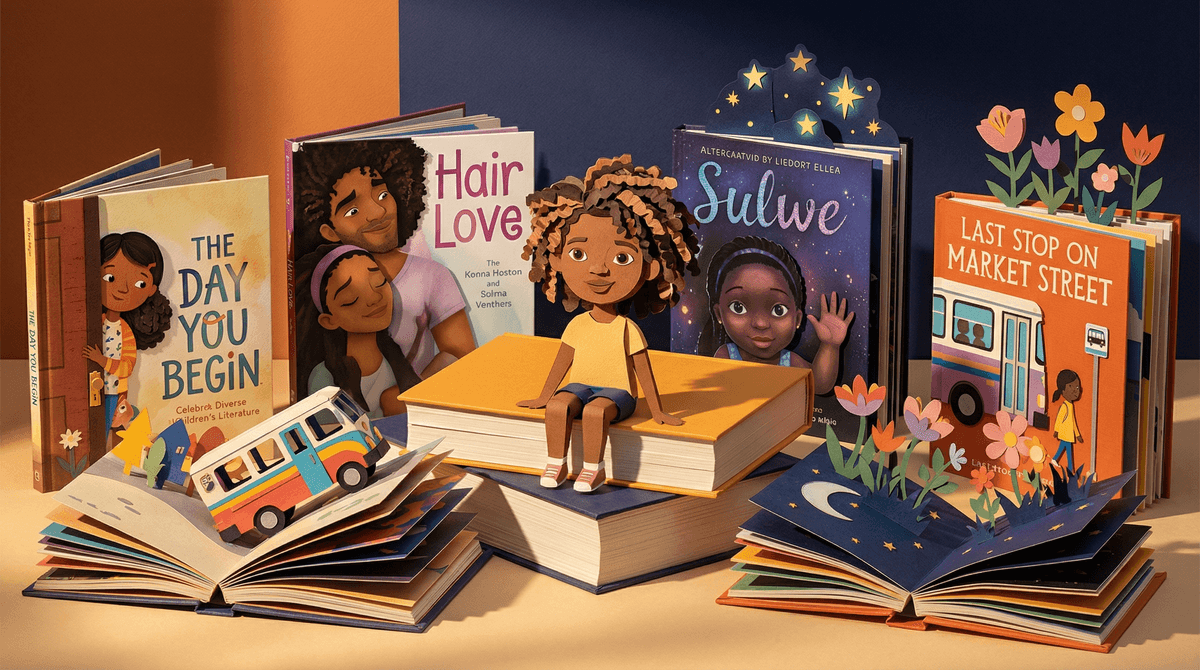
We're talking about books where kids of color are the main characters, living full lives, having adventures, being silly, being brave, being themselves — not just showing up as sidekicks or to teach white kids about racism. These are stories where Black, Brown, Asian, Indigenous, and multiracial kids see themselves reflected as complex, wonderful, ordinary, and extraordinary humans.
And here's the thing: these books aren't just for kids of color. Every kid benefits from seeing diverse characters as the heroes of their own stories. It builds empathy, expands worldviews, and normalizes what should already be normal — that kids of all backgrounds are worthy of being centered in the stories we tell.
The landscape has gotten SO much better in the last decade. When I was growing up, the options were... limited. Now? There are incredible authors, illustrators, and publishers creating gorgeous, funny, heartbreaking, joyful books that reflect the actual diversity of the world kids live in.
For kids of color: Representation matters. Full stop. When kids see themselves in books — their skin tone, their hair texture, their family structure, their cultural traditions — it sends a powerful message: You belong here. Your story matters. You are worthy of being the hero.
Research consistently shows that kids who see themselves positively represented in media have higher self-esteem and stronger identity development. They learn that their experiences are valid and valuable.
For all kids: Books are empathy machines. When white kids (and kids from any background) read about characters different from themselves, they develop understanding, compassion, and cultural awareness. They learn that "normal" isn't one thing — it's everything.
Plus, let's be honest: monoculture is boring. The best stories come from diverse perspectives and experiences. Kids deserve access to the full richness of human storytelling.
Picture Books (Ages 3-8)
This is where you'll find the most growth in recent years. Look for books where:
- Kids of color are just... kids — not teaching lessons about diversity, just being themselves
- Illustrations are beautiful and accurate — skin tones, hair textures, facial features rendered with care
- Stories span all genres — not just "issue" books, but silly books, adventure books, bedtime books, counting books
Some standouts:
- Hair Love by Matthew A. Cherry — A dad learning to do his daughter's hair. Sweet, funny, and won an Oscar as an animated short.
- Last Stop on Market Street by Matt de la Peña — A boy and his grandmother's bus ride through the city, finding beauty everywhere.
- Sulwe by Lupita Nyong'o — About colorism and learning to love your darkest skin tone. Gorgeous illustrations.
- The Day You Begin by Jacqueline Woodson — About feeling different and finding courage to share your story.
Early Readers & Chapter Books (Ages 6-10)
This is where kids start reading independently, and what they read shapes how they see the world. Look for series where diverse kids are the protagonists having regular kid adventures:
- Junie B. Jones has some diverse characters, though Junie herself is white — but worth mentioning because it's such a beloved series
- Ivy + Bean — One of the girls is Asian American, and it's just... not a thing. They're just friends having adventures.
- Dork Diaries — Nikki is Black (though not always clear from covers), navigating middle school drama
- The Questioneers series (Rosie Revere Engineer, Ada Twist Scientist, etc.) — Diverse kids being brilliant inventors and scientists
Middle Grade (Ages 8-12)
This age range has EXPLODED with incredible diverse authors and stories:
- New Kid by Jerry Craft — Graphic novel about a Black kid navigating a predominantly white private school. Won the Newbery. Funny and real.
- Front Desk by Kelly Yang — Chinese immigrant family running a motel, told through a 10-year-old's eyes
- Ghost by Jason Reynolds — First in a series about kids on a track team. Reynolds is a genius.
- The Vanderbeekers series — Multiracial family in Harlem, cozy and heartwarming
- Amina's Voice by Hena Khan — Pakistani American girl navigating friendship and identity
Young Adult (Ages 12+)
YA has been leading the charge on diversity for years:
- The Hate U Give by Angie Thomas — Powerful story about a Black teen witnessing police violence. Not light, but essential.
- Children of Blood and Bone by Tomi Adeyemi — West African-inspired fantasy epic
- American Born Chinese by Gene Luen Yang — Graphic novel about identity and assimilation
- I Am Not Your Perfect Mexican Daughter — About grief, family expectations, and being yourself
"But my kid is white — should they still read these?"
Yes. Absolutely yes. Centering diverse stories isn't taking anything away from white kids — it's giving them a fuller, richer understanding of the world. And honestly? Some of the best writing happening right now is by authors of color. Your kid deserves access to these incredible stories.
"How do I talk about race with my kids when reading?"
For younger kids, you can acknowledge differences matter-of-factly: "Look, this character has beautiful brown skin like your friend Maya!" For older kids, you can ask questions: "How do you think the character's experience is similar or different from yours? Why might that be?"
Don't make it weird. Kids notice race anyway — they're not colorblind. Naming it and celebrating it normalizes diversity.
"Where do I find these books?"
- Your library is your best friend — ask librarians for recommendations
- Look for the We Need Diverse Books
 organization's reading lists
 - Follow diverse book bloggers and educators on social media
- Check out publishers like Lee & Low Books, which specializes in diverse children's books
"Should I only buy books by authors who share the characters' identity?"
This is a nuanced question. Generally, #OwnVoices books (where the author shares the identity of their characters) offer authentic perspectives and lived experience. But there are also wonderful books by authors writing outside their own identity with care and research. Look for books that feel authentic, have been well-reviewed by people from that community, and avoid stereotypes.
Building a diverse home library isn't about checking boxes — it's about giving your kids access to the full spectrum of human experience. It's about kids of color seeing themselves as heroes, and all kids learning that "normal" looks a million different ways.
Start small. Add one new book to your rotation. Visit the library and let your kid pick something that looks interesting. Ask for recommendations from teachers or librarians who know your kid's interests.
And here's the beautiful thing: these aren't "vegetables" you're making your kids read. These are genuinely great books. Funny, exciting, moving, page-turners. Your kids will love them because they're good stories, full stop.
The world is diverse. Your kid's bookshelf should be too.
- Audit your current collection: What does your bookshelf look like? If it's mostly white characters, time to diversify.
- Make it normal: Don't make a big announcement about reading "diverse books" — just... read them. Let it be the new normal.
- Follow your kid's interests: If they love science fiction, find sci-fi with diverse characters. Into graphic novels? There are tons of diverse options.
- Talk about what you're reading: Ask questions, share observations, let books spark conversations about the world.
Need recommendations for a specific age or interest? Get diverse book suggestions based on what your kid already loves.