

TL;DR
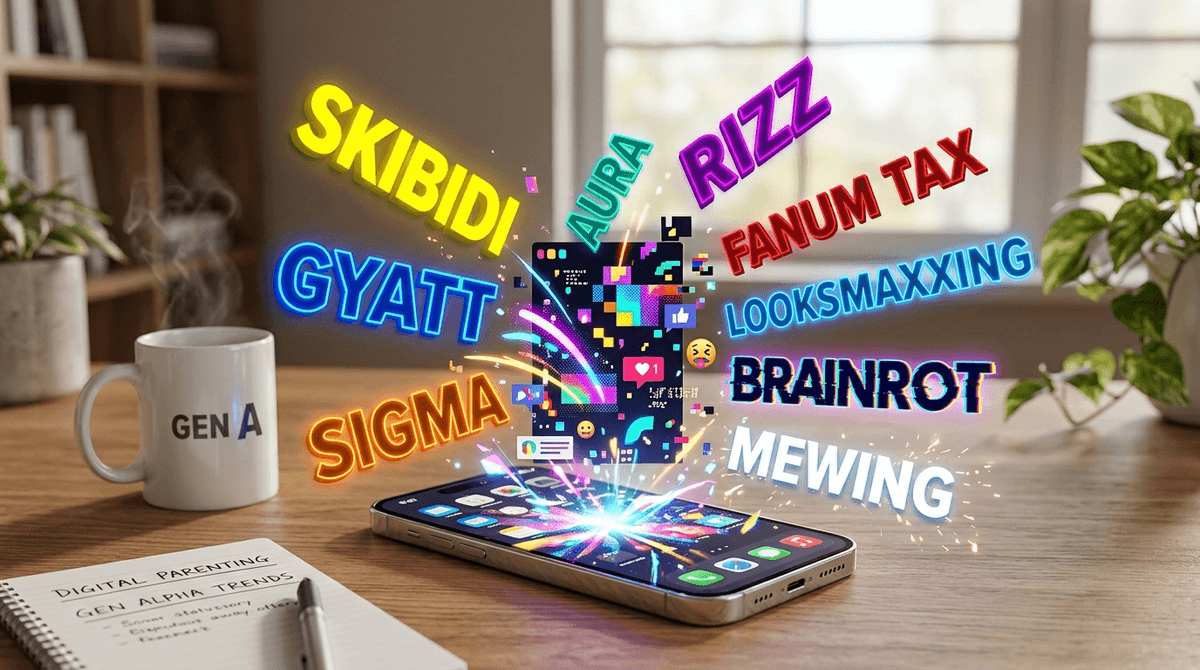
The 2026 digital landscape is dominated by "Brainrot"—a chaotic blend of surrealist humor, rapid-fire AI-generated memes, and hyper-niche slang like "Sigma," "Ohio," and "Rizz." While it looks like your child’s attention span is dissolving, it’s actually a new form of social currency.
Quick Links for Quality Alternatives:
- For Creativity: Minecraft or Scratch
- For Emotional Intelligence: Inside Out 2
- For Narrative Depth: The Wild Robot by Peter Brown
- For Analog Connection: Wingspan
Get a translation of the latest slang your kid is using
If you’ve walked past your ten-year-old’s room and heard a mashup of a singing toilet, a man screaming about "Fanum Tax," and a generic AI voiceover, you’ve encountered "Brainrot."
Technically, "Brainrot" refers to low-effort, high-stimulation content—usually found on YouTube Shorts or TikTok—that prioritizes dopamine hits over substance. It’s the digital equivalent of eating a bowl of pure frosting. It’s colorful, it’s fast, and it leaves you feeling a bit sick if you consume too much.
In 2026, this has evolved into the "Great Meme Reset." Memes used to last months; now, they are born, peak, and become "cringe" in about 72 hours. This creates an intense pressure for kids to stay "chronically online" just to understand what their friends are talking about at lunch.
You don’t need to use these words (in fact, please don’t, unless you want to see your child physically recoil), but you should know what they mean:
- Sigma: Originally meant a "lone wolf," but now it’s just the ultimate compliment for being cool or stoic. If your kid calls you a "Sigma," you’re doing something right.
- Ohio: Anything weird, cringey, or substandard. "That lunch is so Ohio" means it’s terrible.
- Skibidi: Derived from the Skibidi Toilet series. It’s largely a nonsense word used as an adjective for "bad" or "evil," but it's often just used as a filler word.
- Rizz: Short for "charisma." Usually refers to how much "game" someone has.
- Aura: A person’s vibe or "coolness" points. Doing something embarrassing results in "losing aura."
It’s easy to dismiss this as "garbage," but for kids, this is about community and surrealism.
The humor is intentionally nonsensical because it belongs entirely to them. We had "All Your Base Are Belong To Us" or "Badger Badger Badger"; they have Skibidi Toilet. It’s a way to build an "in-group" that adults simply cannot enter.
Additionally, the algorithms on platforms like Instagram are now so finely tuned that they provide a constant stream of "micro-joys." For a developing brain, that hit of novelty is incredibly addictive.
The biggest trend of 2026 isn't just memes; it's the shift toward AI companionship. Kids are moving away from traditional social media and toward apps like Character.ai, where they can roleplay with AI versions of their favorite fictional characters or celebrities.
While this can be a creative outlet for storytelling, it also raises questions about social development. If a child spends four hours a night talking to a bot that is programmed to never disagree with them, real-world friendships—with all their messy conflicts and compromises—can start to feel "too hard."
See risks and benefits of AI chatbots for kids
If you’re looking to steer your family toward content with a bit more soul, here are our top picks for 2026:
Ages 10+ This is the gold standard of "weird but good." It captures the surrealist energy kids love but pairs it with actual character development and a compelling (if slightly dark) plot. It’s a great bridge between "Brainrot" and actual storytelling.
Ages 12+ If your kid is into gaming, steer them toward titles with artistic merit. Hades II offers incredible music, voice acting, and a crash course in Greek mythology. It’s challenging and rewarding in a way that Roblox "obby" games aren't.
Ages 6+ Based on the brilliant The Wild Robot by Peter Brown, this film is a visual masterpiece. It deals with nature, technology, and empathy—the perfect antidote to the frantic pace of viral trends.
Ages 7-12 If you want to gamify learning without the "brainrot" side effects, Prodigy remains one of the best tools for making math feel like a fantasy adventure.
The danger of "Brainrot" isn't the content itself—it's the delivery system.
- The Infinite Scroll: Platforms like YouTube are designed to keep kids watching. In 2026, about 65% of parents report that their children struggle to stop watching "Shorts" even when they are hungry or tired.
- Hidden Commercialism: Many of these trends are manufactured by brands. That "cool" new soundbite might actually be a carefully placed ad for a new toy or game.
- The 'Sigma' Pipeline: Be aware that the "Sigma" meme can sometimes overlap with "alpha male" content that promotes exclusionary or sexist views. If your child starts talking about "Alpha" vs "Beta" dynamics, it’s time for a deeper conversation.
Check out our guide on navigating YouTube's algorithm for parents
Instead of banning the slang or mocking the videos, try the "Curious Anthropologist" approach.
- Ask for a Translation: "I heard you say 'Sigma' earlier. What does that actually mean in your friend group?"
- The 'Why' Question: "What’s the funniest part of Skibidi Toilet? I genuinely don't get it, help me understand."
- Share the 'Cringe': Show them a meme from your childhood (remember the "Hamster Dance"?). It helps them see that every generation has its own version of "Brainrot."
"Brainrot" is the 2026 version of "The Three Stooges" or "SpongeBob SquarePants"—it looks mindless to us, but it's the language of their generation. The goal isn't to eliminate it, but to balance it with "High-Wise" content that requires more than a 6-second attention span.
If your kid is still reading books like Percy Jackson and playing Catan on the weekends, they’re going to be just fine. The "Sigma" phase will pass, just like "Swag" and "YOLO" did before it.
- Check the Data: Take the Screenwise Survey to see how your child's app usage compares to other kids in their grade.
- Set a 'Shorts' Timer: If the infinite scroll is becoming an issue, use the built-in parental controls on YouTube to limit "Shorts" specifically.
- Introduce a 'Palate Cleanser': Tonight, instead of individual screens, try a round of Exploding Kittens. It’s fast, chaotic, and provides the same "high-energy" fun as a meme, but with actual human eye contact.