

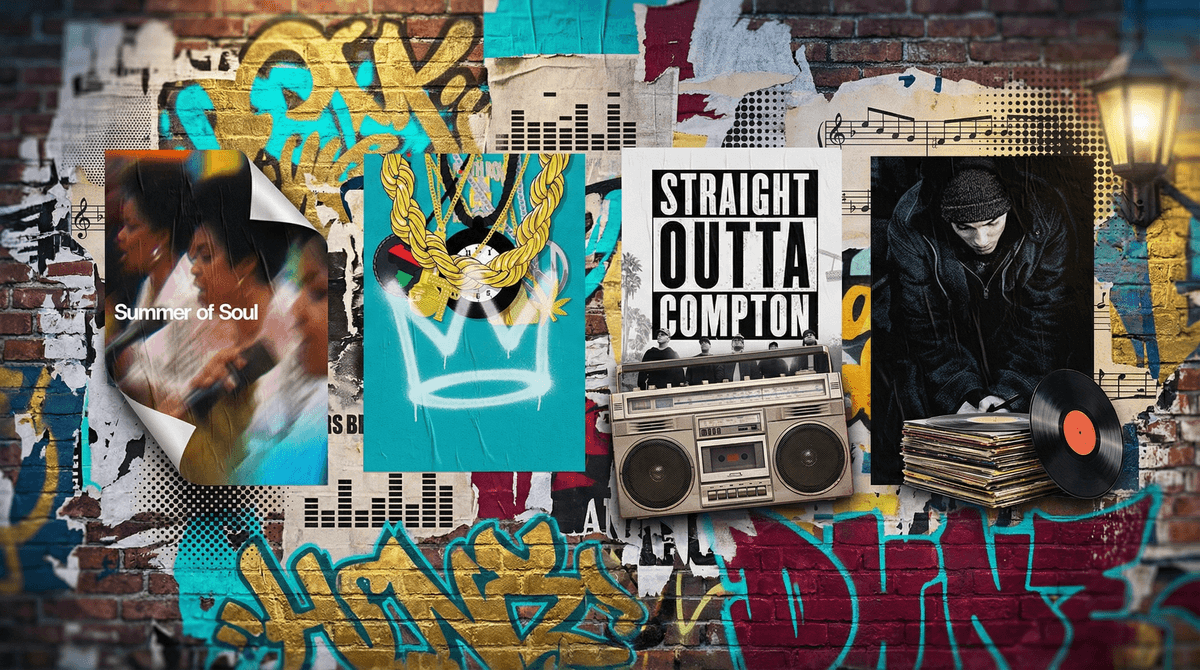
Hip-hop isn't just music—it's a culture born in the Bronx in the 1970s that transformed art, fashion, language, and how we think about creativity and resistance. And there's a whole catalog of films that tell this story, celebrate the movement, and show kids (and let's be honest, parents too) where their favorite beats, rhymes, and dance moves actually came from.
These aren't just "music movies." The best hip-hop films explore identity, community, systemic inequality, artistic innovation, and what it means to create something from nothing. They range from documentaries that trace the genre's origins to biopics about legendary artists to fictional stories set against hip-hop's backdrop.
For families, these movies can be incredible conversation starters—about history, about race and class in America, about what it means to use your voice when the world isn't listening.
Here's the thing: most kids know hip-hop as the dominant sound of popular culture. It's everywhere—TikTok sounds, video game soundtracks, commercials, you name it. But very few understand the context. They don't know about block parties in the South Bronx, about DJs like Kool Herc inventing the breakbeat, about how hip-hop gave voice to communities that mainstream media ignored.
Watching these films together gives you a chance to connect the dots. Why does that artist rap about struggle and survival? What does it mean when someone talks about "making it out"? Why is authenticity such a big deal in hip-hop culture?
Plus, these movies showcase incredible artistry—not just musically, but in dance, visual art, fashion, and storytelling. For kids interested in any creative field, seeing how hip-hop pioneers built something revolutionary with limited resources is genuinely inspiring.
Ages 8-12: Start Here
Jingle Jangle (Netflix) isn't strictly a hip-hop film, but it's a musical fantasy with hip-hop influences that celebrates Black creativity and innovation. It's a great entry point for younger kids—magical, fun, and full of heart.
For slightly older kids in this range, the documentary Hip-Hop Evolution (also Netflix) offers an accessible, educational look at the genre's history. You can watch episodes together and pause for questions.
Ages 13-15: Getting Real
8 Mile is the classic here, but be ready—it's rated R for language, some violence, and mature themes. Eminem's semi-autobiographical story about a young rapper trying to make it in Detroit is raw and authentic. If your teen is mature enough for the content, it's a powerful film about finding your voice and overcoming self-doubt.
Straight Outta Compton tells the story of N.W.A. and the birth of gangsta rap. It's also R-rated and doesn't pull punches about police brutality, systemic racism, and the music industry's exploitation of Black artists. But if you're ready to have those conversations, this film is historically important and incredibly well-made.
Ages 16+: The Full Picture
Summer of Soul is a documentary about the 1969 Harlem Cultural Festival—basically "Black Woodstock"—and it's absolutely stunning. It shows the cultural moment that preceded hip-hop and helps kids understand the continuum of Black music and activism.
For a fictional deep dive, All Eyez on Me (about Tupac) or Notorious (about Biggie) explore the lives of two of hip-hop's most influential and tragic figures. Both are rated R and deal with violence, drugs, and the East Coast/West Coast rivalry that ended in both artists' deaths.
Language and Content: Let's not sugarcoat it—most authentic hip-hop films have significant profanity, some violence, drug references, and discussions of systemic oppression. That's part of the story. Hip-hop emerged from communities dealing with poverty, police brutality, and marginalization. Sanitizing that erases the point.
That said, you know your kid. Some 13-year-olds can handle mature content with context; some 16-year-olds can't. The key is watching together (or at least being available for conversation afterward) and being ready to discuss what they're seeing.
The Commercialization Question: Many of these films also grapple with how hip-hop went from underground movement to global commercial force—and what was gained and lost in that transition. It's worth talking about: how do artists balance authenticity with making money? This connects directly to conversations about influencer culture and kids' own relationship with creating content online.
Representation Matters: Hip-hop culture is predominantly Black and Latino, and these films center those voices and experiences. For kids of color, seeing their culture celebrated on screen matters. For white kids, understanding that they're guests in this culture—appreciating it without appropriating it—is an important lesson.
Don't just hit play and zone out. These films work best as shared experiences:
-
Set expectations beforehand: "This movie has a lot of strong language because it's telling a real story about real people. Let's talk about why that language exists and what it means in context."
-
Pause for questions: If your kid looks confused or uncomfortable, hit pause. "Do you know what's happening here? Want to talk about it?"
-
Follow up afterward: "What surprised you? What did you think about how they showed [specific event/person]? Did anything bother you?"
For documentaries like Hip-Hop Evolution, you can literally use them as educational tools—watch an episode, look up the artists mentioned, listen to their music together.
Hip-hop movies aren't just entertainment—they're cultural education. They show kids where their favorite music came from, who built it, and what it meant (and still means) to those communities.
Yes, much of this content is mature. Yes, you'll need to have some real conversations about race, class, violence, and language. But those conversations are valuable. They help kids understand context, think critically about art and culture, and appreciate the difference between consuming something and understanding it.
Start with age-appropriate entry points, build up to the heavier stuff, and watch together when you can. These films are worth your time.
Ready to dive in? Check out our guides to specific films mentioned above, or get recommendations based on your kid's age and interests. And if your teen gets inspired to explore hip-hop history deeper, point them toward documentaries about hip-hop culture or even local community centers that teach DJing, breaking, or graffiti art.
The culture is still very much alive—and now your family has context for it.