

Every January, schools dust off their MLK lesson plans, and suddenly our kids are coming home asking big questions about segregation, protests, and why people were so mean to Dr. King. And honestly? This is one of those moments where the right book or movie can do what a thousand "well, sweetie..." conversations can't.
MLK-focused media ranges from picture books for kindergarteners to documentaries that'll make you cry in front of your tweens. The best ones don't just teach history—they spark conversations about courage, standing up for what's right, and how change actually happens (spoiler: it's messy and hard and takes forever).
The challenge? Finding content that's age-appropriate, historically accurate, and doesn't sanitize Dr. King into some kind of conflict-free saint. Because the real story—with all its tension and danger and moral complexity—is so much more powerful than the watered-down version.
Here's the thing: our kids are growing up in a world where they're going to see injustice. They already do—on their feeds, in their schools, in the news we can't quite shield them from. Teaching them about Dr. King isn't just a history lesson. It's giving them a framework for understanding how ordinary people create extraordinary change.
Plus, the "I Have a Dream" speech your kid will inevitably have to learn about in school? It's like teaching Beatles history by only playing "Yellow Submarine." It's one moment in a massive, complex, often dangerous movement. The books and movies that show the fuller picture—the Montgomery Bus Boycott, the Birmingham Campaign, the tension with other civil rights leaders, the actual risk of violence—those are the ones that stick.
And let's be real: if your kid can explain the lore of Minecraft or recite TikTok trends, they can handle nuanced conversations about civil rights. Kids are more capable of processing hard truths than we give them credit for.
Ages 4-7: Picture Books That Don't Patronize
Martin's Big Words by Doreen Rappaport is the gold standard here. Beautiful illustrations, uses King's actual words, and introduces the concept of peaceful protest without nightmares.
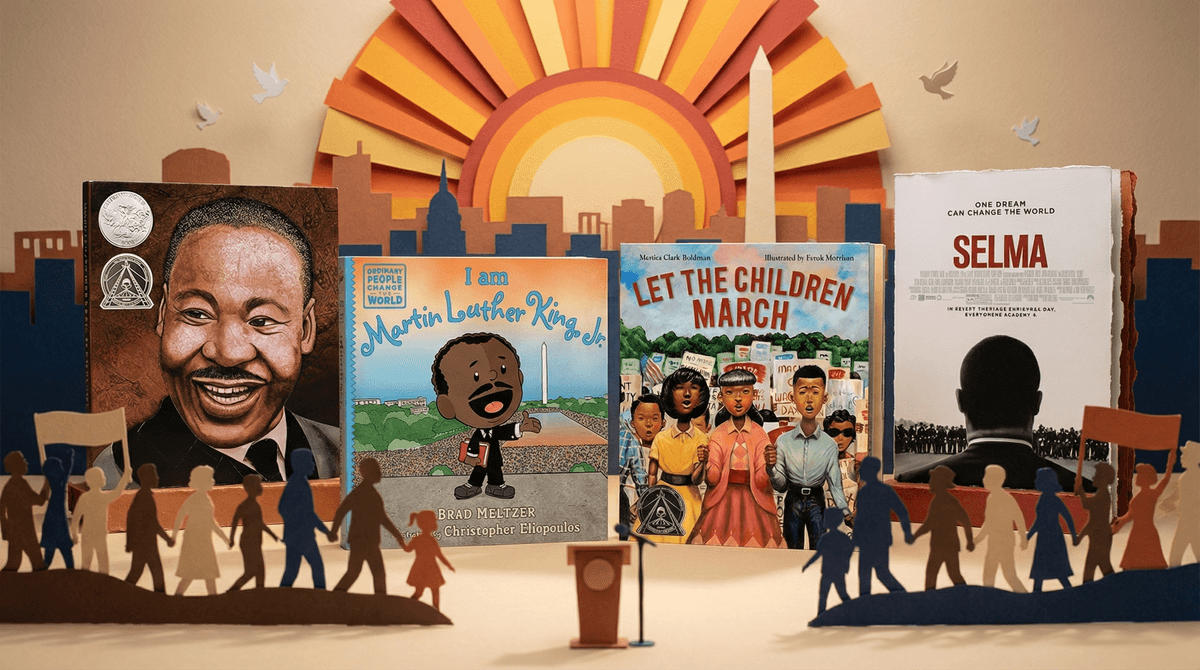
I Am Martin Luther King Jr. from the Ordinary People Change the World series is great for kids who love those "I Am..." books. It's gentle but doesn't skip the hard parts entirely.
Ages 8-12: Getting Real
Let the Children March by Monica Clark-Robinson tells the story of the Children's Crusade in Birmingham—when kids your child's age faced fire hoses and police dogs. It's powerful and age-appropriate, and it shows kids as agents of change, not just passive observers.
For movies, Selma is rated PG-13 for good reason (violence, thematic elements), but mature 11-12 year olds can handle it with parent co-viewing. It's the best film about King, full stop. It shows him as a strategic leader making hard choices, not just a dreamer.
The documentary Eyes on the Prize is incredible for this age group—especially episodes 1-6. Yes, it's from 1987, but the archival footage and interviews are unmatched. Watch it together and pause for questions.
Ages 13+: The Full Picture
Teens can handle King in the Wilderness, the HBO documentary about King's final years. It's less triumphant, more complicated—covering his opposition to the Vietnam War, tensions within the movement, and his assassination. It's the King that history class often skips.
The Autobiography of Martin Luther King Jr. (edited by Clayborne Carson) is dense but readable. If your teen is actually interested (not just doing homework), this is the move.
The Sanitization Problem: Most elementary school materials present King as this gentle, universally beloved figure who gave one speech and fixed racism. The reality? He was controversial, arrested 29 times, surveilled by the FBI, and considered dangerous by many white Americans. The books and movies that acknowledge this complexity are more valuable.
The "White Savior" Trap: Some older films about the civil rights movement center white characters as the heroes. The Help does this. Mississippi Burning definitely does this. They're not bad movies, but they're not the place to start when teaching about Black-led movements for Black liberation.
Co-Viewing Is Key: Don't just hand your kid a book or put on a documentary and walk away. These stories bring up questions—about violence, about why people hated Dr. King, about whether things are really better now. Be there for it. Learn how to have these conversations if you're feeling unsure.
Beyond MLK Day: The best approach isn't cramming all civil rights education into one January weekend. Integrate these books and films throughout the year. Pair them with stories about other civil rights leaders—Fannie Lou Hamer, John Lewis, Bayard Rustin, Ella Baker. King was extraordinary, but he wasn't alone.
Teaching kids about Martin Luther King Jr. through books and movies isn't about checking a box or fulfilling a school assignment. It's about showing them that change is possible, that courage looks like a lot of different things, and that the world they're inheriting was shaped by people who refused to accept injustice.
The right book or movie won't do all the work—you'll still need to have the conversations, answer the questions, and probably say "I don't know, let's look that up together" more than once. But it's a start. And in a world where your kid's screen time is probably dominated by Roblox and YouTube, spending an hour watching Selma together or reading Let the Children March before bed? That's time well spent.
This week: Pick one book or movie from the age-appropriate section above. Put it on hold at the library or queue it up for family movie night.
This month: Have a conversation about a current event through the lens of what your kid learned. "What would Dr. King say about this?" isn't a perfect question, but it's a starting point.
This year: Build a more complete picture. Read books about other civil rights leaders. Watch documentaries about other movements. Show your kids that justice work didn't end in 1968—it's still happening, and they can be part of it.
And if you want more recommendations for age-appropriate content that doesn't rot brains, check out our guide to educational shows and movies that actually teach something worth knowing.