

Look, we're living in the golden age of screens. iPads are babysitters, YouTube is the new Saturday morning cartoons, and Bluey episodes are currency in most households. But here's the thing: books still matter. Like, really matter. And getting little kids hooked on reading early isn't just some Pinterest-perfect parenting flex—it's one of the most impactful things you can do for their development.
The research is clear: kids who are read to regularly have larger vocabularies, better concentration, and stronger emotional intelligence. But beyond the data, there's something magical about curling up with a picture book that no screen can replicate. The physical closeness, the back-and-forth conversation, the way a three-year-old insists on reading the same book 47 nights in a row—it all builds connection and literacy in ways that are genuinely irreplaceable.
Screenwise Parents
See allThis isn't about being anti-screen (you're on Screenwise, after all). It's about being pro-book and understanding how to build that love of reading when everything else is louder, flashier, and more immediately gratifying.
Here's what books do that screens don't:
They slow things down. Picture books have pacing. You can linger on an illustration, go back a page, let your kid process what's happening. Compare that to the rapid-fire cuts of most kids' content on YouTube or Netflix—even the good stuff moves fast.
They build conversation. When you read together, you're talking. "What do you think will happen next?" "How do you think the bear feels?" "Have you ever felt like that?" These aren't passive experiences. They're interactive, but in a human-to-human way.
They develop attention spans. Sitting still for a 10-minute picture book is actually hard work for a toddler. It's building the muscle of sustained attention that will serve them in school and beyond.
They create rituals. Bedtime stories aren't just about the books—they're about the routine, the wind-down, the predictability. Kids thrive on this stuff.
Not all kids' books are created equal. Some are genuinely brilliant. Some are... well, let's just say they exist to sell toys. Here's how to find the good stuff:
For Ages 0-2: Board Books That Can Survive Anything
At this age, books are toys. They're going to get chewed, thrown, and used as building blocks. That's fine. Look for:
- High-contrast images (babies love bold colors and patterns)
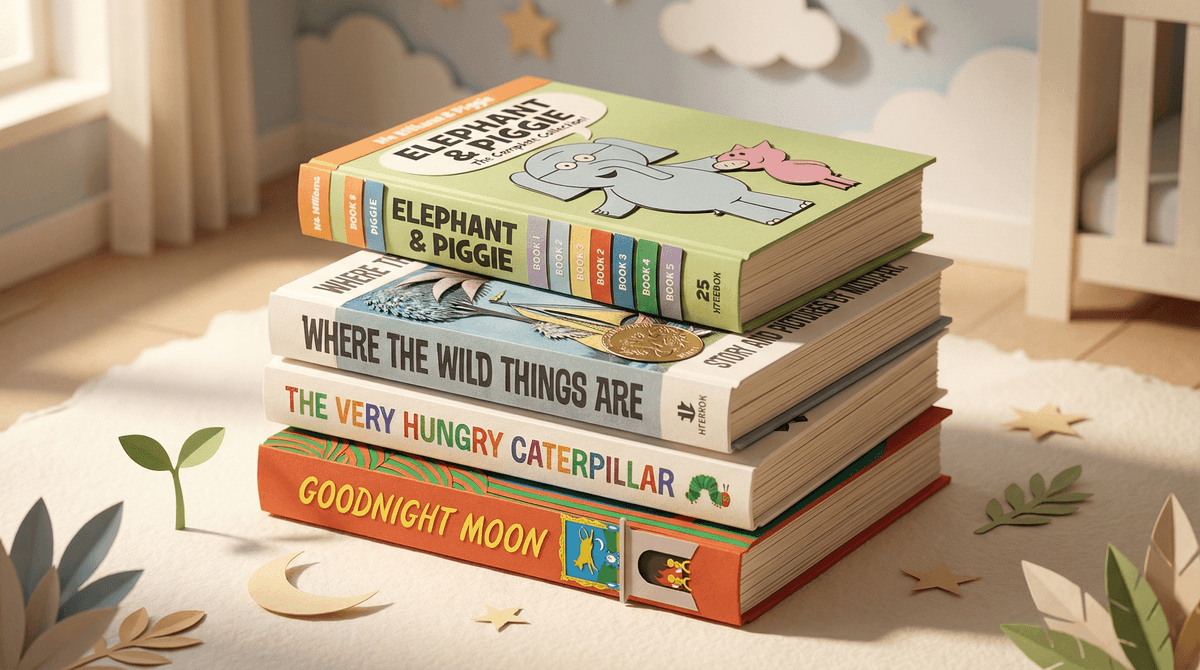
- Simple, rhythmic text (Goodnight Moon is a classic for a reason)
- Touch-and-feel elements (Pat the Bunny has been crushing it since 1940)
- Books about their world (faces, animals, everyday objects)
Don't stress about "reading" at this age. Just make books part of the environment. Point at pictures. Make animal sounds. Let them turn pages (or try to eat them).
For Ages 2-4: Picture Books with Personality
This is the golden age of picture books. Kids are starting to follow stories, identify with characters, and have opinions about what they like. Look for:
- Strong illustrations (The Very Hungry Caterpillar has sold 50 million copies because Eric Carle knew what he was doing)
- Repetition and predictability (kids love knowing what comes next)
- Humor (anything by Mo Willems, especially the Elephant and Piggie series)
- Emotional intelligence (The Feelings Book by Todd Parr is fantastic for this)
Hot take: Don't avoid books with mild conflict or sadness. Kids need to process emotions through stories. Where the Wild Things Are is about anger and reconciliation. That's good stuff.
For Ages 4-6: Early Readers and Chapter Books
This is when some kids start reading independently, but even if they can decode words, they still need you to read to them. Look for:
- Leveled readers (like the "I Can Read" series) for practicing
- Longer picture books with more complex plots
- Early chapter books like Junie B. Jones or Magic Tree House
- Graphic novels (yes, they count! Dog Man is basically crack for this age group)
Don't get hung up on reading levels. If your kindergartener wants to hear Harry Potter, go for it. If your first grader still loves board books, that's fine too.
Library cards are your best friend. Seriously. You don't need to buy every book. Let kids pick out a stack each week, even if some choices are questionable. The autonomy matters.
Rereading is not boring—it's brain-building. When your kid wants the same book every night for three months, they're not being annoying. They're mastering language patterns, anticipating plot points, and finding comfort in predictability. Lean into it.
Screen adaptations can be a gateway, not a replacement. Watched Encanto 400 times? Great! Now read picture books about Colombia, family dynamics, or magical realism. Use their screen interests as a bridge to books.
Audiobooks count. If your kid will sit through Brains On! or story podcasts like Wow in the World, they're building listening comprehension and narrative skills. That's literacy.
Don't force it. If reading time becomes a battle, you've lost. Make it cozy, make it fun, make it optional. Some kids are just slower to warm up to books, and that's okay.
Building a love of reading isn't about hitting some arbitrary milestone or keeping up with other families. It's about making books a natural, enjoyable part of your kid's world. Read together. Let them see you reading. Talk about stories. Visit libraries. Make it normal.
And yeah, they're still going to ask for screen time. They're still going to want to watch Paw Patrol or play Toca Boca. That's fine. This isn't either/or. But when you carve out that 15 minutes before bed to read together, you're giving them something no algorithm can provide: your attention, your voice, and a shared story that's just yours.
Next step: Hit the library this week. Let your kid pick three books—any three books. See what happens. You might be surprised.