

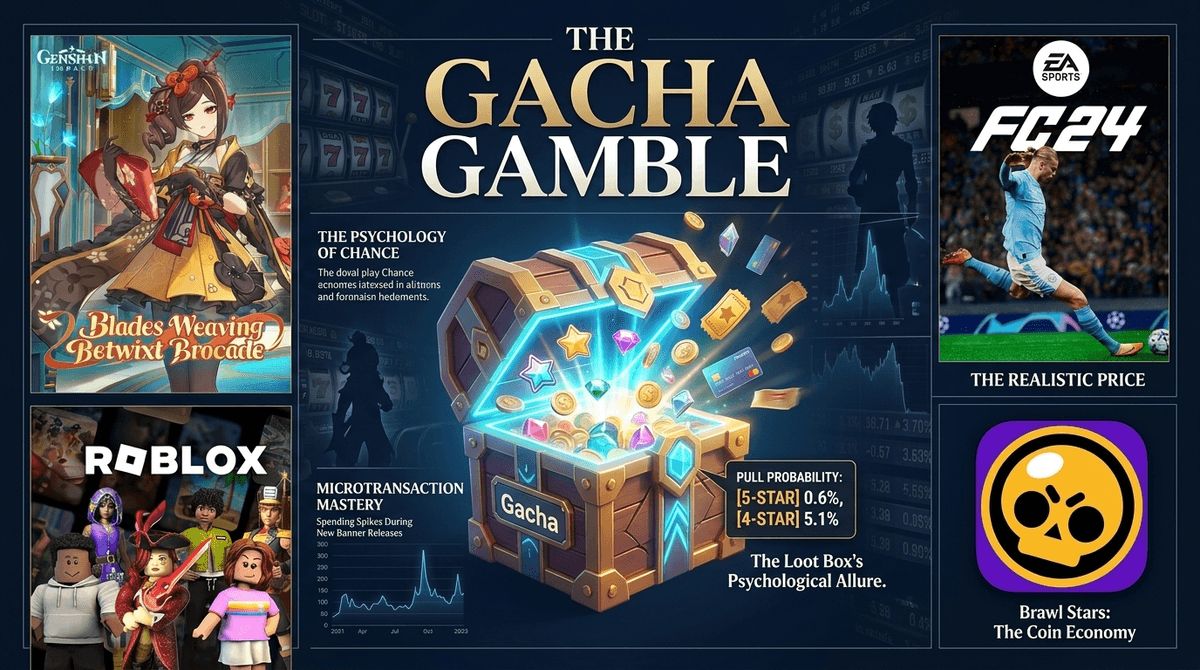
TL;DR: Loot boxes and "Gacha" mechanics are essentially digital slot machines for kids. They use sophisticated psychological tricks—like "pity systems" and limited-time banners—to keep players spending real money on randomized rewards. If your kid is playing Genshin Impact, Brawl Stars, or certain Roblox games, they are engaging with these systems. The best move is to disable in-app purchases at the OS level and have a "no-gambling" talk before the credit card bill arrives.
Learn how to disable in-app purchases on iPhone and Android
If you’ve ever seen your kid staring at a spinning wheel or a glowing chest in a game with the intensity of a high-stakes poker player, you’ve met the "Gacha" mechanic.
The term "Gacha" comes from Japanese "Gashapon" machines—those plastic capsules you'd get for a quarter at the grocery store. In the digital world, it’s a loot box: a virtual container that costs money (or "earned" in-game currency) to open, containing a randomized prize.
The catch? You usually don't get the cool legendary character or the "Godly" sword. You get a digital sticker or a common pair of boots.
The "Pity" System: The Ultimate Hook
Game developers aren't stupid. They know that if a kid loses 50 times in a row, they might quit. To prevent this, they invented "Pity Systems." This is a mechanic where the game guarantees a high-level reward after a certain number of "pulls."
It sounds nice, right? "Oh, the game is being fair!"
Actually, it’s the opposite. It’s a psychological sunk-cost trap. If a kid knows they are "only 10 pulls away" from a guaranteed legendary character in Genshin Impact, they are far more likely to beg for $20 to hit that "pity" threshold. It turns a game of chance into a calculated investment—except the investment is a digital sprite that has zero real-world value.
Kids love the rush. The lights, the sound effects, and the "Near Miss" animations (where the rare item slowly slides past on a ticker) are all designed by behavioral psychologists to trigger dopamine hits.
For kids, owning a rare character isn't just about gameplay; it’s about social currency. If everyone at the lunch table has the new skin in Brawl Stars, the pressure to "pull" for it is immense. It’s FOMO (Fear Of Missing Out) weaponized against a brain that won't have a fully developed prefrontal cortex for another decade.
Not all games use these mechanics, but some of the most popular titles on the planet are built entirely around them.
This is the poster child for Gacha. It’s a beautiful, high-quality open-world game, but it is effectively a "waifu/husbando" casino. To get the best characters, you have to "Wish" for them using Primogems. While you can earn these for free, the pace is agonizingly slow, making the $99.99 currency packs look very tempting to a frustrated teenager.
Supercell has toyed with removing loot boxes (Starr Drops), but the game still leans heavily on randomized rewards to unlock "Brawlers." It’s flashy, fast-paced, and very effective at making kids feel like they’re just one box away from greatness.
Roblox isn't one game; it’s a platform. However, some of its biggest hits, like Pet Simulator 99, are essentially gambling simulators for 8-year-olds. Kids spend Robux to hatch eggs with a 0.0001% chance of getting a "Huge" pet. It’s egregious, and honestly, a bit predatory.
If your kid is into soccer, they’re probably playing Ultimate Team. This mode is built entirely on opening "packs" of players. It’s been the subject of government lawsuits in Europe because it so closely mimics gambling.
When is a kid "ready" for Gacha?
- Ages 5-10: Generally, never. At this age, kids don't understand the value of money versus the probability of a win. They see a button, they want the prize, and they will click until the bank account is empty.
- Ages 11-14: This is the "teaching" phase. If they play these games, it should be with a strict zero-dollar budget. Let them learn how the "free-to-play" grind works. If they want to spend their own allowance, it’s a great time for a lesson on "Return on Investment."
- Ages 15+: They can likely handle the logic, but even teens are susceptible to the FOMO of "limited-time banners."
If you’re tired of the "Dad, can I have $10 for a Mega Box?" conversation, there are incredible games that offer 100+ hours of fun for a single, one-time price.
The ultimate "cozy" game. No loot boxes, no ads, just farming, friendship, and a sense of accomplishment that isn't tied to a credit card. It’s available on everything from iPhones to consoles.
While Minecraft has a marketplace for skins, the core game is a creative sandbox. You don't "win" by buying better gear; you win by building cool stuff.
For the younger crowd, this app does have in-app purchases (you buy specific locations or characters), but they are not randomized. You know exactly what you are buying. It’s a "digital toy store" rather than a "digital casino."
Check out our guide to the best "one-and-done" paid games for kids
You don't need to be a killjoy, but you do need to be real. Try these talking points:
- The "Casino" Comparison: "You know how casinos are designed to make people lose money so the owner gets rich? These games are designed by the same types of people. The 'sparkles' when you open a box are there to trick your brain."
- The Math Lesson: Look up the "drop rates" together. Most games are legally required to list them now (usually in tiny font in the info menu). Seeing that they have a 0.5% chance of getting the item usually takes the wind out of their sails.
- The "Working for It" Talk: "If this skin costs $20, and you earn $5 an hour doing chores, is this digital outfit worth four hours of raking leaves?"
If your child is playing these games, you need to be the "house" that always wins.
- Password Protect Everything: Never, ever have your credit card "saved" on a device a child uses without a required password or biometric check for every single transaction.
- Use Gift Cards: If you decide to let them spend money, use a physical gift card. When the $25 is gone, it’s gone. It provides a tangible limit that digital "gems" don't.
- Monitor the "Grind": Sometimes kids who can't spend money will spend 8 hours a day "farming" currency to get a pull. This is just as addictive. If the game feels like a job, it might be time for a break.
Loot boxes and Gacha mechanics aren't going away—they are too profitable. But as an intentional parent, you can strip away the "magic" and show your kids the gears behind the machine.
Gaming should be about skill, creativity, and fun—not about who has the biggest limit on their Apple ID. If a game feels more like a slot machine than a toy, it’s okay to say "this one isn't for us."
Get a script to talk to your teen about Gacha spending
Next Steps:
- Check the "In-App Purchases" section of your child's favorite game in the App Store.
- Set up Family Sharing to approve every purchase request.
- Download a "clean" game like Stardew Valley to show them what gaming without the "gamble" looks like.