

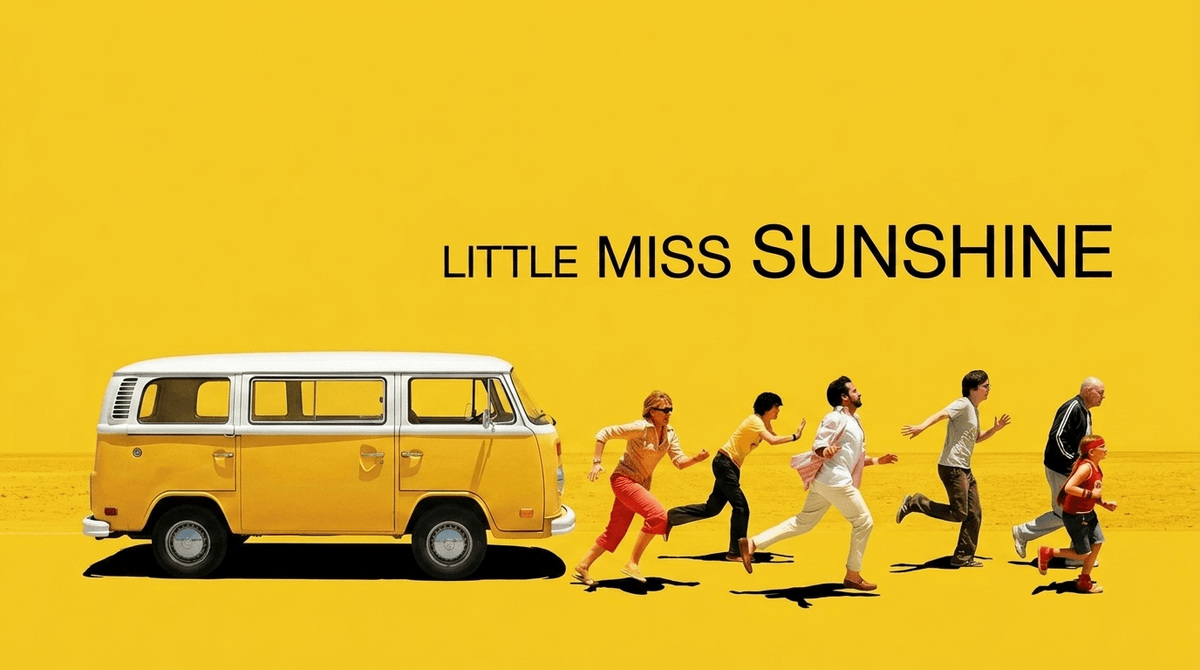
TL;DR: Little Miss Sunshine is the 2006 indie darling that remains the ultimate antidote to today’s "perfection-obsessed" social media culture. It’s rated R for a lot of F-bombs and some heavy themes (suicide, drug use), but for families with teens, it’s a masterclass in self-acceptance.
If you’re looking for more movies that tackle the awkwardness of growing up, check out Eighth Grade, Lady Bird, or The Edge of Seventeen.
If you missed this one during its original run, Little Miss Sunshine follows the Hoover family—a group of six wildly different, deeply flawed individuals—as they pile into a yellow Volkswagen bus to drive from New Mexico to California. The goal? To get seven-year-old Olive into the "Little Miss Sunshine" beauty pageant.
It’s a road trip movie, but it’s really a "deconstruction of the American Dream" movie. You’ve got the dad who is obsessed with his "9-step path to success," the teenage son who has taken a vow of silence until he can join the Air Force, the foul-mouthed grandpa who was kicked out of his retirement home for snorting heroin, and the uncle who is recovering from a suicide attempt.
It sounds bleak on paper, but it’s actually one of the funniest, most heart-wrenching explorations of what it means to be a "loser" in a world that only cares about winners.
We live in an era of "looksmaxxing," "main character energy," and constant digital comparison. Our kids are growing up in a world where Instagram and TikTok filters can make a literal toddler look like a polished runway model.
The pressure to be "extraordinary" is baked into every algorithm. If you aren't a "winner" or a "prodigy" or "aesthetic," you're "mid" or "Ohio" (and not in the good way).
Little Miss Sunshine hits differently in 2026 because it celebrates the "un-aesthetic." It shows that the "winners" (the polished, robotic kids at the pageant) are often the ones who are the most miserable, while the "losers" (the Hoovers) find a weird, chaotic kind of grace in just being themselves.
Let’s talk about that R rating.
By today’s standards, Little Miss Sunshine would probably be a "hard PG-13." There is no graphic violence and no sex scenes. However, there is:
- Language: The F-word is used frequently. It’s used for comedic effect and to express genuine frustration, but it is definitely there.
- Drug Use: Grandpa (Alan Arkin) is a heroin user. He doesn't do it on screen in a "glamorized" way—it’s portrayed as a sad, messy habit of an old man who has given up on social norms.
- Mental Health: The movie starts with Uncle Frank (Steve Carell) coming home after a suicide attempt. It’s handled with a dry, dark humor that might be jarring for younger kids but feels very "real" to older teens who are already navigating these conversations in their peer groups.
- Body Image: The pageant world is depicted as creepy and hyper-sexualized (which is the point).
Screenwise Recommendation: Ages 13+ or 14+. If your teen can handle the chaotic energy of The Bear or the emotional weight of Everything Everywhere All At Once, they can handle this.
This isn't just a movie you put on and scroll through your phone. This is a "watch together and talk about it over pizza" movie. Here are the three big topics that will inevitably come up:
1. The Toxicity of "Winning"
Richard (the dad) is obsessed with his 9-step program. He tells his daughter, "A real loser isn't someone who doesn't win. A real loser is someone who's so afraid of not winning, they don't even try."
While that sounds like a typical "motivational speaker" line, the movie subverts it. It shows how his obsession with winning almost destroys his marriage and his relationship with his kids.
The Talk: Ask your kids if they feel like they have to be "the best" at their hobbies (gaming, sports, art) for it to be "worth it."
2. Body Image and the "Superfreak" Moment
The climax of the movie is Olive’s performance at the pageant. Without spoiling it, she doesn't do a traditional pageant routine. She does something Grandpa taught her, and it is "inappropriate" in the most glorious, rebellious way possible.
The pageant judges are horrified because she isn't "performing" girlhood the way they want her to. But her family? They jump on stage and join her.
The Talk: This is a great bridge to talk about TikTok beauty standards. Olive is a normal-looking kid who loves ice cream. The pageant girls look like miniature adults. Which one seems happier?
3. The "Vow of Silence" and Teen Angst
Dwayne (Paul Dano) is the quintessential brooding teen. He hates everyone. He’s reading Nietzsche. He won’t talk. We’ve all seen a version of this in our own homes (even if it’s just the "one-word-answer" phase).
His character arc is a beautiful reminder that teen anger is often just a mask for fear and disappointment. When his dream is crushed, his silence breaks in a way that is incredibly raw.
If your kids are spending hours watching Skibidi Toilet or mindless "challenge" videos on YouTube, Little Miss Sunshine is a necessary palate cleanser.
It’s "slow media." It requires empathy. It asks the viewer to sit with uncomfortable emotions—grief, failure, embarrassment—and find the humor in them.
In a world where Roblox is constantly gamifying social status through "skins" and digital currency, a movie about a family that is "broke and failing" but still loves each other is a radical act of digital wellness.
Little Miss Sunshine is an indie classic for a reason. It’s a messy, loud, sweary, and deeply loving portrait of a family that refuses to fit into a box.
It’s the perfect movie for the "intentional parent" who wants to move past the "everything is fine" surface level and get into the "life is hard and that’s okay" reality.
Next Steps:
- Check the "vibe" of your household—if things feel high-pressure lately, this is the movie to watch.
- Be prepared to explain what a "yellow VW bus" is (and why it has to be push-started).
- Expect some questions about Grandpa’s "habits"—be honest, keep it age-appropriate, and use it as a teaching moment.
Find more movies about dysfunctional but loving families
Want to see how your family's media diet compares to your community? Take the Screenwise Survey to get your personalized Digital Wellness profile.