

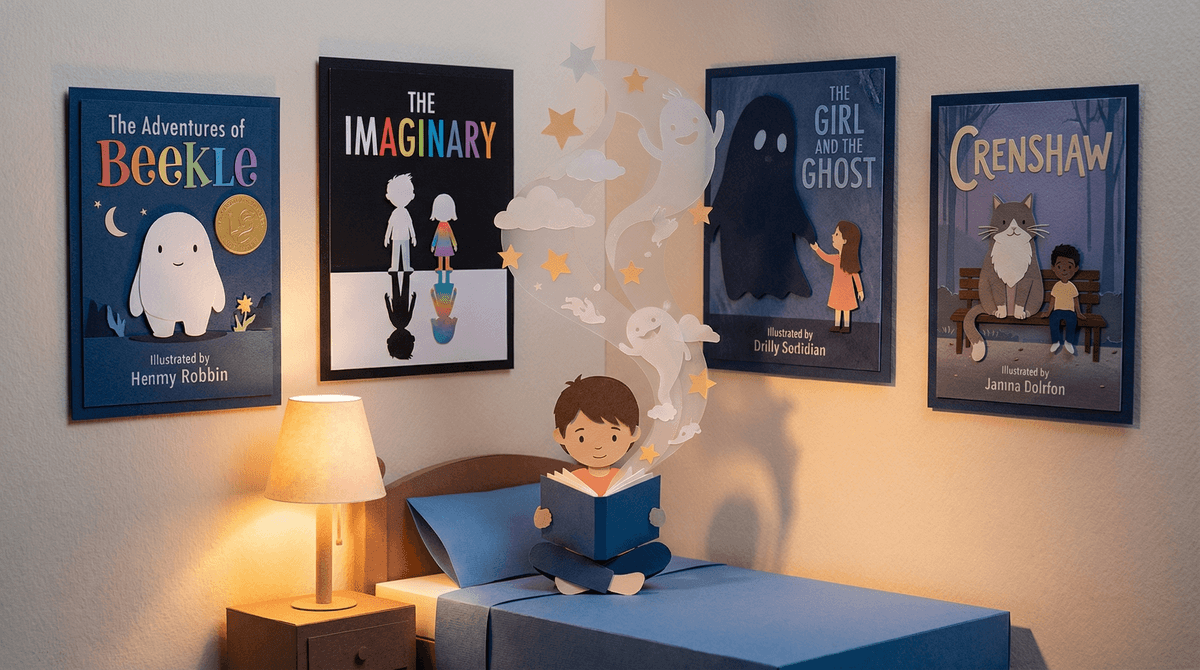
Books about imaginary friends are stories where a character has an invisible companion—sometimes magical, sometimes mundane, always meaningful. These range from picture books like The Imaginary to middle-grade novels like Foster's Home for Imaginary Friends tie-in books, and they tap into something deeply relatable for kids: the power of imagination and the comfort of companionship that exists entirely on their own terms.
Here's the thing about imaginary friends—they're incredibly common. Research shows that up to 65% of children have an imaginary companion at some point, usually between ages 3-7, though some kids maintain these friendships well into elementary school. And yet parents often feel weird about it. Is it normal? Is my kid lonely? Should I be concerned?
Books about imaginary friends do something brilliant: they normalize this experience while also exploring the emotional work these invisible companions do for kids. They're not just about "pretend play"—they're about processing feelings, practicing social skills, working through fears, and yes, sometimes just having fun when you're bored.
Kids love imaginary friend books because they validate an experience adults often dismiss. When you're six and your parents are like "uh huh, sure" about your invisible dragon friend, but then you read a book where the main character's imaginary friend is treated as real and important? That hits different.
These stories also tend to explore themes that resonate with childhood experiences:
- Loneliness and belonging - Often the imaginary friend appears when a kid is struggling socially or going through a transition
- Growing up and letting go - Many of these books deal with what happens when you "outgrow" your imaginary friend
- Being seen and understood - The imaginary friend often "gets" the kid in ways real people don't
- Agency and control - Kids can't control much in their lives, but they have total control over their imaginary friends
Books like The Girl and the Ghost by Hanna Alkaf or Crenshaw by Katherine Applegate take this concept and add layers of emotional depth—these aren't just fun companions, they're coping mechanisms for kids dealing with real stuff like poverty, family stress, or social anxiety.
Ages 3-5: Picture Books At this age, kids are often in the thick of their own imaginary friend phase. Books like Beekle: The Unimaginary Friend by Dan Santat (which won the Caldecott Medal) are perfect—simple, sweet, and affirming. The imaginary friend is presented matter-of-factly, no big deal, just part of life.
Ages 6-8: Early Readers This is when kids start to become more self-conscious about their imaginary friends. Books like Invisible Emmie by Terri Libenson (though this is more about an imaginary "ideal self" than a friend) or the Bink and Gollie series help bridge the gap between fantasy and reality.
Ages 8-12: Middle Grade This is where imaginary friend books get emotionally complex. Crenshaw deals with housing insecurity. The Imaginary by A.F. Harrold explores what happens when an imaginary friend's kid doesn't need them anymore. These books ask bigger questions: What does it mean to be real? What do we do with the parts of ourselves we've outgrown?
Ages 12+: YA Territory By middle school, most kids have moved past imaginary friends, but books that explore the concept metaphorically—like The Invisible String or even Bridge to Terabithia (where imagination creates a whole world, not just a friend)—can still resonate deeply.
These books are not just for kids with imaginary friends. Even if your kid has never had an invisible companion, these stories explore universal themes: friendship, loss, imagination, growing up, emotional regulation. They're valuable for all kids.
They can be surprisingly emotional. Many imaginary friend books deal with saying goodbye—to childhood, to innocence, to the parts of ourselves that helped us cope. Books like Crenshaw or The Imaginary might make your kid (and you) cry. That's okay. That's actually the point.
They validate feelings without pathologizing imagination. If your kid has an imaginary friend and you're worried about it, these books can be reassuring. They show imaginary friends as normal, healthy, and temporary—a tool kids use and then naturally move past when they're ready.
Watch for the "letting go" theme. Some of these books can be bittersweet or even sad when the imaginary friend disappears or gets forgotten. If your kid is particularly sensitive or going through a tough transition, you might want to preview the ending. Not saying avoid it—just be prepared for a conversation.
Read them together, especially the first time. These books often bring up feelings—about loneliness, about growing up, about what's real and what's not. Your kid might have questions or need to process.
Don't force connections. If your kid has an imaginary friend, don't be like "oh just like in the book!" Let them make their own connections. If they want to talk about it, great. If not, that's fine too.
Use them as conversation starters. Books like Crenshaw can open up discussions about stress, coping mechanisms, and emotional support. "What do you think about how Jackson handled his worries?" is less direct than "Are you worried about anything?"
Balance with other types of books. Imaginary friend books are great, but make sure your kid's reading diet includes books about real friendships, family relationships, and other aspects of life. Check out our guide to building a balanced reading list.
Books about imaginary friends are some of the most emotionally intelligent children's literature out there. They take something that adults often find weird or concerning and show it for what it really is: a creative, healthy way kids process their inner lives.
Whether your kid has an imaginary friend or not, these books offer valuable lessons about imagination, empathy, and the bittersweet process of growing up. They're not "just" fantasy—they're deeply real stories about how we cope, how we connect, and how we hold onto the parts of childhood that matter while letting go of the parts we've outgrown.
And honestly? In a world where we're all worried about screen time and digital distraction, books that celebrate the power of imagination feel pretty radical. Want more book recommendations that encourage creativity and emotional growth?
- Start with one book that matches your kid's age and current interests
- Don't overthink it - if your kid has an imaginary friend, they're fine, this is normal
- Use these books as bridges to talk about feelings, transitions, and what helps your kid feel safe and understood
- Explore more books that support emotional development