

Look, I get it. We're all trying to raise kids who can handle disappointment, bounce back from failure, and navigate hard emotions without completely falling apart. And while there's no shortage of apps promising to teach "emotional intelligence" or games that claim to build "grit," sometimes the old-school solution is actually the best one.
Books—actual stories with characters who struggle and fail and get back up—are one of the most powerful tools we have for building resilience in kids. Not because they're morally superior to screens (though the research on deep reading versus scrolling is pretty compelling), but because stories let kids practice hard emotions in a safe space. They get to see characters mess up, feel devastated, and figure it out. It's like an emotional gym where the stakes are low but the lessons stick.
Screenwise Parents
See allSo here's a curated list of books that actually build the kind of resilience we're hoping for—organized by age, because what works for a second grader definitely won't land with a middle schooler.
Before we dive into specific titles, let's talk about why this matters. When kids read stories (or listen to them), they're doing something pretty remarkable: they're stepping into someone else's struggle and living through it. They feel the character's disappointment when they don't make the team. They experience the fear of starting at a new school. They sit with the grief of losing a pet or a friendship.
This isn't just entertainment—it's emotional rehearsal. Research shows that narrative fiction actually helps kids develop theory of mind, the ability to understand that other people have different thoughts, feelings, and perspectives. And that skill is foundational to resilience, because it helps kids understand that their current struggle isn't the whole story.
Compare that to most apps and games, which are designed to keep kids in a flow state where they're constantly succeeding (or at least constantly engaged). Roblox and Minecraft can be creative and social, sure, but they're not really teaching kids how to sit with discomfort or process failure in the same way a good story does.
Ages 4-7: Building the Foundation
The Koala Who Could by Rachel Bright This one's about a koala who's terrified of change and has to leave his comfort zone. It's gentle but doesn't sugarcoat that change is scary. Perfect for kids starting school or dealing with transitions.
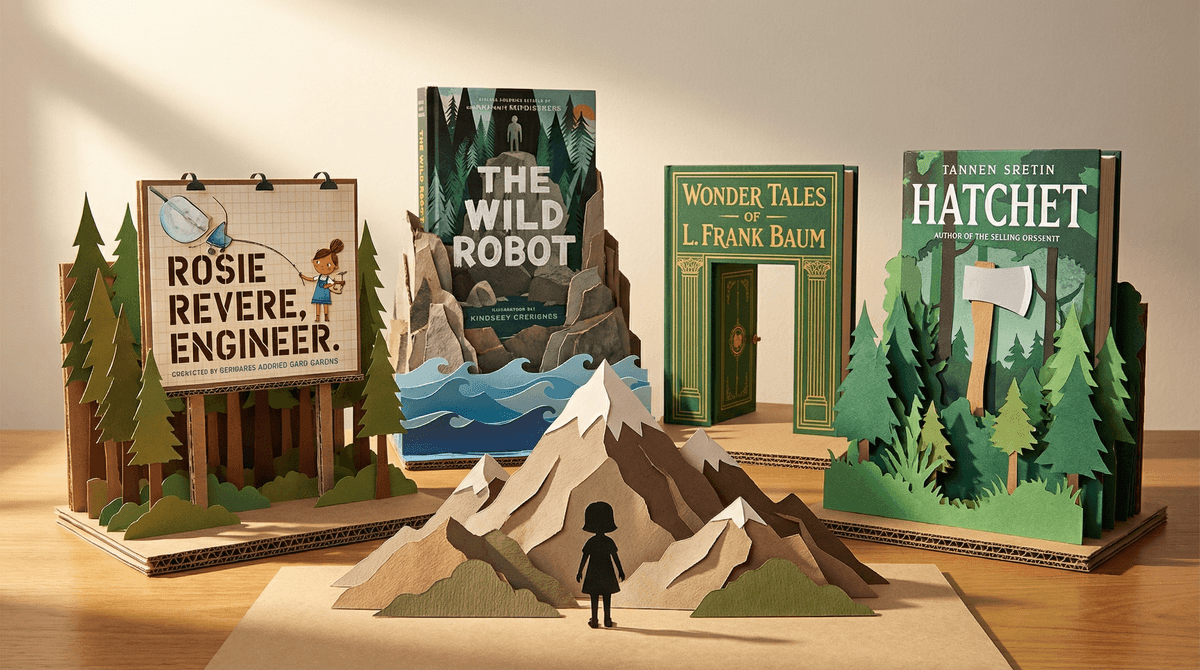
Rosie Revere, Engineer by Andrea Beaty Rosie builds things that fail spectacularly, and she has to learn that failure is part of creating. The rhyming makes it fun, but the message about persistence is what sticks.
The Invisible Boy by Trudy Ludwig About a kid who feels unseen at school until someone notices him. It's a beautiful entry point for talking about loneliness, inclusion, and how small acts of kindness matter.
Ages 8-11: Getting Real About Hard Stuff
Wonder by R.J. Palacio If you haven't read this yet, move it to the top of your list. Auggie's story about starting school with a facial difference is heartbreaking and hopeful. The multiple perspectives show kids that everyone's dealing with something, and that kindness is a choice.
Fish in a Tree by Lynda Mullaly Hunt About a girl with dyslexia who's been hiding her reading struggles by acting out. It's fantastic for kids who feel "different" or who struggle academically—and for their siblings who need to understand that smart looks different for everyone.
Hatchet by Gary Paulsen A survival story where a kid has to figure everything out after a plane crash. It's intense, but it shows resourcefulness and mental toughness in a way that feels earned, not preachy.
The Wild Robot by Peter Brown A robot learns to survive on an island by adapting and building relationships. It's about belonging, adaptation, and finding your place—themes that resonate hard with this age group.
Ages 12+: Building Perspective and Grit
The Hunger Games by Suzanne Collins Yes, it's dystopian and intense, but Katniss is one of the best examples of resilience in YA literature. She's not fearless—she's terrified—but she keeps going anyway. That's the lesson.
A Long Walk to Water by Linda Sue Park Based on a true story about a boy walking across Sudan to escape war. It's devastating and inspiring, and it gives kids serious perspective on what resilience actually looks like.
Ghost by Jason Reynolds About a kid with a traumatic past who joins a track team and has to learn to channel his anger and pain into something productive. Reynolds writes kids as they actually are—messy and real—which makes the growth feel authentic.
Speak by Laurie Halse Anderson This one deals with trauma and finding your voice after assault. It's heavy, but for older teens, it's an important story about survival and the long road to healing. Definitely preview this one and be ready to talk.
Here's the thing: you can't force resilience any more than you can force a love of reading. But you can create conditions where both are more likely to happen.
Start by reading together. Even with older kids, reading aloud or doing a family book club removes the "this is homework" feeling and makes it a shared experience.
Don't make it a lesson. If you finish Wonder and immediately launch into "So what did we LEARN about KINDNESS?" you've lost them. Let the story do its work. Ask open questions like "What do you think you would have done?" instead of quizzing them.
Match books to their current struggles. If your kid is dealing with friendship drama, hand them Fish in a Tree. If they're anxious about starting middle school, try The Invisible Boy with your younger kid or Ghost with your older one.
Audiobooks count. If your kid would rather listen while building in Minecraft than sit with a physical book, that's fine. The research shows comprehension is nearly identical, and you're still getting the narrative benefits.
Resilience isn't something you can download or unlock like a new skin in Fortnite. It's built slowly, through experiences—both real and imagined—where kids learn that hard feelings don't last forever and that they're capable of more than they think.
Books offer a low-stakes, high-impact way to build that muscle. They let kids practice empathy, sit with discomfort, and see characters who struggle and survive. And unlike most of what's happening on their screens, stories actually slow down the brain enough to let those lessons sink in.
So yeah, keep monitoring their Roblox spending and limiting TikTok time. But also? Put one of these books in their hands and see what happens.
- Pick one book from the age-appropriate list above and grab it from your library or bookstore this week
- Create a reading routine that doesn't compete with screens—maybe 20 minutes before bed or during a weekend morning
- Talk about what you're reading too. Kids are more likely to read if they see you doing it
- If your kid is resistant to reading, explore why that might be—sometimes there are underlying issues like undiagnosed dyslexia or just bad experiences with forced reading at school
And if you want more personalized recommendations based on your kid's specific interests and challenges, Screenwise can help you figure out exactly which books (and which conversations) will resonate most with your family.