

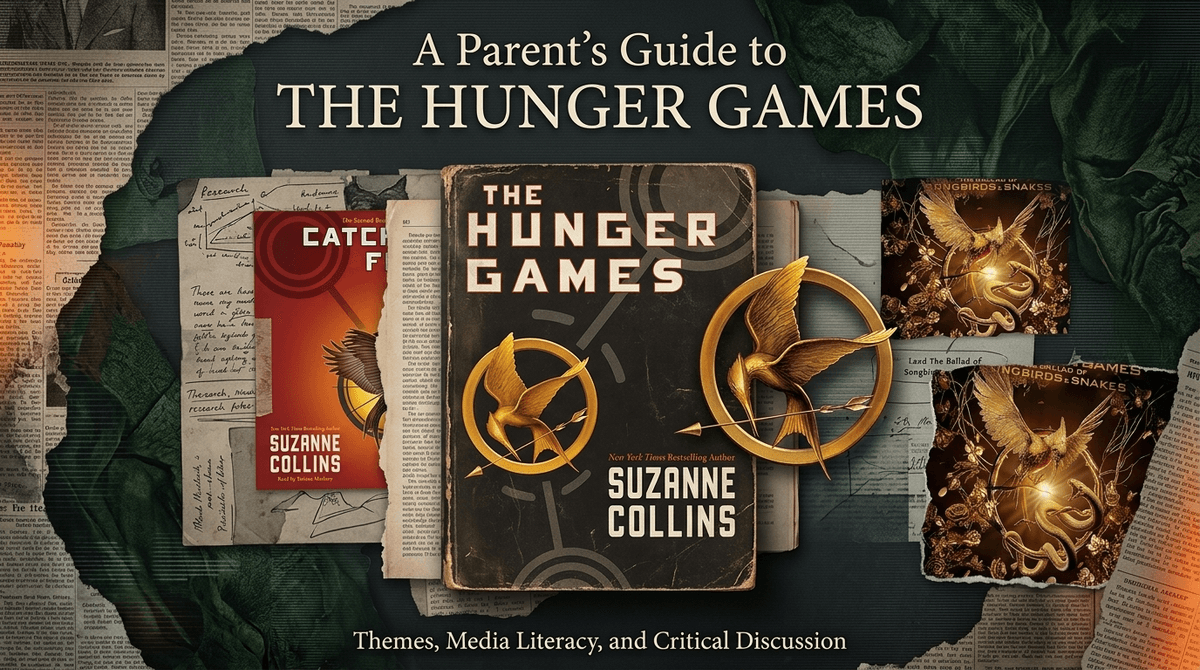
TL;DR: The Hunger Games book is a modern classic for a reason. It’s the ultimate "gateway drug" to critical thinking for middle and high schoolers. While the violence is intense (kids fighting to the death), the real value lies in its portrayal of media manipulation, reality TV ethics, and social inequality. It’s best for ages 12+, but the maturity of your reader matters more than the number on their birthday cake.
If your teen is finished with Panem and looking for the next thing, check out these linked guides:
At this point, The Hunger Games book by Suzanne Collins is basically the "1984" for the Gen Z and Gen Alpha transition. Set in a post-apocalyptic North America called Panem, the story follows Katniss Everdeen, a 16-year-old who volunteers to take her sister's place in a televised death match.
The "Capitol" (the wealthy, fashion-obsessed ruling class) forces two children from each of the twelve districts to fight to the death every year as a reminder of a past rebellion. It’s grim. It’s dark. And it’s incredibly effective at making kids question the world around them.
It’s easy to dismiss the series as just another "Team Peeta vs. Team Gale" romance, but that’s doing a massive disservice to the writing. Kids gravitate toward this book because it respects their intelligence. It acknowledges that the world can be unfair, that adults can be incompetent or even evil, and that standing up for what’s right usually comes with a heavy price.
In a world where kids are constantly told to "find their voice" while being managed by algorithms on TikTok and Instagram, Katniss’s struggle to remain authentic while being "packaged" for the Capitol audience feels incredibly relevant.
If you want to talk to your kid about "fake news," influencer culture, or how YouTube thumbnails are designed to manipulate them, The Hunger Games book is your best textbook.
In the book, Katniss isn't just fighting other kids; she's fighting a PR war. She has to wear specific dresses, act "in love," and play a character to get "sponsors" to send her life-saving medicine. This is a direct parallel to how modern social media works. We all have a "Capitol" version of ourselves that we post online to get "likes" (sponsors).

The Screenwise community generally lands on 12+ for this series. According to our data, about 65% of kids have read the first book by the end of 7th grade.
The Violence Factor
Yes, kids kill kids. It’s descriptive, but unlike the The Hunger Games movie, the book forces you to sit with the psychological aftermath. Katniss suffers from clear PTSD throughout the sequels, Catching Fire and Mockingjay. This isn't "brain rot" violence where people explode and then respawn like in Fortnite; it has weight.
The Emotional Load
The book deals with starvation, grief, and the "lesser of two evils" choices. If your child is particularly sensitive to animal death or themes of child endangerment, you might want to wait until 13 or 14.
If you’re worried about the "romance" part, don't be. Compared to some of the stuff trending on "BookTok" right now, The Hunger Games book is incredibly tame. The focus is on survival and revolution, not spicy scenes.
What you should know is that the book is quite critical of "spectacle." It asks: Why do we enjoy watching people suffer for entertainment? This is a great time to bring up reality TV or even the "shock" content popular on YouTube.
Comparisons to Consider:
- Battle Royale: The Japanese predecessor. Much more violent, much more cynical. Maybe save this for the older teens.
- Uglies by Scott Westerfeld: Great for younger readers (10-12) who aren't ready for the gore of Hunger Games but want to talk about beauty standards and surveillance.
- Divergent: Similar vibes, though arguably less "deep" in its political commentary.
- The Ballad of Songbirds and Snakes: The prequel. It’s a fascinating character study of the villain, President Snow, but it’s definitely "philosophical heavy lifting" for a more advanced reader.
Don't ask "Who should Katniss choose?" That’s the boring question. Instead, try these:
- The "Personal Brand" Question: "The Capitol stylists changed everything about Katniss to make her more 'likable' to the audience. Do you feel like you have to do that on Snapchat or TikTok?"
- The Spectacle Question: "Why do the people in the Capitol think the Games are fun to watch? Are there things we watch today that might seem cruel in 50 years?"
- The Courage Question: "Katniss isn't a perfect hero—she’s grumpy, she’s scared, and she makes mistakes. Does that make her more or less of a leader?"
Check out our full guide on talking to teens about dystopian themes
The Hunger Games book is top-tier media. It’s one of those rare instances where the hype is actually justified. It’s not just a story about a girl with a bow; it’s a critique of how media can be used to control us, how "reality" is often manufactured, and why empathy is a rebellious act.
If your kid is asking to read it, the answer is likely "yes," provided you’re willing to have some of the heavier conversations that come with it. It’s a much better use of their time than scrolling through mindless "Ohio" memes or watching someone open mystery boxes on YouTube.
- Read it with them. Honestly, it’s a page-turner for adults too.
- Watch the movie after. Compare how the violence feels on screen versus on the page. Use this The Hunger Games movie guide to prep.
- Branch out. If they loved the political intrigue, try 1984 or Lord of the Flies.