

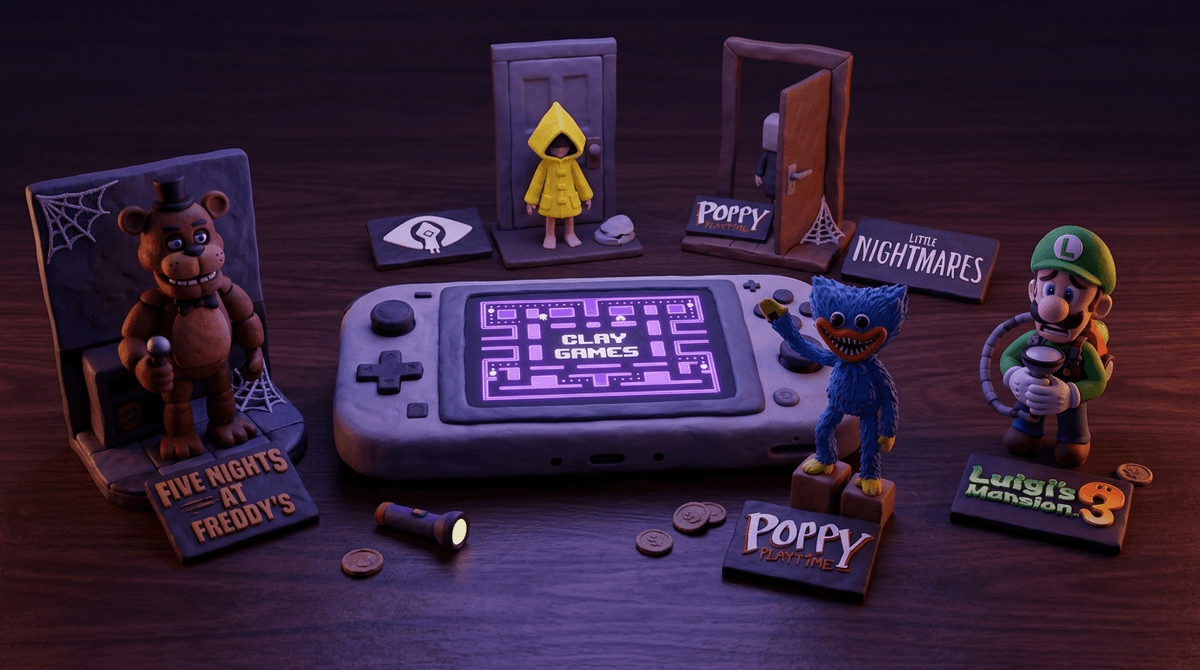
TL;DR: Horror games are a massive rite of passage for kids today, driven by the "mascot horror" trend (think creepy animatronics and twisted toys). While jump scares can be intense, most of these games are more about tension and "lore" than actual gore. If your kid is asking for Five Nights at Freddy's or Poppy Playtime, they’re likely looking for social currency and a controlled adrenaline rush.
Quick Links for the Spooky-Curious:
- Best Entry-Level Spooks: Luigi's Mansion 3 or Roblox: Doors
- The "Mascot" Classics: Five Nights at Freddy's and Bendy and the Ink Machine
- Atmospheric & Artsy: Little Nightmares and Limbo
- The "Too Much" Zone: Resident Evil Village or Dead by Daylight (Save these for the teens)
Screenwise Parents
See allIf you’ve seen a blue, fuzzy monster with rows of needle-sharp teeth on a plushie shelf at the mall, you’ve met Huggy Wuggy from Poppy Playtime. This is the face of "mascot horror."
The formula is simple: take something traditionally comforting—a pizza parlor animatronic, a toy factory, a daycare center—and make it predatory. It’s a subgenre that has completely taken over YouTube and Roblox.
Unlike the slasher films of the 80s, mascot horror usually avoids extreme gore. Instead, it relies on jump scares (something loud and scary popping onto the screen) and deep lore. Kids spend hours watching "theory" videos to figure out the backstory of the monsters. It’s less about being genuinely terrified and more about being part of a giant, internet-wide mystery.
It’s easy to wonder why a 9-year-old would want to play something that makes them scream and drop their controller. But for most kids, it’s about emotional regulation and mastery.
- The Adrenaline Hit: It’s a roller coaster on a screen. The "scare" is followed by a release of tension, which feels good.
- Social Currency: In 4th through 8th grade, being "brave" enough to play Five Nights at Freddy's is a badge of honor.
- The Lore: Games like Garten of Banban or Bendy and the Ink Machine have complex stories. Solving the "puzzle" of why the monsters exist feels rewarding.
- Controlled Fear: A game is a safe space to practice being afraid. They can turn it off at any time.

Not all horror is created equal. Here is how to navigate the levels of intensity.
Level 1: "Spooky" (Ages 7-10)
These games focus on atmosphere and "ghost hunting" rather than predatory monsters chasing you down.
- The gold standard. It’s spooky, funny, and beautifully animated. It teaches the mechanics of horror (tension, sound cues) without the nightmares.
- A surprisingly high-quality Roblox game. It’s a "roguelike" where you walk through 100 doors. Each entity has a specific sound cue you have to learn to survive. It’s more of a memory and reaction game than a horror game.
- Don't underestimate the first time a Creeper hisses behind a kid in a dark cave. For many, Minecraft is their first experience with "survival horror."
Level 2: "Mascot Horror" (Ages 10-13)
This is where the jump scares live. These games are generally "clean" in terms of language and sex, but the tension is high.
- The OG. You sit in an office and watch security cameras. If you run out of power, the animatronics get you. It’s a classic for a reason. If they've seen the Five Nights at Freddy's movie, they already know the vibe.
- Set in an abandoned toy factory. It’s a bit more intense than FNAF because you are actually walking around and being chased. Chapter 3 gets significantly darker, so maybe watch a playthrough first.
- Very popular with the elementary crowd. It’s basically hide-and-seek with colorful monsters. It’s the "entry-level" version of the mascot horror trend.
Level 3: Atmospheric & Psychological (Ages 12+)
These games are often "indie" titles that use art and sound to create a sense of dread.
- You play as a tiny child in a world of grotesque, oversized adults. It’s visually stunning and very creepy, but there is no dialogue or gore. It’s "art-house horror."
- A black-and-white puzzle platformer. It’s bleak and features some stylized violence (getting caught in a trap), but it’s a masterpiece of atmosphere.
- While it’s a social deduction game, the core concept—a hidden "imposter" killing crewmates—is pure sci-fi horror. It’s a great way to talk about tension in a group setting.
When you’re looking at a new game your kid wants, ignore the ESRB rating for a second (though it’s a good baseline) and look for these three things:
- Gore vs. Startle: Most "kid-friendly" horror uses the "startle" (a loud noise and a scary face). This wears off quickly. Games with realistic gore, dismemberment, or torture—like Outlast or Resident Evil—stay with a kid much longer and can cause genuine distress.
- The "Chase" Factor: For some kids, the feeling of being chased is the part that triggers anxiety. If your kid is sensitive to pressure, games like Granny might be too much, even if the graphics look "cheap."
- YouTube Proximity: Many kids "play" these games by watching Markiplier or CoryxKenshin on YouTube. Be aware that the YouTuber’s reaction (screaming, swearing) often makes the game seem scarier than it actually is.
If your kid is diving into the world of horror, don't just ban it—that makes it "forbidden fruit" and even more enticing. Instead, try these steps:
- Watch a "Playthrough" Together: Before they download Poppy Playtime, watch 10 minutes of gameplay on YouTube. Ask, "Do you think that jump scare would be fun or would it make you want to stop playing?"
- The "Lights On" Rule: If they’re playing something spooky, keep the door open and the lights on. It grounds the experience in reality.
- Discuss the "Why": Ask them, "What's the story here? Why is the bear trying to get you?" Turning it into a narrative discussion takes the "teeth" out of the scare.
- Check the Community: On Roblox, horror games often have active chats. Make sure they know how to mute other players so a random teenager doesn't ruin the "fun" scare with actual scary language.
Horror games are the modern version of telling ghost stories around a campfire. For most kids, it’s a phase fueled by internet culture and the desire to feel "grown-up."
If your kid is prone to nightmares or has high anxiety, stick to Level 1 games like Luigi's Mansion 3. If they are obsessed with "the lore" and want to talk your ear off about why a puppet is haunted, they’re probably ready for the Five Nights at Freddy's tier.
Just remember: the "scare" is the point. As long as it stays on the screen and doesn't follow them into their sleep, it’s usually just a new way for them to play.
- Take the Screenwise Survey: Understand how your kid's interest in horror fits into their overall digital diet.
- Co-play a "spooky" game: Try a round of Roblox: Doors together. It’s actually pretty fun.
- Audit their YouTube: See if they are watching "horror shorts." These are often more intense and less curated than the games themselves.