

TL;DR: Pixar’s Hoppers is a visually stunning, high-concept sci-fi adventure that feels like a mix of Avatar and a nature documentary, but with a weird, dark edge. It’s generally safe for ages 7+, but parents of sensitive kids should be ready for a finale that leans surprisingly hard into "body horror" and "uncanny valley" territory.
If your kid loved The Wild Robot or Wall-E, they’ll likely be obsessed with this. If they’re still recovering from the incinerator scene in Toy Story 3, you might want to pre-screen the last twenty minutes.
See if Hoppers is too scary for a 6-year-old
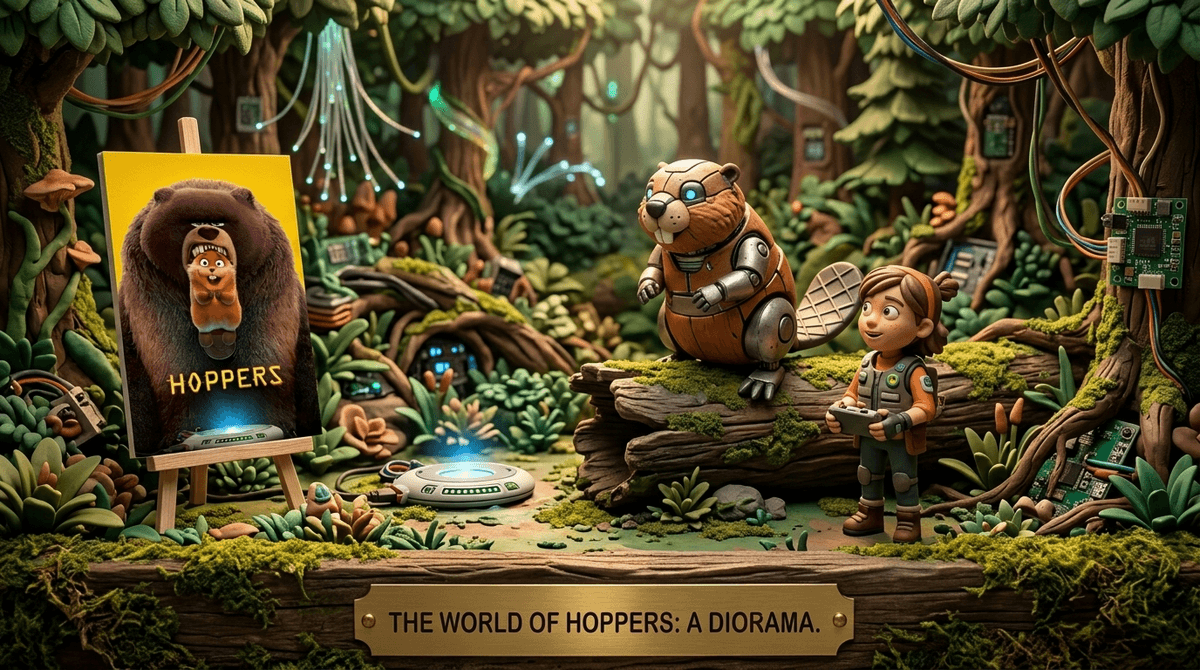
Released today, March 6, 2026, Hoppers is Pixar’s latest swing at big-idea sci-fi. The story follows Mabel, a tech-savvy animal lover who discovers a way to "hop" her consciousness into a state-of-the-art robotic beaver. The goal? To infiltrate the animal kingdom, talk to real animals, and understand their world to help protect it from a massive land development project.
It’s directed by Daniel Chong (who created We Bare Bears), so it has that signature blend of "super cute" and "slightly cynical humor." But while the trailers make it look like a fluffy romp through the woods, the actual film tackles some pretty heavy themes: environmental destruction, the ethics of "brain-swapping" tech, and what it actually means to be human versus animal.
Kids are currently obsessed with the "transformation" trope. Whether it’s Minecraft skins or the "animorphs" style logic of games like Roblox, the idea of inhabiting a different body is a huge draw.
- The "Beaver-Cam" Perspective: The movie uses some really cool "first-person" perspectives when Mabel is in the robot, which feels very familiar to kids who play Splatoon or other third-person action games.
- The Humor: There’s a lot of physical comedy involving Mabel trying to figure out how to walk, swim, and slap her tail like a real beaver. It’s classic Pixar slapstick.
- The Tech: The "Hopper" lab looks like something out of a high-end LEGO City set. It’s "cool tech" without being overly sterile.
At Screenwise, we’re seeing that about 65% of kids in grades 3-5 are already talking about the "consciousness-transfer" tech in the movie as if it’s a real thing. This is a great opening to talk about AI and the "uncanny valley."
We’re moving into an era where kids are seeing hyper-realistic digital avatars every day. Hoppers explores the "creep factor" of something looking real but being a machine—a concept that is going to be central to their digital lives as AI-generated video and "deepfake" tech become the norm.
Check out our guide on explaining AI to elementary students
Let’s talk about the elephant (or beaver) in the room. The third act of Hoppers takes a sharp turn.
The villain, King George (voiced with a delicious, corporate-bro menace by Jon Hamm), isn't just a developer; he’s a guy who wants to use the "Hopper" tech to achieve a weird kind of digital immortality. Without spoiling too much, the finale involves:
- Malfunctioning Robots: Think "Five Nights at Freddy's Lite." The robotic beavers get damaged, revealing the metal skeletons and sparking wires underneath. For some kids, this "body horror" of the machine is more upsetting than a monster.
- The "Glitch" Sequence: There’s a moment where Mabel’s consciousness gets stuck between her human body and the robot. It’s visually trippy and a little claustrophobic.
- High Stakes: Unlike some Pixar movies where the threat is emotional, the threat here is physical destruction of the forest and the "death" of the robotic consciousness.
If your kid was fine with the "junk yard" scene in The Brave Little Toaster or the darker moments of Coraline, they'll be fine. If they have a phobia of animatronics or "broken toys," proceed with caution.
If your family is heading to the theater this weekend, or if you've already seen it and your kids want more of that "nature meets tech" vibe, here are our top picks that skip the "brain rot" and offer some actual substance.
This is the gold standard. If Hoppers is the "flashy movie version," Peter Brown’s book is the soul. It’s a beautiful story about a robot named Roz who becomes a mother to a gosling. It handles the "nature vs. nurture" theme with way more nuance than the movie does.
- Age: 7+
- Why: Great for bedtime reading and much less "scary" than the movie’s finale.
If the environmental themes of the movie resonated with your kid, give them Stardew Valley. Instead of just watching a character save a forest, they can build a sustainable farm, fight back against the "Joja Corp" (the corporate villains of the game), and learn about ecosystems.
- Age: 8+
- Why: It’s the ultimate "intentional" game. No microtransactions, no "stranger danger," just pure, cozy strategy.
For the kids who loved the "animal facts" aspect of Mabel’s mission, Wingspan is a gorgeous board game about attracting birds to your wildlife preserve. It’s competitive but educational and looks like a work of art.
- Age: 10+ (or 8+ with help)
- Why: It turns "nature infiltration" into a fun family strategy night.
Mabel’s character is essentially a field scientist. If your kids want to know how real scientists study animals in the wild (without using robot beavers... yet), Tumble is fantastic.
- Age: 6-12
- Why: It makes real science feel like an adventure.
Don't just walk out of the theater and head straight to the food court. Use the ride home to actually dig into what they saw. Here are a few ways to frame it:
- The Ethics of the "Hopper": "If you could 'hop' into any animal for a day, which one would it be? Do you think the animals would be okay with a robot pretending to be one of them?"
- Tech vs. Nature: "King George thought technology was better than the forest. Mabel thought technology should serve the forest. Where do you think the balance is?"
- The Scary Parts: "The ending got pretty intense with the broken robots. What was the scariest part for you? Why do you think the filmmakers made it look so 'glitchy'?" (This helps kids externalize the fear and understand it as a creative choice).
- Language: Very mild. A few "hecks" and "gosh," but nothing that will make you cringe.
- Consumerism: Expect a wave of "Robo-Beaver" toys. Pixar’s merch machine is already in high gear.
- The "Uncanny" Factor: Some younger kids (ages 4-5) might find the transition between Mabel's human face and the beaver face to be "creepy" rather than "cool."
Learn more about the 'Uncanny Valley' and why it creeps kids out
Hoppers is a "Big Pixar" movie. It’s ambitious, it’s beautiful, and it’s a little bit messy. It’s not "brain rot"—it’s a film that actually asks kids to think about their relationship with the planet and the devices in their pockets.
However, it is not a "set it and forget it" movie for the little ones. Because of that "horror-tinged" finale, this is a "co-viewing" essential. Sit with them, hold the popcorn, and be ready to talk about why the robot beaver’s eyes turned red at the end.
Next Steps:
- If your kid is under 6, maybe wait for the Disney+ release so you can skip the intense bits.
- If they’re 7-12, go see it on the big screen, but maybe grab a copy of The Wild Robot by Peter Brown for the "cool down" afterwards.
- Take our Screenwise Survey to see how your family's movie habits compare to your community