

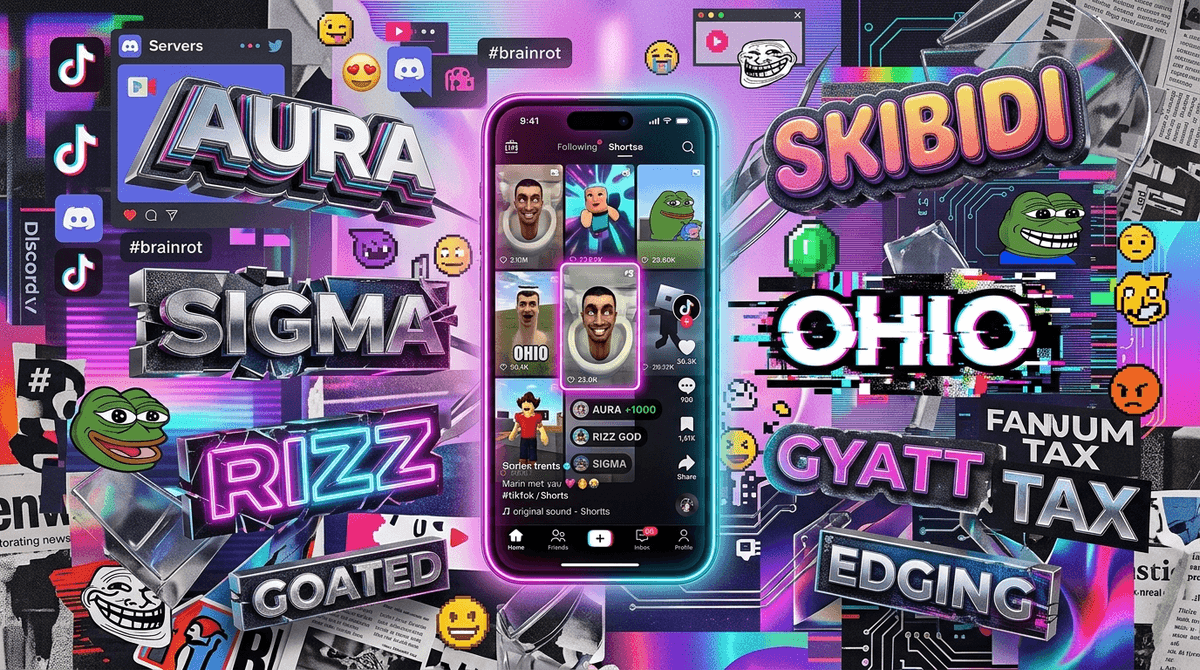
TL;DR: Gen Alpha slang isn't just "nonsense"—it’s a fast-moving dialect built on YouTube memes and Roblox culture. If you’ve heard your kid mention "Skibidi," "Ohio," or "Aura," they aren't losing their minds; they're participating in a digital community. Use this guide to decode the "Brain Rot" so you can talk to your kids without sounding like a "Beta."
Quick Links for the "Brain Rot" Curious:
If you’ve spent any time near a middle school lately, you’ve probably heard the term Brain Rot. It’s the self-aware label Gen Alpha (kids born roughly 2010–2024) has given to the hyper-stimulating, nonsensical, and often surreal content they consume on TikTok and YouTube Shorts.
Think of it as the 2026 version of Mad Libs mixed with a fever dream. It’s fast, it’s loud, and it’s intentionally absurd. While it can feel like your child’s vocabulary is eroding, most of this slang is actually a sophisticated way of signaling "I’m in on the joke."
Learn more about the psychology of viral memes
Here is the breakdown of the terms currently dominating the dinner table and the Discord chats.
Originating from the viral YouTube series Skibidi Toilet, this word has evolved into a general adjective. It can mean "bad," "evil," or just "weird." However, in some contexts, it’s just a filler word used to annoy parents.
- Example: "That lunch was so skibidi." (It was bad/weird).
Aura
This is the Gen Alpha version of "street cred" or "cool factor." You can gain aura points by doing something impressive, or lose them by doing something embarrassing.
- Example: "Tripping in the hallway is -10,000 aura."
- Context: It’s often paired with 6-7, referencing the "6'7 frame" meme where height and physical presence equate to maximum aura.
Ohio
In Gen Alpha speak, Ohio is not a state. It is a place where everything is cursed, weird, or monstrous. This stems from the "Only in Ohio" meme. If something is "so Ohio," it’s beyond weird—it’s unsettling.
- Example: "That haircut is straight out of Ohio."
Rizz
Short for "charisma." It’s the ability to attract a romantic partner or just be generally smooth. If someone has "unspoken rizz," they are effortlessly cool.
- Example: "He’s got that Baby Gronk rizz." (Don't ask about Baby Gronk yet; that’s a whole other rabbit hole).
Sigma
Originally meant to be the "lone wolf" at the top of the social hierarchy, it’s now used mostly ironically to describe someone who is cool, stoic, or a "boss." If your kid calls you a "Sigma," take the win—it's a compliment.
- Example: "Dad just finished the dishes without being asked. Truly Sigma."
Fanum Tax
Named after the streamer Fanum, who is known for "taxing" (stealing) a bite of his friends' food. If your kid grabs a fry off your plate, they are "Fanum taxing" you.
- Example: "I'm taking a slice of that pizza. Fanum tax!"
Mewing and Mogging
These are "looksmaxxing" terms. Mewing is a tongue exercise meant to define the jawline (often signaled by putting a finger to the lips to stay quiet). Mogging is being physically superior to someone else in a photo or video.
- Example: "He can't talk right now, he's mewing."
Unc and Beta
Unc (short for Uncle) is what kids call someone who is acting old or out of touch. If you try to use this slang incorrectly, you will be called "Unc." Beta is the opposite of Sigma—it means weak or submissive.
It’s easy to dismiss this as "brain rot," but there’s a reason 85% of kids in grades 5-8 are using at least three of these terms daily.
- Community Signaling: Using this language proves they are part of the digital "in-crowd." It’s a way to bond over shared content from Minecraft streamers or MrBeast.
- Irony and Absurdism: This generation has a very high "irony threshold." They know "Skibidi" is stupid. That’s why they say it. It’s a rebellion against the polished, serious world of adults.
- Speed of Culture: On apps like TikTok, a meme can be born, peak, and die in 48 hours. Using the slang shows they are keeping up with the "lore."
Not all Gen Alpha content is created equal. Some of it is genuinely creative, while some is just low-effort engagement bait.
The "Okay" List (Creative & High Effort)
- The Wild Robot: A masterpiece of storytelling that respects a kid's intelligence.
- Bluey: Even Gen Alpha loves Bluey; it’s the ultimate "high aura" show.
- Mark Rober (YouTube): High-energy, science-based content that uses the "vibe" of modern YouTube for good.
- Toca Life World: Encourages digital storytelling and creativity without the toxic social pressure.
The "Brain Rot" Warning List (Low Effort/Addictive)
- Skibidi Toilet: While the animation is impressive, the later episodes get very dark and violent. It’s not "educational" in any sense.
- Elsagate-style Content: Weird, AI-generated videos on YouTube Kids that use familiar characters (like Spider-Man or Elsa) in bizarre situations.
- Roblox "Life Sim" Games: Some of these are just gambling simulators in disguise.
Check out our full review of the "Brain Rot" genre
Ages 6-9: At this age, kids are parrots. They’ll say "Skibidi" because it sounds funny. This is a great time to set boundaries on where they hear these words. If they’re getting it from YouTube Shorts, consider moving them back to YouTube Kids or curated Netflix shows.
Ages 10-13: This is the "Aura" and "Rizz" era. Social standing is everything. They are likely using Discord or Snapchat to communicate. The goal here isn't to ban the slang, but to ensure they understand the context. (e.g., Don't tell your teacher they have "negative aura").
Ages 14+: By high school, Gen Alpha slang starts to merge with Gen Z slang. It becomes more about identity and less about memes. If they’re still talking about "Ohio" at 16, they’re probably just being ironic.
The fastest way to kill a meme is for a parent to use it. If you want your kid to stop saying "Skibidi," start saying it yourself—incorrectly.
However, if you want to actually connect, try these prompts:
- "I heard someone mention 'Aura points' today. How many points did I lose by making you wear that coat?"
- "Is Skibidi Toilet actually a story, or is it just people fighting? I'm genuinely curious about the lore."
- "I saw a video about 'mewing.' Is that actually a thing at your school, or is it just a TikTok joke?"
The Goal: You don't have to like the slang, but acknowledging it shows you’re paying attention to their world. It moves you from being a "hater" to being an "informed observer."
Gen Alpha slang is a byproduct of a digital-first childhood. It’s fast, weird, and can feel exclusionary to parents. But at its core, it’s just kids being kids—trying to find a way to communicate that belongs only to them.
As long as the "brain rot" content isn't replacing sleep, exercise, or real-life friendships, it's usually just a phase. Keep an eye on the amount of time they spend in the "Shorts" loop, and use the slang as a bridge to talk about what they're seeing online.
Next Steps:
- Audit the Feed: Spend 10 minutes scrolling through your kid’s YouTube or TikTok feed with them. Ask them to explain one meme to you.
- Set "Brain Rot" Boundaries: Use a timer for short-form video content. It’s designed to be infinite; your kid’s attention span shouldn't be.
- Check the Stats: See what percentage of other parents in your community allow Skibidi Toilet
Take the Screenwise Survey to see how your family's digital habits compare to your community.