

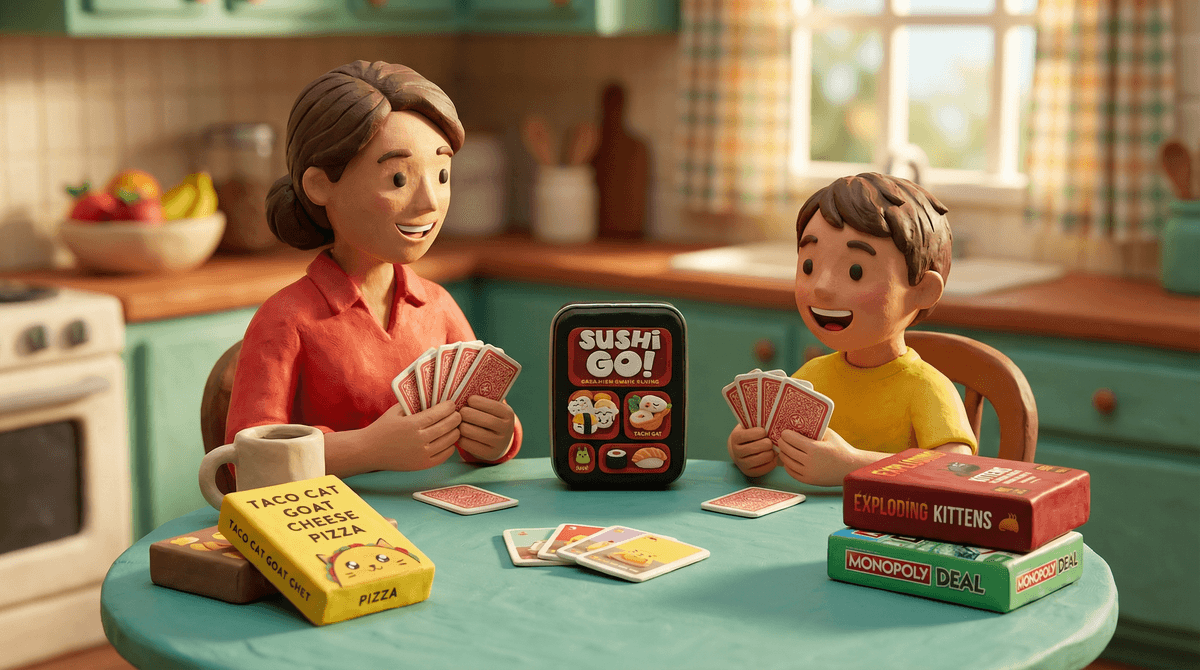
If your family has discovered Monopoly Deal, you know the magic: all the property-stealing, rent-collecting chaos of regular Monopoly, but you're done in 15 minutes instead of 3 hours. No board, no tiny metal dogs getting lost under the couch, and crucially—no one flips the table in rage because they've been stuck in a losing position for 90 minutes.
The good news? There's a whole world of quick, strategic card games that capture this same energy. These games typically take 10-30 minutes, involve some combination of collecting sets, strategic hand management, and just enough "take that!" moments to keep things spicy. They're perfect for family game night when you actually want to play multiple rounds, or when you need something engaging that fits before bedtime.
Think of this category as the sweet spot between mindless card games (War, Go Fish) and complex strategy games that require a PhD to understand the rulebook. These are games where a 7-year-old can play competitively against a parent, but there's enough depth that adults aren't dying of boredom.
They're actually fast. When a game says it takes 15 minutes, it actually takes 15 minutes. Not "15 minutes if everyone already knows the rules and plays at tournament speed" like some games claim.
The revenge factor is real. Just like in Monopoly Deal where you can steal someone's property set right before they win, these games often have mechanics that let you mess with other players. Kids LOVE this. It teaches them about strategic thinking and also how to lose gracefully when someone plays a "Nope" card on their winning move.
Everyone's in it until the end. Unlike traditional Monopoly where you can be effectively eliminated an hour before the game ends but forced to keep playing, these quick games keep everyone engaged. If you're losing, well, the game will be over soon and you can try again.
They're genuinely social. These aren't games where everyone stares at their phone between turns. They're interactive, they involve table talk and negotiation, and they create actual family memories. (Even if that memory is "remember when Dad rage-quit Sushi Go?")
Sushi Go! (Ages 8+, but 6-year-olds can play with help) The gateway drug of card-drafting games. You're picking sushi dishes to create the best meal, passing cards around the table, and trying to collect sets. It's adorable, the art is great, and games take about 15 minutes. There's also Sushi Go Party! which adds more variety if your family gets hooked.
Exploding Kittens (Ages 7+) Created by the folks behind The Oatmeal, this is essentially Russian Roulette with cards. You're drawing cards hoping not to get an exploding kitten (unless you have a defuse card). It's ridiculous, it's funny, and kids think the art is hilarious. Fair warning: there are some mild potty humor references, but nothing worse than what they're hearing on the playground.
Uno Flip (Ages 7+) If regular Uno is too basic but you want something everyone already kind of knows, Uno Flip adds a double-sided deck that flips mid-game and changes all the rules. It's chaotic in the best way.
Taco Cat Goat Cheese Pizza (Ages 8+) This is pure chaos. Everyone plays cards simultaneously while saying "taco, cat, goat, cheese, pizza" in order. When the card matches the word, everyone slaps the pile. Last person to slap takes all the cards. It's loud, it's physical, and it's over in 10 minutes. Not recommended right before bedtime unless you want your kids completely amped up.
Sleeping Queens (Ages 8+, but great for younger kids) Invented by a 6-year-old, which tells you something about its accessibility. You're waking up queens with kings, putting them back to sleep with potions, and using number cards to draw more cards. It's gentle, it reinforces basic math, and it's legitimately fun for the whole family.
Splendor (Ages 10+) Technically not just cards (there are poker chips too), but it fits the quick-playing strategic game vibe. You're collecting gems to buy cards that give you more gems to buy better cards. It's basically teaching your kids about compound interest and resource management, but they think they're just collecting shiny things.
The "take that" factor varies. Some families love games where you can directly mess with other players (like Monopoly Deal's "Sly Deal" or "Forced Deal" cards). Other families find this creates too much conflict. Know your kids. If your 8-year-old is going to cry when their sibling steals their property set, maybe start with something gentler like Sleeping Queens.
Reading level matters. Most of these games require reading cards, though many use symbols too. Monopoly Deal, for example, has enough text that pre-readers will need help. Sushi Go! is more symbol-based and accessible to younger players.
They're actually teaching stuff. These games build real skills: strategic thinking, planning ahead, probability assessment, graceful losing, and pattern recognition. When your kid is calculating whether to save their "Just Say No" card or use it now, that's legitimate decision-making practice. You can learn more about how card games build executive function skills .
.
The cost is reasonable. Most of these games run $10-25, which is way cheaper than a video game and provides way more family interaction. They're also portable—throw them in your bag for restaurants, waiting rooms, or travel.
Watch for complexity creep. Just because a game is quick doesn't mean it's simple. Some card games pack a lot of strategic depth into 15 minutes. Read reviews on the age recommendations and maybe watch a YouTube tutorial before buying to make sure it matches your family's gaming experience level.
Ages 5-7: Stick with games that have clear visual cues and simple rules. Sleeping Queens and Uno Flip work well. They can probably play Monopoly Deal with help, but might need an adult as a partner.
Ages 8-10: This is the sweet spot for most of these games. Sushi Go!, Exploding Kittens, and Monopoly Deal all work great. They can handle the strategy and won't be devastated by the competitive elements.
Ages 11+: They can handle anything in this category, including more complex strategy games like Splendor. At this age, they might also enjoy games with more player interaction and negotiation elements.
If Monopoly Deal has been a hit in your house, you've discovered what game designers have known for years: quick, strategic card games are the perfect family activity. They're short enough that losing doesn't feel devastating, engaging enough that everyone actually wants to play, and portable enough to take anywhere.
The key is finding games that match your family's tolerance for direct conflict and strategic complexity. Some families thrive on the chaos of stealing each other's sets and playing "gotcha" cards. Others prefer games where you're building your own thing and the competition is more indirect.
Start with one or two games from this list based on your kids' ages and your family's gaming style. Play them a few times to really get the strategy down—most of these games reveal more depth after multiple plays. And remember: the goal isn't to find the "perfect" game, it's to find games that get your family actually interacting, laughing, and occasionally arguing about whether that card play was legal.
Way better than everyone on their own screen, right?
- Check out our guide to the best family card games for even more options
- If your kids are really into strategy, explore board games that teach critical thinking
- Looking for screen-free activities? Read about alternatives to video games that kids actually enjoy