

Look, let's address the elephant in the room: gaming isn't gendered, and plenty of girls love the exact same games we're about to discuss. But there ARE patterns in what tends to capture boys' attention across age groups, and understanding those patterns helps parents navigate the gaming landscape more effectively.
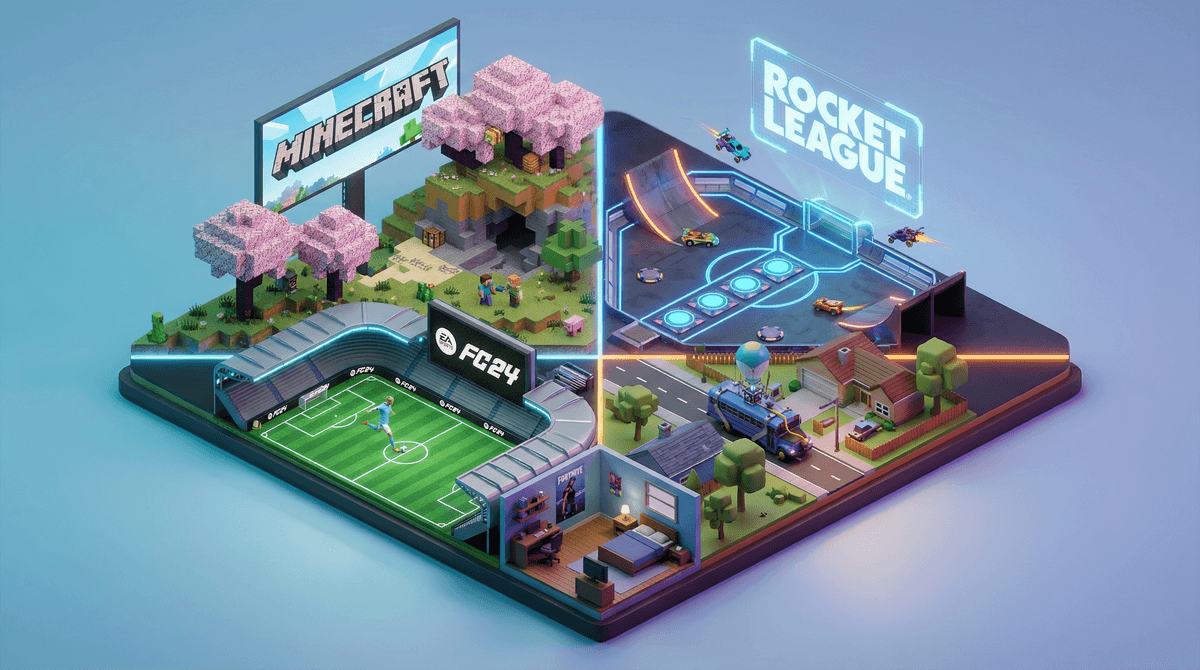
The games that consistently top boys' favorites lists share some common DNA: competition, mastery, social connection, and often some form of combat or strategic challenge. We're talking Fortnite, Minecraft, Roblox, sports games like EA Sports FC (formerly FIFA), Call of Duty, and Rocket League. These aren't just games—they're the social infrastructure of modern boyhood.
By middle school, the vast majority of boys are playing at least one of these titles regularly, and it's where a significant portion of their social life happens. Yes, even more than the group chat.
It's where their friends are. Full stop. This is the number one driver. When your son says "everyone plays Fortnite," he's not exactly wrong. The social pressure is real, and being left out of gaming conversations at school feels legitimately isolating.
They offer clear progression and mastery. Boys (and plenty of girls, but we're focusing here) often respond strongly to games with visible skill development. Getting better at building in Fortnite, improving your FIFA ranking, or mastering a difficult Minecraft redstone contraption provides concrete evidence of competence. In a world where academic and social success can feel nebulous, gaming offers immediate, measurable feedback.
They provide low-stakes social connection. For boys who find face-to-face emotional conversations challenging (which is...most of them, thanks to how we socialize boys), gaming offers parallel play with built-in conversation topics. They're talking about the game, but they're also just...together. It's bonding without the pressure of direct eye contact or vulnerable conversation.
The dopamine hits are real. These games are engineered by teams of PhDs to be maximally engaging. The loot drops, the victory royales, the rank-ups—they're all carefully calibrated to keep players coming back. This isn't inherently evil, but it's worth understanding that your kid's brain is up against some serious behavioral psychology.
Violence: Yes, many of these games involve shooting or combat. But decades of research show that playing violent video games doesn't make kids violent. What DOES matter is the context—is your 7-year-old playing Call of Duty with realistic gore? That's different from your 12-year-old playing Fortnite with its cartoonish aesthetic. Age-appropriate matters here.
Time suck: This is the legitimate concern. These games are designed to be endless. There's always another match, another season, another challenge. Without boundaries, they will absolutely consume all available time. This is where parenting comes in.
Social toxicity: The voice chat in these games can be a cesspool. Slurs, bullying, toxic masculinity—it's all there. This is actually the thing I'd worry about most, not the cartoon violence. See how to manage voice chat in games .
.
Cost: "Free to play" is a lie. Between Fortnite skins, Roblox Robux, and FIFA Ultimate Team packs, these games can drain hundreds of dollars. Understanding how Robux works as real money is essential.
Elementary (Ages 6-10): Minecraft and Roblox dominate this age group. Minecraft is genuinely creative and educational in many ways. Roblox is more of a mixed bag—some games are great, others are cash-grab garbage. Both benefit enormously from parental involvement. Play with them. Understand what they're building or playing.
Middle School (Ages 11-13): This is when Fortnite, sports games, and shooters enter the picture. The social pressure peaks here. This is also when you need to get serious about time limits and have real conversations about online behavior. Voice chat should be monitored or restricted.
High School (Ages 14+): By now they're playing whatever their friends play, and that might include M-rated games like Call of Duty. Your leverage shifts from "you can't play that" to "here are the household rules about gaming." Focus on balance, not prohibition.
Play with them. Even one session of Fortnite or Minecraft will teach you more than reading ten articles. You'll understand the appeal, see the social dynamics, and have actual credibility when you set boundaries.
Set clear time limits. Use the built-in parental controls on consoles and devices. Learn how to set up gaming time limits. An hour on school nights, more on weekends—whatever works for your family. But be consistent.
Monitor spending. Do not attach a credit card directly to their account. Use gift cards or require approval for purchases. The "it's just $10" adds up fast.
Talk about online behavior. Have explicit conversations about what's okay and not okay to say online. Make it clear that the same rules of respect apply in voice chat as they do in real life.
Recognize the social value. Gaming isn't just "screen time"—it's genuinely how boys maintain friendships now. Completely prohibiting it can create real social isolation. The goal is balance, not elimination.
Games boys love aren't the enemy. They're tools—for connection, for skill-building, for fun. Like any tool, they can be used well or poorly. Your job isn't to ban them (good luck with that anyway), but to help your son develop a healthy relationship with gaming that includes other activities, real-world friendships, physical movement, and sleep.
The boys who game healthily aren't the ones who never play—they're the ones whose parents stayed engaged, set boundaries, and treated gaming as one part of a full life rather than a moral panic.
Next Steps: Check out our guides on setting up Fortnite parental controls, understanding Roblox safety settings, and alternatives to popular shooters if you're looking for less combat-focused options.