

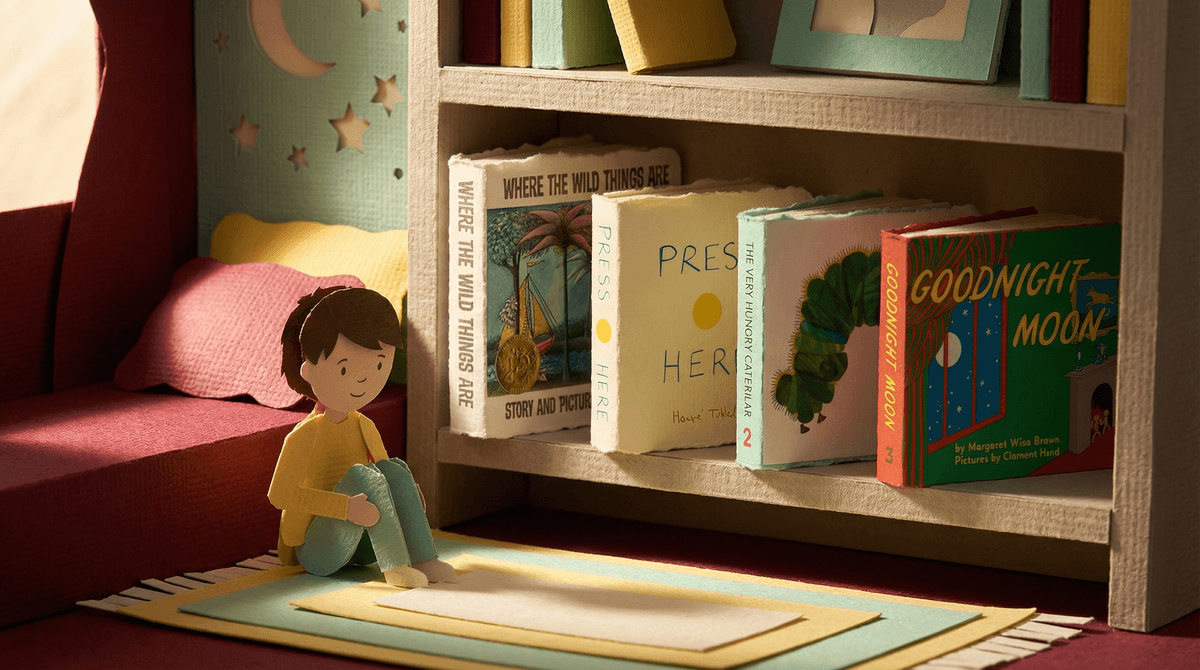
We're talking about those chunky board books, picture books with maybe 10-20 pages, and early readers that become the foundation of your kid's relationship with reading. These aren't just entertainment—they're literally building neural pathways for language, empathy, and curiosity. And yes, I'm including the book your toddler demands you read 47 times before bed every single night.
The preschool years (roughly ages 2-5) are when kids are absorbing language at an absolutely wild rate. They're learning that those squiggly lines on pages represent sounds and stories, that books have a front and back, and that reading is something humans do for pleasure, not just homework.
But here's the thing: not all books are created equal, and the "classics" your aunt keeps buying aren't necessarily the ones that'll click with your kid.
Look, I get it. You're exhausted. The idea of sitting through another reading of The Very Hungry Caterpillar makes you want to scream. But stick with me here.
Kids who are read to regularly in these early years show up to kindergarten with significantly larger vocabularies—we're talking thousands more words than kids who aren't. They have better attention spans, stronger emotional regulation, and yeah, they're more likely to become readers themselves.
But beyond the academic stuff, these books are teaching your kid how stories work, how to predict what comes next, how to understand that other people (or caterpillars, or monsters) have feelings too. It's empathy training disguised as entertainment.
And in our current screen-saturated world? Books are one of the few things that require zero batteries, have no in-app purchases, and won't suddenly pivot to showing your kid unboxing videos from some random YouTube channel.
Repetition is your friend, not your enemy. Yes, you'll memorize every word. Yes, you'll be able to recite it in your sleep. That's literally the point. Kids learn through repetition, and those predictable patterns help them start to "read" along with you.
Pictures that actually tell the story. The best picture books work even without the words. Your kid should be able to follow what's happening just by looking at the illustrations. The Snowy Day by Ezra Jack Keats is a masterclass in this.
Simple but not dumbed down. There's a difference between age-appropriate and boring. Books like Where the Wild Things Are use sophisticated vocabulary ("gnashed their terrible teeth") but in context that makes sense to a 3-year-old.
Representation matters. Your kid should see themselves in books, but they should also see kids who don't look like them, families that don't look like theirs, and experiences beyond their immediate world.
Ages 2-3: Board Books and Simple Stories
At this age, books are toys. They're going to get chewed, thrown, and possibly used as a step stool. That's fine.
Look for:
- Board books with real photos like the Baby Faces series
- Touch-and-feel books (yes, even though the fuzzy parts get gross)
- Simple storylines with clear pictures like Brown Bear, Brown Bear, What Do You See?
- Books about their life (potty training, new siblings, bedtime)
Ages 3-4: Picture Books with Plot
Now we're getting somewhere. They can sit for longer stories, they're starting to predict what comes next, and they have OPINIONS about which books are acceptable bedtime reading.
Try:
- Books with rhythm and rhyme like anything by Julia Donaldson (The Gruffalo, Room on the Broom)
- Stories with emotional depth like The Feelings Book by Todd Parr
- Silly humor like Dragons Love Tacos
- Adventure stories like We're Going on a Bear Hunt
Ages 4-5: Longer Stories and Early Concepts
Pre-K kids are ready for books that take 10-15 minutes to read, introduce basic concepts (counting, letters, problem-solving), and have more complex plots.
Consider:
- Chapter-ish books like Frog and Toad (short chapters, still lots of pictures)
- Books that play with language like anything by Dr. Seuss
- Stories about friendship and conflict like Stick and Stone
- Non-fiction picture books about space, animals, construction—whatever they're obsessed with
Your kid's favorite book will make you lose your mind. That's normal. My record is reading the same book 6 times in one sitting. You will survive.
It's okay to skip pages. If a book is too long for their attention span that day, summarize. If a particular page freaks them out, skip it. You're not going to ruin their literary development.
Diverse books aren't "special"—they should be the norm. Make sure your bookshelf includes authors and illustrators of different backgrounds. Last Stop on Market Street, Hair Love, Alma and How She Got Her Name—these aren't "diversity books," they're just excellent books.
The library is your best friend. You don't need to buy every book. Let your kid pick out a stack each week. Some will be duds. That's fine. They're learning to have preferences.
Audiobooks and e-books count, but... they're not the same as physical books for this age. The tactile experience of turning pages, the lack of screen stimulation, the fact that you're sitting together—that all matters. Save the audiobooks for car rides.
Here's a starter pack that works for most kids (and won't make you want to hide the book under the couch):
- Goodnight Moon - yes it's a cliché, but it works
- Press Here by Hervé Tullet - interactive without being annoying
- The Day the Crayons Quit - genuinely funny
- Chicka Chicka Boom Boom - alphabet book that doesn't suck
- The Pigeon series by Mo Willems - your kid will love yelling at the pigeon
The "best" first books are the ones your kid will actually sit still for. That might be a beautifully illustrated Caldecott winner, or it might be a board book about trucks that you found at Target. Both are valid.
The goal isn't to create a literary prodigy by age 4. It's to build positive associations with reading, expand their vocabulary, and give them tools to understand the world and their feelings.
Read with enthusiasm, even when you're faking it. Let them turn the pages. Answer their 47 questions about why the caterpillar is eating a lollipop. Point out letters and words when they show interest, but don't turn it into a lesson.
And when they ask for the same book for the 1000th time? That's actually a sign you're doing something right. They're finding comfort, mastering the story, and building confidence. Even if it's slowly driving you insane.
Start a bedtime routine that includes books. Even just 10-15 minutes makes a massive difference.
Get a library card and make it a weekly outing. Let your kid carry their own bag of books home.
Follow your kid's interests. Obsessed with dinosaurs? Get every dinosaur book the library has. Into princesses? Great, find books with princesses who do interesting things.
Don't stress about "educational" books. If they're engaged, they're learning. A silly book about a pigeon who wants to drive a bus teaches vocabulary, emotional regulation, and narrative structure just as well as a book specifically about the alphabet.
And remember: every kid who loves reading started with someone reading to them. You're literally building their future relationship with books right now. No pressure or anything.
Want more recommendations based on your kid's specific interests? We can help with that.