

Let's be honest: we've all done it. Turned on a show because the box said "educational" and we needed 22 minutes to answer work emails or just stare at a wall in silence. But here's the thing—not all "educational" TV is created equal, and the label itself has become basically meaningless.
True educational TV teaches specific skills or concepts that kids can apply beyond the screen. It's designed with learning objectives, paced for comprehension, and invites participation. Then there's... everything else. The shows that slap "educational" on the package because there's a number somewhere in the episode or a character says "please" once.
The difference matters. Not because entertainment is evil (it's not), but because if you're choosing screen time specifically hoping your kid learns something, you should know whether that's actually happening.
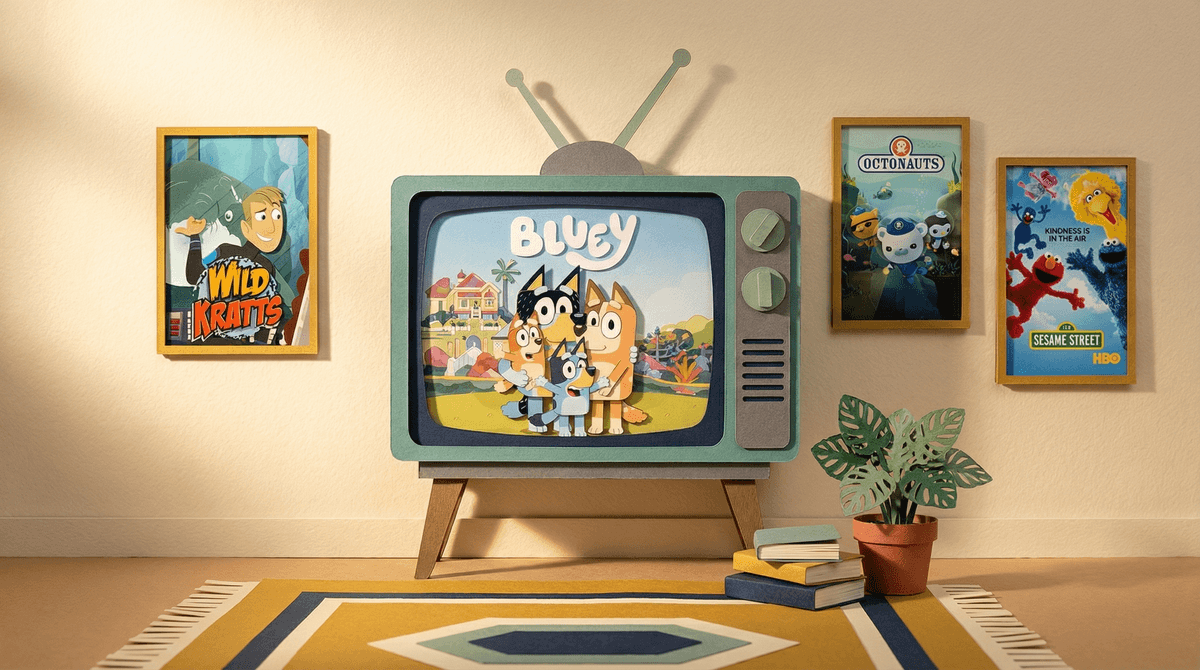
1. Actually Educational Shows like Bluey, Sesame Street, Wild Kratts, and Octonauts have curriculum consultants, research backing, and intentional teaching moments. They pause for kids to answer questions. They repeat concepts. They model problem-solving. Your kid is genuinely learning vocabulary, emotional regulation, science concepts, or social skills.
2. Sneaky Good Shows that don't market themselves as educational but actually teach tons: Avatar: The Last Airbender (conflict resolution, philosophy, cultural appreciation), The Great British Baking Show (patience, following instructions, kindness), or Encanto (family dynamics, generational trauma). These teach through story and character, not by hitting you over the head with a lesson.
3. Educational Theater Brightly colored shows with numbers and letters scattered throughout, but no actual pedagogical structure. Think: a character counts to three once while running, and now it's "math content." These aren't harmful, but they're not teaching much either. They're just... shows. Which is fine! Just don't count them as learning time.
4. Straight-Up Brain Rot Rapid cuts, no narrative structure, characters screaming, pure overstimulation. We're talking about certain YouTube channels (you know the ones), some of those bizarre animated shows that pop up on streaming services, and anything that makes you feel vaguely anxious just hearing it from the other room. These aren't just not-educational—they can actually make it harder for kids to focus on actual learning afterward.
The Pause Test: Does the show pause and wait for your kid to answer a question or think about something? Daniel Tiger's Neighborhood does this beautifully. Most shows don't.
The Conversation Test: After an episode, can your kid tell you something specific they learned or talk about what happened? If they just stare at you blankly or immediately ask for another episode, that's your answer.
The Pace Check: Can you follow what's happening, or is it so fast-paced and chaotic that even you can't track the plot? Kids' brains work faster than ours in some ways, but they still need processing time.
The Repeat Value: Do you notice your kid applying something from the show in real life? Singing the feelings song from Daniel Tiger when they're upset? Asking questions about animals after Wild Kratts? That's evidence of actual learning.
Ages 2-5: You want shows with clear learning objectives, lots of repetition, and direct address to the camera. Sesame Street, Daniel Tiger, Bluey, and Peg + Cat are gold standard. PBS Kids in general is a safe bet—they actually have educational standards.
Ages 6-8: Kids can handle more complex narratives now. Wild Kratts and The Magic School Bus Rides Again teach science. StoryBots makes learning genuinely fun. Bluey still works here too (and honestly, for adults).
Ages 9-12: This is where "educational" gets more subtle. Avatar: The Last Airbender teaches emotional intelligence and ethics. The Great British Baking Show models kindness and perseverance. Nature documentaries like Our Planet spark curiosity. History shows that don't bore them to death actually exist—Horrible Histories is hilarious and accurate.
"Educational" is not a free pass for unlimited screen time. Even the best educational show is still passive consumption. It's a tool, not a replacement for play, reading, or actual teaching.
Co-viewing multiplies the learning. When you watch with your kid and talk about what's happening, educational value skyrockets. Ask questions. Pause and discuss. Make connections to real life.
Entertainment has value too. Not every show needs to teach something. Sometimes kids (and parents) just need to decompress. That's okay. Just be honest about what you're choosing and why.
Beware the YouTube rabbit hole. Even if you start with something educational like SciShow Kids, the algorithm will absolutely serve up garbage within three videos. YouTube Kids is better but not perfect. Here's how to navigate it.
The best "educational" content sparks curiosity beyond the screen. If your kid watches Wild Kratts and then wants to go outside and look for bugs, or watches a baking show and wants to try making something—that's the real win. The show is just the starting point.
Educational TV can be a useful tool, but it's not magic. The "educational" label means almost nothing without looking at the actual content. The best shows teach specific skills, invite participation, and spark curiosity that extends beyond the screen.
But also? Sometimes you just need 20 minutes of peace, and that's fine too. Not every moment needs to be optimized for learning. The goal isn't perfect educational screen time—it's being intentional about what you're choosing and why.
If you're going to use screen time for learning, use actually good educational content. If you're using it to buy yourself a break, own that too. Both are valid. Just know the difference.
Want to explore specific shows for your kid's age? Check out our guides on best educational shows for preschoolers, science shows for elementary kids, or how to make screen time more interactive.