

Look, I get it. You want your kids to care about the planet, but you also need 30 minutes to answer emails. Enter: Earth Day videos and activities that might actually teach something while you're making dinner.
But here's the thing – not all "educational" Earth Day content is created equal. Some of it is genuinely great at building environmental literacy. Some of it is corporate greenwashing wrapped in cartoon animals. And some of it is just... boring lectures that'll have your kid back on YouTube Shorts in 90 seconds.
The good news? There's actually solid digital content out there that can help kids understand climate change, biodiversity, and environmental responsibility in age-appropriate ways. The trick is knowing what's worth your family's screen time.
Environmental education isn't just about recycling anymore. Kids today are inheriting a genuinely different planet than the one we grew up on, and they know it. They're seeing wildfires on the news, hearing about "forever chemicals," and watching their friends become anxious about climate change.
Quality environmental content can:
- Build actual scientific literacy – Not just "save the trees" vibes, but real understanding of ecosystems, carbon cycles, and interconnected systems
- Combat eco-anxiety – Kids who understand problems AND solutions feel more empowered, less helpless
- Develop critical thinking – Learning to spot greenwashing is a legit life skill now
- Create genuine motivation – Kids who understand why something matters are way more likely to care than kids who just get lectured
The digital piece matters because this is how kids consume information now. A well-made video can explain ocean acidification better than most of us can, and interactive apps can make abstract concepts like carbon footprints actually tangible.
Ages 4-7: Keep It Concrete and Hopeful
Little kids need to see cause and effect, not hear about atmospheric CO2 levels.
Octonauts – Genuinely great for ocean ecosystems and marine biology. The creatures are real, the science is solid, and it's not preachy. Available on Netflix.
Bluey: "Bin Night" – This episode actually does a better job teaching about waste and recycling than most "educational" content. It's about responsibility without being heavy-handed.
Sesame Street Earth Day content – Their YouTube channel has solid Earth Day episodes. Elmo's enthusiasm is annoying to adults but genuinely effective for this age group.
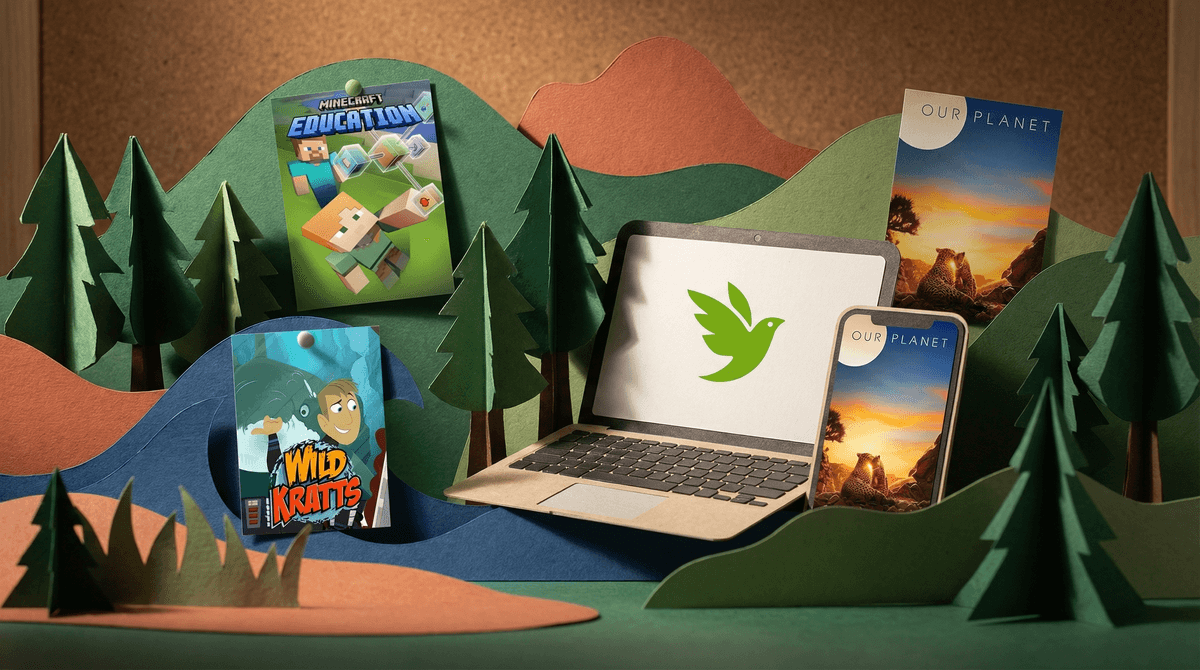
PBS Kids Games app – Has several nature-focused games that are actually educational, not just branded content. The Wild Kratts games are particularly good for learning about endangered species.
Ages 8-12: Ready for Real Science
This age can handle more complexity and wants to feel like they can make a difference.
Our Planet (select episodes) – The Netflix series is stunning, but be selective. Some episodes (like the walrus cliff scene) are genuinely traumatic for sensitive kids. The "Coastal Seas" and "Forests" episodes are safer starting points.
Brains On! Earth Month episodes – This podcast consistently delivers actual science without talking down to kids. Their climate change episodes explain the greenhouse effect better than most adult content.
National Geographic Kids YouTube – Solid educational content, though you'll want to monitor recommended videos since YouTube's algorithm doesn't care about your parenting goals.
iNaturalist app – This is screen time that gets them off screens. Kids photograph plants and animals, and the community helps identify them. It's like Pokémon Go but with actual science and citizen research contribution.
Minecraft: Education Edition – Has specific Earth Day lessons and sustainability challenges. If they're already playing Minecraft anyway, this redirects that energy toward something educational.
Ages 13+: Ready for Uncomfortable Truths
Teens can handle (and often want) the real story, including the parts that are scary or make them angry.
Our Planet: Behind the Scenes – Shows how the documentary was made and discusses conservation efforts. Teens respond well to the filmmaking craft angle.
Crash Course: Ecology – Hank Green makes science engaging for teens. The ecology series is comprehensive without being overwhelming.
Climate Town YouTube channel – Uses humor to explain climate policy and greenwashing. Great for teens who are skeptical of corporate "sustainability" messaging. Warning: occasional mild language.
How to Change the World podcast – Interviews with activists and scientists. Empowering without being preachy.
Corporate "educational" content – If it's sponsored by an oil company or features a lot of plastic product placement, skip it. Your kids are smart enough to spot the contradiction.
Doom-and-gloom without solutions – Content that just lists environmental disasters without discussing what's being done or what kids can do will increase anxiety without building agency.
"Reduce, reuse, recycle" as the whole story – Individual consumer choices matter, but kids also need to understand systemic issues. Content that puts all responsibility on personal choices is missing the bigger picture.
Anything that treats climate change as "just a theory" – We're not doing that in 2026. The science is settled.
Co-watch when possible – Especially for the first episode or video. Answer questions, pause to discuss, help them process.
Follow up with action – Screen time that leads to a nature walk, a recycling audit, or a letter to a local representative is way more valuable than screen time that just... ends.
Let them go deep – If your kid becomes obsessed with coral reefs or wants to watch every episode about rainforests, let them. Deep interest beats surface-level exposure to everything.
Balance hope and reality – Yes, things are serious. But kids also need to see the solar farms being built, the forests being restored, the species being saved. Both things are true.
Earth Day screen time doesn't have to be guilt-inducing. Quality environmental content can build scientific literacy, critical thinking, and genuine motivation to care about the planet.
The key is being selective. Skip the greenwashing and doom-scrolling. Choose content that treats kids as capable of understanding real science and complex problems. And when possible, use digital content as a jumping-off point for real-world action.
Your kids are going to spend time on screens anyway. Might as well make some of it count toward understanding the planet they're inheriting.
Want to explore more? Check out our guide to educational screen time that doesn't feel like homework or learn how to talk to kids about climate anxiety .
.