

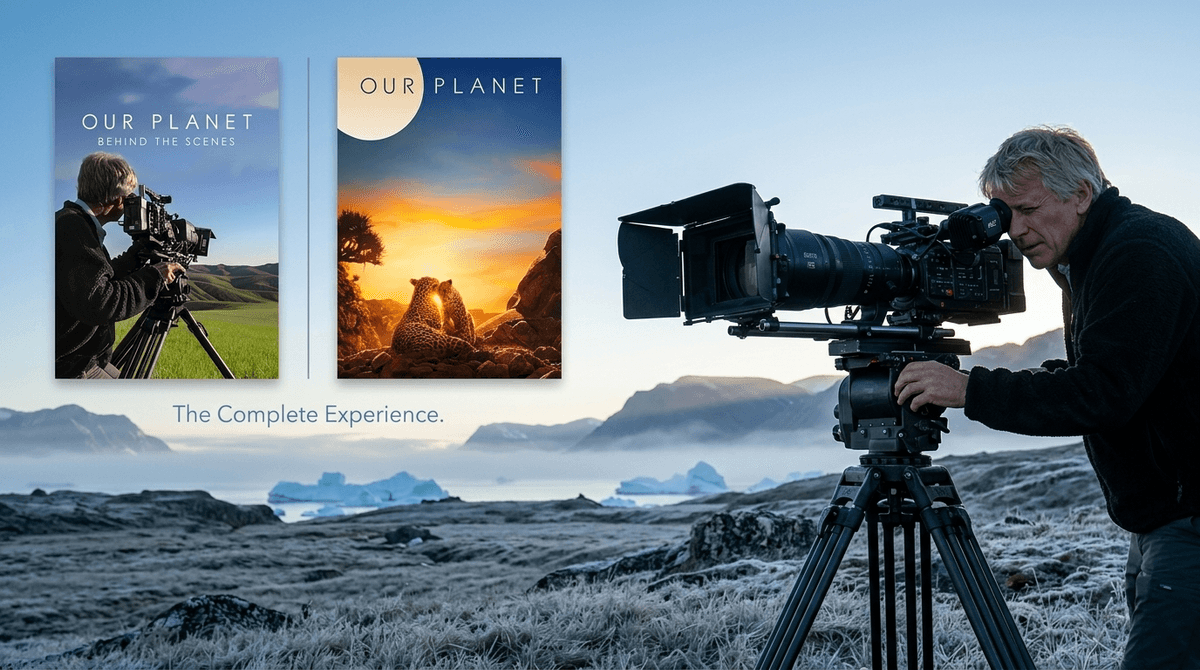
TL;DR: Our Planet Behind the Scenes is a 60-minute deep dive into how the iconic Our Planet series was made. It’s perfect for kids who love tech, camera gear, and "how-it’s-made" content, but it doesn't shy away from the harsh reality of climate change. It’s a great companion piece that turns a passive viewing experience into a conversation about conservation and ethics.
Quick Links:

If your family has already binged the original Our Planet, you know it’s breathtaking. But this "behind the scenes" special is a different beast. Instead of just focusing on the animals, it focuses on the humans—the cinematographers, scientists, and field researchers who spent years in the freezing cold or the deep jungle to get "the shot."
It covers the high-tech innovations used to capture never-before-seen behaviors, like 4K camera traps and advanced drones. More importantly, it shows the emotional toll the crew takes when they witness the direct impact of habitat loss and climate change. It moves the needle from "look at the pretty tiger" to "here is exactly why this tiger's home is disappearing."
Most kids today are "creators" in some capacity. Whether they are messily editing videos for YouTube, building complex worlds in Minecraft, or experimenting with filters on TikTok, they have an inherent interest in how things are produced.
This documentary hits that "maker" itch. Seeing a massive camera rig attached to a helicopter or a disguised "boulder camera" is fascinating for kids who are digitally native. It reframes nature documentaries as a feat of engineering and endurance rather than just a slow-paced science lesson.
Check out our guide on how to encourage kids' interest in filmmaking
We talk a lot about "brain rot"—that mindless scroll through Skibidi Toilet memes or low-effort Roblox obbys. Our Planet Behind the Scenes is the literal opposite of that.
It demonstrates patience, persistence, and purpose. The crew might wait six weeks in a hut for a bird to dance for ten seconds. In a world of instant gratification and 15-second clips, showing kids that "the good stuff" takes time and immense effort is a vital counter-narrative.
We can’t talk about this documentary without talking about the walrus scene. If you haven't seen it, it involves hundreds of walruses falling to their deaths from a cliff because their sea ice has melted, forcing them onto land where they don't belong.
In the original series, it’s traumatic. In the Behind the Scenes special, you see the camera crew weeping as they film it.
This is a heavy moment. For sensitive kids, it can be a lot. However, seeing the adults on screen react with empathy and sadness provides a model for how to handle these "big feelings." It shows that it’s okay—and actually quite human—to be devastated by what’s happening to the planet.
- Ages 5-7: Might find the tech cool, but the ecological "truth" sections (like the walrus scene) can be genuinely frightening and hard to process without significant context. You might want to stick to the tech-focused clips.
- Ages 8-12: This is the sweet spot. They are old enough to understand the "why" behind the conservation message and will be genuinely impressed by the technology.
- Ages 13+: Great for teens interested in photography, environmental science, or journalism. It’s a solid "career-path" documentary that shows the grit required for high-level media production.
1. It’s Not Just "Background Noise"
Unlike some nature shows that you can leave on while the kids play with LEGOs, this one demands a bit of attention. The narrative is about the struggle of filmmaking.
2. The Tech is the Hook
If your kid is obsessed with drones or gadgets, use this as a bridge. Talk about how the drones they see in Fortnite are used in real life to track endangered species.
3. Be Ready for "The Talk"
No, not that talk. The climate change talk. This documentary doesn't pull punches. It explicitly links the difficulty of filming to the fact that the seasons are changing and the animals are behaving erratically.
If this documentary sparks an interest in nature, tech, or conservation, here are some logical next steps:
This is David Attenborough’s "witness statement." It’s more personal and focuses on his life’s work. It’s a bit more somber but incredibly moving.
For a fictional take on tech meeting nature, this book (and the movie) is a masterpiece. It explores how a robot adapts to the wilderness, mirroring some of the "tech in nature" themes in the documentary.
A great place for kids to go to learn the "facts" behind the animals they saw on screen in a format designed for their age group.
Specifically, look for their episodes on climate change and how animals adapt. It’s science-heavy but very kid-friendly and upbeat.
Our Planet Behind the Scenes is a rare "educational" show that doesn't feel like school. It’s a high-production-value look at the intersection of technology, art, and the environment.
While the content can be emotionally heavy, it’s exactly the kind of "intentional" screen time we advocate for. It moves kids away from the "Ohio" memes for an hour and connects them to the actual, physical world they live in.
Next Step: Watch the original Our Planet "Frozen Worlds" episode first, then follow it up with this behind-the-scenes special. It makes for a powerful double-feature that will spark more questions than a week's worth of school.
Check out our full list of recommended nature documentaries for families