

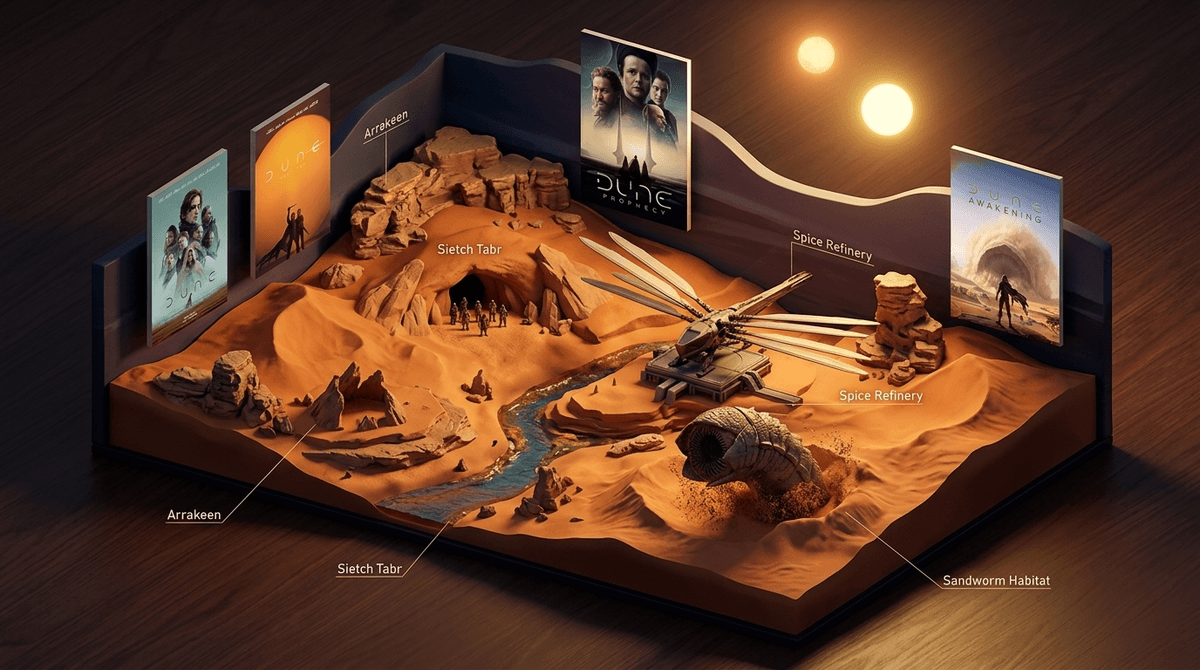
TL;DR: Dune: Part One and Dune: Part Two are generally safe for the 12+ crowd, provided they can handle long runtimes and "bloodless" but intense violence. However, the prequel series Dune: Prophecy is a different beast entirely—think Game of Thrones in space with a TV-MA rating. If your kid is asking about the Dune: Awakening video game, they're looking at a survival MMO that requires some serious time management.
Get a Dune family viewing plan
If you’ve managed to dodge the "Lisan al-Gaib" memes or the "Dune popcorn bucket" discourse over the last couple of years, here’s the gist: Dune is the granddaddy of modern sci-fi. It’s based on the 1965 Dune book by Frank Herbert.
It’s set 10,000 years in the future where humanity has banned AI (relatable, right?) and relies on a substance called "spice" to travel across the stars. The story follows Paul Atreides as his family takes over the desert planet Arrakis, which is the only source of spice and is full of giant, toothy sand-worms. It’s basically Star Wars for people who think Star Wars is too simple and want more politics, religion, and environmentalism.
It’s not just the giant worms. Dune has massive "aura" right now. Between the Timothée Chalamet and Zendaya factor and the sheer scale of the filmmaking, it feels like an "event" in a way most Marvel movies don't anymore.
For the younger crowd, Arrakis is the ultimate "Ohio" of space—a weird, hostile environment where everything is trying to kill you. For teens, the themes of rebellion, finding your identity, and questioning authority hit home. Plus, the Dune: Awakening game has brought a whole new wave of players into the fold who just want to build bases and ride worms.
This is the setup. It’s visually stunning but slow. If your kid has a short attention span, they might check out in the first hour.
- Violence: There’s a lot of it, but it’s mostly "clean." Because of the "shields" the characters wear, high-velocity projectiles don't work, so they use knives. When someone gets hit, the shield flashes red, but there’s very little actual gore.
- Sex/Nudity: Almost none. There’s a scene with a character in a healing vat, but it’s very clinical.
- Language: Very mild. A few "hells" or "damns."
This is where the action kicks in. It’s louder, more violent, and much more intense.
- Violence: The scale is bigger. We’re talking massive explosions, arena combat, and some pretty cold-blooded executions. There’s a scene involving "ink-black" sun effects that makes a gladiatorial fight look terrifyingly bleak.
- Themes: This movie flips the "hero" narrative on its head. It’s a great jumping-off point to talk about whether "chosen ones" are actually a good thing (spoiler: usually not).
Check out our guide on the best sci-fi movies for middle schoolers
If your teen finished the movies and wants more, they’ll likely find this on Max. Take a beat before you hit play.
Unlike the PG-13 movies, this show is TV-MA. It focuses on the origins of the Bene Gesserit (the "space nuns" with mind-control powers).
- Content Warning: Expect HBO-level nudity, more explicit violence, and much more complex, adult-oriented political maneuvering.
- Age Recommendation: 16+ is the sweet spot here. It’s not "brain rot" by any means—it’s actually quite smart—but it’s definitely not for the same audience that enjoyed The Mandalorian.
By now, your kid might be seeing this all over Twitch or YouTube. It’s an Open World Survival MMO.
- The Hook: Players have to manage their water (just like the movies), build shelters to survive sandstorms, and fight other players for spice.
- The Concern: Like Rust or Ark: Survival Evolved, this is a "time-sink" game. You can lose hours of progress if you aren't careful, which leads to that "just five more minutes" loop that drives parents crazy.
- Social: It’s an MMO, so they will be interacting with strangers. Standard "internet stranger" rules apply.
Ages 9 and Under: Skip it
Even if they’re "advanced," the movies are long (2.5+ hours) and the political nuances will go right over their heads. They’ll likely find the giant worms cool for ten minutes and then get bored by the talk of trade franchises and spice production. If they want space adventure, try Star Wars: The Clone Wars instead.
Ages 10-12: Use Caution
This is the "maybe" zone. If your kid is into Percy Jackson or The Hunger Games book, they can probably handle the movies. Just be prepared to explain why everyone is so grumpy and what a "Bene Gesserit" actually is.
Ages 13-15: The Sweet Spot
This is the prime audience for the movies and the Dune: Imperium board game (which is actually a fantastic way to teach strategy and resource management). It’s "cool" enough for them to enjoy without you, but deep enough to actually talk about afterwards.
Ages 16+: Green Light
They’re ready for the movies, the show, and the dense Frank Herbert novels. At this age, the discussions can move into the heavier stuff: the dangers of religious fanaticism and the ethics of resource extraction.
The biggest thing to know about Dune is that it’s a cautionary tale. Unlike Harry Potter, where the "chosen one" is a straightforward hero, Dune is about how dangerous it is when people follow a charismatic leader blindly.
If you watch these with your kids, that’s the conversation to have. "Do you think Paul is actually the 'good guy' here?" or "Why are the Fremen so willing to believe the prophecies?" It’s a great way to build some media literacy and critical thinking skills.
If your family is diving into Arrakis, here are a few icebreakers that don't sound like a school assignment:
- The "Water" Talk: Arrakis is a planet where water is more valuable than money. How would our lives change if we had to recycle our own sweat? (Gross, but kids love the "stillsuit" concept).
- The AI Ban: In Dune, they destroyed all "thinking machines" because humans became too reliant on them. Looking at ChatGPT today, do you think they had a point?
- The Worms: Obviously. "If you saw a worm the size of a skyscraper, would you try to ride it or run away?"
Dune is high-quality sci-fi that respects its audience's intelligence. It’s a refreshing break from "brain rot" content, but it demands a certain level of maturity and attention.
Next Steps:
- Start with Dune: Part One on a Friday night.
- If they're hooked, grab a copy of the Dune: Imperium for your next family game night.
- Keep a close eye on the Dune: Prophecy series—it’s great, but keep it for the older teens.
Find sci-fi recommendations for your family's specific age range