

10 Amazing Movies Like WALL-E That Teach Kids About Our Planet
TL;DR: If your kids loved WALL-E's mix of heart, humor, and environmental themes, here are 10 films that hit similar notes—from robots learning to feel to animals fighting pollution. Each one sparks great conversations about taking care of our planet without being preachy.
Quick picks:
- Ages 5+: The Lorax, Happy Feet
- Ages 7+: Raya and the Last Dragon, FernGully
- Ages 8+: The Iron Giant, Big Hero 6
- Ages 10+: Princess Mononoke, Nausicaä of the Valley of the Wind
WALL-E nailed something rare: it made environmentalism feel emotional rather than educational. That lonely little trash compactor cleaning up Earth's mess while humanity floats around in space-chairs wasn't lecturing anyone—he was just trying to hold someone's hand and watch Hello, Dolly!
The genius is that kids come away caring about the planet because they care about WALL-E. They see the consequences of waste and consumerism through story, not statistics. And honestly? Adults need that approach too.
If you're looking for more films that thread this needle—environmental themes wrapped in compelling characters and genuine emotion—here are 10 that deliver.
Ages 8+ | 1999 | 1h 26m
Set during Cold War paranoia, this is about a boy befriending a massive robot from space. The environmental angle is subtler here—it's more about choosing who you want to be rather than accepting what you're "designed" for. The Iron Giant could be a weapon, but he chooses to be something else. Sound familiar?
The "you are who you choose to be" moment will wreck you. Fair warning.
Parent note: There's genuine peril and some scary moments when the military gets involved. The themes about war and weapons are heavy but handled beautifully. Perfect for thoughtful 8-10 year olds.
Ages 7+ | 2014 | 1h 42m
A kid genius and his inflatable healthcare robot team up to save San Francisco from a tech villain. While not explicitly environmental, it's all about using technology responsibly and the consequences when innovation runs ahead of ethics. The city of San Fransokyo itself is a vision of sustainable urban design—wind turbines, solar panels, and public transit everywhere.
Plus, Baymax is basically a huggable WALL-E. Kids will want one immediately.
Parent note: Deals with grief and loss in the opening act. It's handled well but younger kids might need some processing time.
Ages 6+ | 1992 | 1h 16m
This one doesn't mess around—it's about fairies fighting loggers and an evil pollution entity voiced by Tim Curry having way too much fun being toxic sludge. It's the most on-the-nose environmental film on this list, but it works because the villain (Hexxus) is genuinely menacing and the rainforest world is gorgeous.
The 90s animation style is dated, but the message about deforestation is unfortunately still relevant.
Parent note: Hexxus is legitimately scary for younger viewers. The logging machines and pollution imagery can be intense. Great for kids ready to handle environmental threats more directly.
Ages 5+ | 2006 | 1h 48m
A tap-dancing penguin who can't sing discovers his colony's fish shortage is caused by human overfishing. It starts as a cute musical about being different, then pivots into surprisingly heavy territory about industrial fishing and climate change.
The animation of Antarctica is stunning, and the musical numbers are genuinely catchy. But the third act—when Mumble ends up in a marine park and basically has a breakdown—goes darker than you might expect from a penguin movie.
Parent note: The marine park scenes can be distressing. Some kids find the "different = bad" social rejection themes hard to watch. But it sparks incredible conversations about ocean conservation.
Ages 5+ | 2012 | 1h 26m
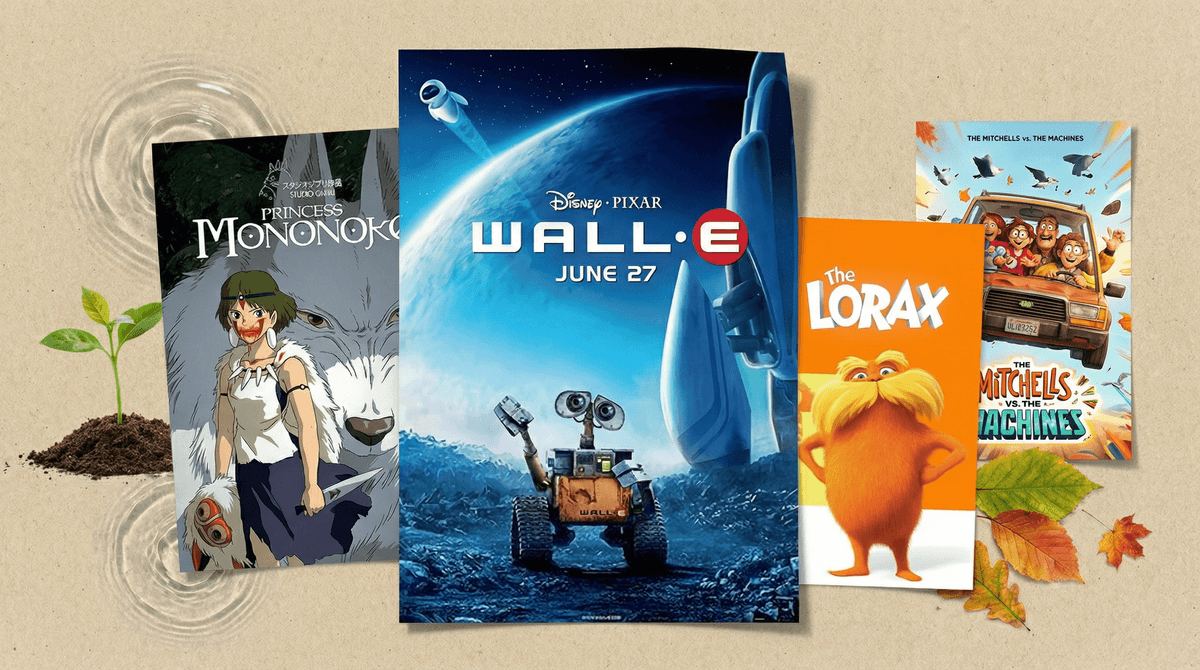
The 2012 adaptation of Dr. Seuss's environmental classic. A kid in a plastic city with bottled air learns about the Lorax, who "speaks for the trees" against the Once-ler's industrial greed.
It's colorful, funny, and has a great message about corporate greed versus environmental stewardship. The songs are earworms (sorry in advance for "How Bad Can I Be?"). Some purists prefer the original 1972 animated short, which is darker and more faithful to Seuss—both are worth watching.
Parent note: Very kid-friendly. The villain is more silly than scary. Great starter environmental film for younger kids.
Ages 10+ | 1997 | 2h 14m
Studio Ghibli's masterpiece about the conflict between industrial progress and nature. A cursed prince gets caught between Iron Town (mining and forging) and the forest gods defending their home. Unlike most kids' movies, there's no clear villain—both sides have legitimate needs and perspectives.
This is the most sophisticated environmental film on this list. It doesn't offer easy answers about progress versus preservation. The forest spirits are beautiful and terrifying. The violence is real (there's blood, severed limbs, and death).
Parent note: This is PG-13 for good reason. The violence is stylized but present. Best for mature 10+ who can handle moral complexity. Worth watching together and discussing afterward.
Ages 9+ | 1984 | 1h 57m
Another Miyazaki environmental epic. Set in a post-apocalyptic world where toxic forests are spreading, a young princess discovers the pollution isn't the forest's fault—it's cleaning up humanity's mess. Sound familiar?
Nausicaä is basically WALL-E as a brave teenage girl with a glider. She sees beauty and purpose in what everyone else fears and wants to destroy. The world-building is incredible, and the message about understanding ecosystems rather than destroying them is timeless.
Parent note: Some intense battle scenes and disturbing imagery of war and pollution. The giant insects (Ohmu) are both beautiful and scary. Best for kids comfortable with epic fantasy stakes.
Ages 7+ | 2021 | 1h 47m
When a magical land is broken and its water source threatened, a warrior must find the last dragon to restore balance. It's about trusting others and working together to heal a broken world—pretty relevant for climate action.
The Southeast Asian-inspired setting is gorgeous, and Sisu (the dragon) brings WALL-E-level earnestness to saving the world. The environmental themes are woven into the story rather than stated outright.
Parent note: Some scary moments with the Druun (evil spirits) and themes of betrayal and trust that might need processing. Generally great for family viewing.
Ages 8+ | 2021 | 1h 54m
A family road trip interrupted by robot apocalypse. While the environmental message is less direct, it's all about technology running amok and the importance of human connection over screens and devices. The villain is literally an AI assistant that decides humans are obsolete.
It's hilarious, heartfelt, and the animation style is bonkers in the best way. If WALL-E is about humans disconnecting from Earth, this is about humans disconnecting from each other.
Parent note: Fast-paced and loud. Some scary robot imagery but played for laughs. Great for families who can handle action-comedy.
Ages 5+ | 2008 | 1h 41m
A fish-girl wants to become human after a boy rescues her from a polluted harbor. Miyazaki's most kid-friendly film, but the environmental themes are there—the ocean is full of trash, and Ponyo's father is trying to restore balance to a world humans have disrupted.
The animation of water and waves is mesmerizing. The story is simple and sweet. It's basically The Little Mermaid meets environmental fable, filtered through Miyazaki's gentle lens.
Parent note: Very accessible for younger kids. Some intense storm sequences but the overall tone is warm and magical. Perfect family film.
Ages 5-7: Start with The Lorax, Ponyo, or Happy Feet. Clear messages, colorful worlds, manageable stakes.
Ages 8-10: The Iron Giant, Big Hero 6, Raya and the Last Dragon, and The Mitchells vs. The Machines offer more complex themes while staying accessible.
Ages 10+: Ready for Princess Mononoke and Nausicaä? These require emotional maturity and ability to handle moral ambiguity. Watch together.
FernGully sits in a weird spot—the content is fine for 6+, but the scary villain might be too much for sensitive viewers under 8.
The beauty of these films is they do the heavy lifting for you. You don't need to deliver a lecture about climate change after watching. Instead, ask:
- "What do you think happened to make the world look like that?"
- "Why do you think the characters made those choices?"
- "What would you do differently?"
- "Does anything in the movie remind you of our world?"
For younger kids watching The Lorax or Happy Feet, you can pivot to action: "What's one thing we could do this week to help?" (Recycle more, use less plastic, plant something, etc.)
For older kids watching Princess Mononoke, lean into the complexity: "Do you think either side was wrong? What would you have done?" These films respect kids' ability to think critically about hard problems.
If you want to go deeper on environmental themes in media, check out this guide to eco-friendly family films or explore how animation tackles climate change.
WALL-E proved you can make kids care about the planet by making them care about characters first. These 10 films follow that blueprint—they're not environmental documentaries disguised as entertainment. They're genuine stories that happen to have something important to say about how we treat our world.
Some are gentle (Ponyo), some are intense (Princess Mononoke), some are hilarious (The Mitchells vs. The Machines). But they all share WALL-E's secret: environmental awareness through emotional connection.
Plus, they're all genuinely good films. You won't be hate-watching while your kids zone out. These are movies that hold up, that you'll quote later, that might even change how your family thinks about the world.
Start with whatever matches your kid's age and sensitivity level. Watch together. Talk about it. And maybe, just maybe, you'll raise humans who want to take care of this planet because they've seen what happens when we don't.
Next Steps:
- Browse more environmental films for kids
- Looking for shows instead? Check out nature documentaries kids actually enjoy
- Want to extend the learning? Here are books about environmentalism for young readers