Why Arrakis is everywhere in 2026
Even though this book hit shelves in 1965, it’s currently the center of the pop-culture universe. Between the massive Villeneuve films and the constant stream of memes, your teen is likely looking at that 600-plus page paperback with a mix of interest and dread. If they’re diving in because of The Chalamet Effect or the viral success of the recent movies, they need to know that the book is a much slower burn. It’s not an "action" novel in the modern sense. It’s a book about how religion, ecology, and politics grind people into dust.
If you want to understand why your kid is suddenly using words like Lisan al-Gaib or obsessing over "the spice," our Parent’s Guide to Arrakis, Spice, and Sci-Fi Survival breaks down the terminology. But for the reader, the real draw is the sheer scale. Herbert didn't just write a story; he built a functioning planet with its own linguistics and history.
The "Wikipedia" hurdle
The biggest friction point for a young reader is the first fifty pages. Herbert drops you into the middle of a conversation between space-witches and dukes without explaining a single thing. He uses words like kwisatz haderach and gom jabbar like they’re common English. Most editions have a glossary in the back—tell your kid to use it.
I’ve seen plenty of smart readers bounce off this book because they felt like they were failing a test. They aren't. You’re supposed to feel a bit lost. Once the Atreides family actually lands on Arrakis, the plot kicks into gear, but the initial barrier is real. If they can get past the first few chapters, they’ll usually finish the whole thing.
It’s the anti-Star Wars
We’re used to sci-fi being about "the hero’s journey" where a farm boy saves the galaxy. Dune looks like that on the surface, but it’s actually a warning about heroes. Paul Atreides isn't Luke Skywalker. He’s a young man who sees a terrible future and realizes he might be the one to cause it.
This makes it one of the best Sci-Fi Books for Teens because it treats them like adults. It asks if "the chosen one" is actually a good thing for the world, or just a tool for manipulation. For a generation that is already skeptical of institutions and power structures, this message hits hard.
The "How to Use It" move
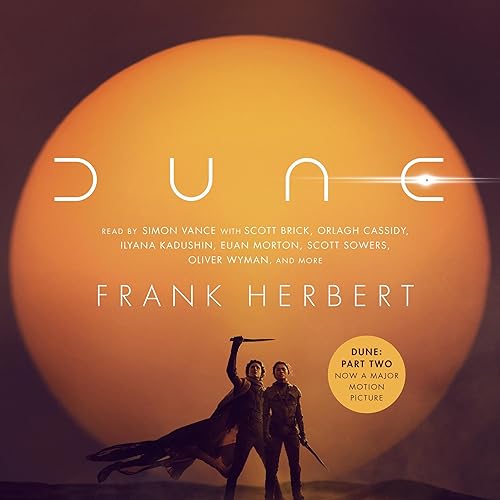
If your kid is struggling with the density, try the audiobook. The 2008 Audie Award-winning production is legendary for a reason. It uses a full cast for many of the dialogue sections, which helps keep the dozens of characters distinct. It’s a great way to "read" while commuting or doing chores, and it makes the philosophical monologues feel less like a lecture and more like a performance.
Don't worry about the sequels yet. The first book is a self-contained masterpiece. If they finish it and want more, they’ve officially entered the deep end of the genre. If they hate it, they’ve at least learned that even "classics" can be a slog if the vibe isn't right. Either way, they’ll finally understand what all those desert memes are actually about.