

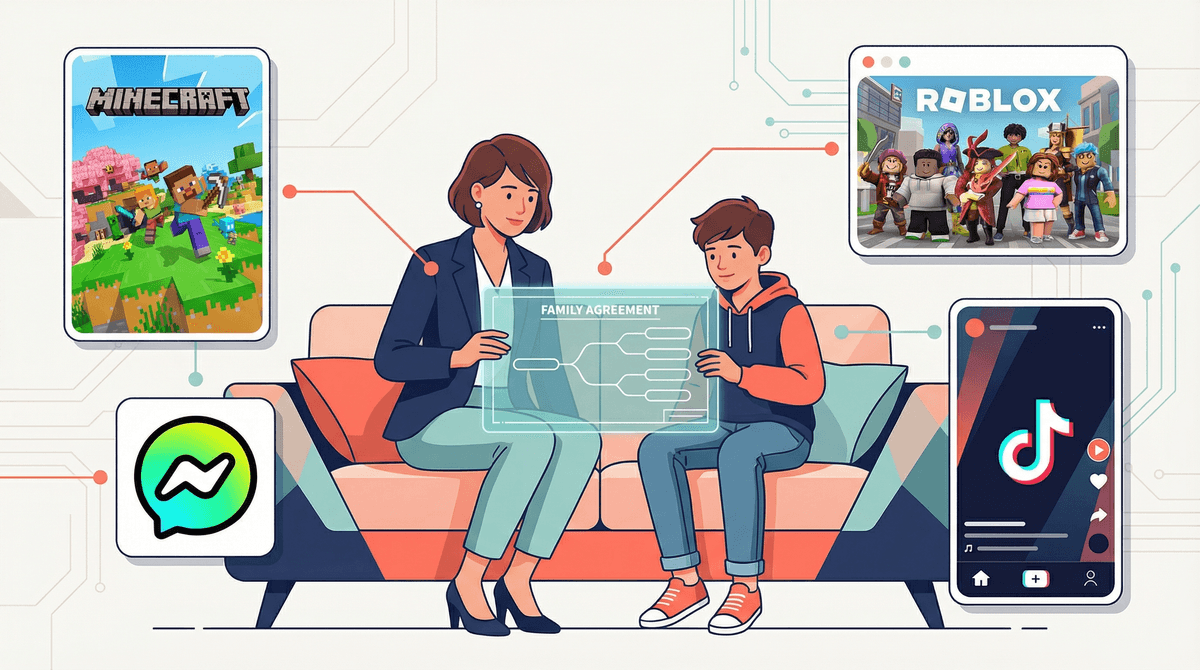
Digital citizenship policies are basically the rules and agreements families and schools create around technology use—but the ones that actually work aren't just a list of "don'ts" printed out and stuck on the fridge. They're living frameworks that teach kids how to be responsible, ethical, and safe online while still letting them participate in digital culture.
The problem? Most policies fail because they're either too vague ("be respectful online"), too restrictive (complete bans that kids immediately work around), or created without any kid input whatsoever. The policies that actually stick are the ones that balance structure with autonomy, consequences with teaching moments, and rules with real conversations.
Here's the thing: we can't protect kids from every digital risk, and honestly, we shouldn't try. What we can do is teach them to navigate digital spaces with good judgment, empathy, and critical thinking. That's what effective digital citizenship is about.
The data is pretty clear—kids who have structured guidance (not total restriction) around tech tend to make better decisions online. They're more likely to come to adults when something goes wrong, less likely to engage in cyberbullying, and better at recognizing manipulation or unsafe situations.
But here's what makes this tricky: every family's digital life looks different. What works for a 7-year-old is wildly different from what works for a 14-year-old. A kid who's super into gaming needs different guidance than one who's all about social media. And your family values around privacy, independence, and risk are going to be different from your neighbor's.
1. Age-Appropriate Expectations
Ages 5-8: At this age, policies should be simple and concrete. "We only use tablets in the living room" or "We ask before downloading new games." The focus is on establishing basic digital habits and safety rules. Kids this age need direct supervision, not abstract concepts about digital footprints.
Ages 9-12: This is when you can introduce more nuanced ideas. Talk about what information is private, how to recognize clickbait, why we don't say things online we wouldn't say in person. Policies can include earning privileges (like a first social media account on a platform like Messenger Kids) by demonstrating responsibility with current tech.
Ages 13-17: Teens need policies that acknowledge their growing independence while maintaining safety nets. This might look like "you can have Instagram, but I'm a follower" or "gaming until 10pm on weekends, 9pm on school nights." The best policies for this age group are co-created with the teen—they're way more likely to follow rules they helped design.
2. Clear Consequences (That You'll Actually Enforce)
Empty threats destroy credibility fast. If you say "one more YouTube video and you lose screen time for a week," you better be prepared to follow through.
The most effective consequences are:
- Proportional - The punishment fits the crime. Accidentally clicking a sketchy ad shouldn't result in the same consequence as deliberately cyberbullying someone.
- Restorative - Focus on fixing the problem, not just punishment. If your kid posts something mean, maybe the consequence includes a genuine apology and a conversation about impact.
- Teaching-focused - "You lose your phone for a month" teaches nothing. "You lose your phone for the weekend, and we're going to talk about why sharing that screenshot violated your friend's trust" actually builds citizenship.
3. Regular Check-Ins (Not Surveillance)
There's a huge difference between monitoring and snooping. Effective policies include transparent oversight that kids know about. This might look like:
- Weekly "tech talks" where you discuss what they're watching, playing, or chatting about
- Periodic phone checks that are scheduled, not surprise attacks (for younger kids especially)
- Using parental controls on Roblox or YouTube that you've explained to your kid
- Following their public social media accounts (not lurking on finstas you discovered by violating their privacy)
The goal is teaching kids to self-regulate, which means gradually loosening oversight as they demonstrate good judgment.
4. Flexibility and Updates
A policy that worked when your kid was 10 and only played Minecraft isn't going to cut it at 13 when they want Discord and TikTok. Good policies evolve.
Schedule regular family meetings (quarterly works for most families) to revisit rules. What's working? What feels unfair? What new apps or situations need to be addressed? Kids are way more invested in policies they have a voice in updating.
Most school digital citizenship programs focus heavily on "stranger danger" and "don't cyberbully"—which, sure, important. But they often miss the everyday digital literacy kids actually need: How do you fact-check a viral claim? What makes a source credible? How do algorithms shape what you see? Why does that free game keep pushing you to buy V-bucks?
The best school programs:
- Teach critical media literacy, not just fear-based warnings
- Involve parents through workshops or resources (not just policy handouts)
- Address AI literacy—this is huge right now
 with kids using ChatGPT for homework
 - Create peer mentorship programs where older kids help younger ones navigate digital challenges
- Have clear, enforced policies around phone use that are actually about learning, not just control
Here's a framework you can adapt:
Our Family's Digital Agreement
We believe technology should enhance our lives, not replace real connections.
Device-Free Zones/Times:
- Dinner table
- Bedrooms after [time]
- [Your family's specific boundaries]
Privacy & Safety:
- We don't share [specific info: full names, location, school name, etc.] online
- We ask before posting photos of others
- We tell a parent if something online makes us uncomfortable
- [Age-appropriate social media rules]
Content Guidelines:
- Games/shows are parent-approved until age [X]
- We check ratings and reviews together for new content
- If you're not sure if something is okay, ask first
Consequences:
- First issue: Conversation about what went wrong
- Repeated issues: [Specific, proportional consequence]
- Serious violations: [More significant consequence]
This Agreement Will Be Reviewed: [Date—quarterly or twice yearly]
Digital citizenship policies work when they're clear, consistent, age-appropriate, and co-created. They fail when they're just restriction without education, or when parents don't actually understand the digital spaces their kids inhabit.
You don't need to become a TikTok expert or start playing Fortnite (though it wouldn't hurt to understand why 47 million kids play it). But you do need to stay curious, keep talking, and be willing to admit when you don't know something.
The goal isn't raising kids who never make digital mistakes—it's raising kids who know how to handle it when they do, who think critically about what they consume, and who treat others with respect online and off.
-
Audit your current situation - What rules do you actually have? Are they enforced? Do your kids even know what they are?
-
Have a family meeting - Not a lecture, a conversation. What's working? What feels unfair? What situations have come up that you haven't addressed?
-
Draft together - Use the template above as a starting point, but customize it. Write it down. Everyone signs it.
-
Set a review date - Put it in your calendar now. Digital citizenship isn't one-and-done.
-
Get educated - Use Screenwise to understand what your kids are actually using. Take the survey to see how your family's digital habits compare to your community. Get advice for specific questions
when you're stuck.
This stuff is hard, and there's no perfect answer. But having intentional policies—even imperfect ones—is infinitely better than just hoping for the best.