

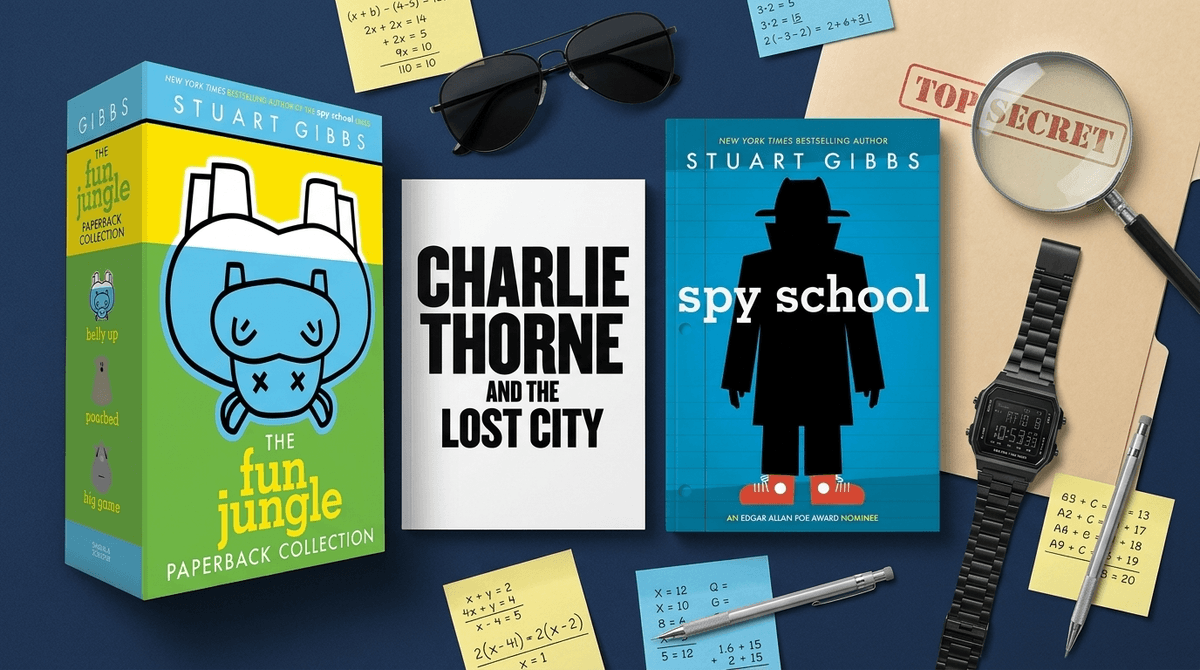
Stuart Gibbs’ Spy School is the ultimate gateway drug for kids who claim they hate reading but love a good explosion. If you’re looking at the generic age ratings and seeing "10+" but your 8-year-old is begging for it, here is the reality: the series is remarkably clean, genuinely funny, and perfectly calibrated for the middle-grade brain that wants James Bond stakes with middle-school maturity.
The Spy School series is a home run for kids aged 8 to 12, blending fast-paced action with the relatable awkwardness of being a "mediocre" kid in an elite world. While ratings often suggest 10+, most 3rd and 4th graders handle the cartoonish violence and mild crushes just fine. If they finish the series, point them toward City Spies or Gibbs' own Charlie Thorne series next.
The reason Spy School works where other "adventure" books fail is the protagonist, Ben Ripley. Ben isn't a super-soldier; he’s a math nerd who gets recruited to a top-secret CIA academy by mistake (or so it seems). He’s frequently terrified, socially awkward, and bad at almost everything except high-level logic.
For a kid, this is a massive relief. Most "hero" stories feature kids who are secretly the chosen one with innate powers. Ben is just a guy trying not to get blown up while also trying to figure out how to talk to his crush, Erica Hale. It’s the "relatable underdog" trope done with a high-octane engine.
If you check the standard guidelines, you’ll see Spy School often pegged for ages 10 and up. That’s a safe, conservative play, but it’s not the whole story. Here is what is actually in the books:
The Violence
Yes, there are bombs. Yes, there are kidnappings. Yes, people shoot at each other. But it’s "A-Team" violence—lots of action, very little blood, and the good guys almost always escape through some clever use of a ventilation shaft or a math equation. It’s intense in the way a Pixar action sequence is intense, not in the way a Jason Bourne movie is intense.
The Romance
This is usually what bumps the age rating up in parents' minds. There are crushes. Ben is head-over-heels for Erica Hale (who is objectively better at everything than he is). There’s some hand-holding and the occasional chaste kiss in later books, but it’s mostly characterized by the "I don't know what to do with my hands" brand of middle-school awkwardness. It’s sweet, not suggestive.
The Humor
Stuart Gibbs leans hard into snark. He pokes fun at the incompetence of the CIA, the absurdity of evil villains, and the general weirdness of puberty. If your kid has a dry sense of humor, they’ll get the jokes. If they’re on the younger side (7 or 8), some of the institutional satire might fly over their heads, but the physical comedy and fast plotting will keep them moving.
At Screenwise, we’re big believers that literacy is multi-stranded. If your kid is a reluctant reader or struggles with decoding long blocks of text, don't sleep on the Spy School audiobooks.
Listening to these stories builds the "language comprehension" strands of the reading rope—vocabulary, narrative structure, and background knowledge—without the friction of staring at a page. If they’re "reading" with their ears, they’re still building the mental machinery they’ll need for high school English. Plus, the Spy School Graphic Novels are a fantastic bridge for kids who need the visual support to keep the momentum going.
If your kid burns through Ben Ripley’s adventures, Gibbs has a whole ecosystem of "smart kids in over their heads" stories.
- FunJungle: Think "CSI: Zoo." It’s a mystery series set in a massive Texas theme park. It’s slightly more grounded than Spy School but just as funny.
- Charlie Thorne: This is the "level up" series. Charlie is a 12-year-old genius on the run from Mossad and the CIA. It’s a bit faster and more "global thriller" than Spy School.
- Moon Base Alpha: A murder mystery... on the moon. It’s great for kids who like a side of sci-fi with their sleuthing.
The hardest part of the Spy School series isn't the content—it's the sheer volume of books. There are over a dozen titles now, including the upcoming Spy School Goes Wild and Spy School Goes North. Once a kid is in, they’re in for the long haul.
Pro-tip: If you’re starting the series with a younger reader (8 or 9), read the first book together. The "on-boarding" of the spy world can be a little dense with acronyms and character introductions. Once they get through the first 50 pages and Ben is officially at the Academy, they’ll usually take off on their own.

Instead of asking "What happened in the chapter?" try these:
- "Ben is supposedly the 'worst' spy at the school, but he keeps saving the day. Why do you think his 'weaknesses' actually help him?"
- "The adults in the CIA are often portrayed as pretty clueless. Do you think the book is being fair, or is it just funnier that way?"
- "If you had to pick one 'spy skill' to actually be good at, would it be coding, hand-to-hand combat, or blending into a crowd?"
Q: Is Spy School appropriate for an 8-year-old? Yes, for most 8-year-olds, it’s a great fit. The violence is cartoonish and the "romance" is limited to innocent crushes. If they are a strong reader or you're doing the audiobook, they'll likely love it.
Q: Does Spy School have any bad language? It’s very mild. You might get the occasional "sucks" or "heck," but Stuart Gibbs keeps the dialogue clean and focused on the action and humor. It's much tamer than your average Marvel movie.
Q: Which Stuart Gibbs series should my kid start with? Spy School is the flagship for a reason—it’s the most accessible. However, if your kid is an animal lover, FunJungle is a fantastic alternative.
Q: Are the Spy School graphic novels the same as the books? They follow the same plot as the original novels but condensed for the format. They are excellent for visual learners or as a way to "re-read" the series quickly.
Spy School is one of those rare series that actually lives up to the hype. It’s intentional entertainment that respects a kid’s intelligence while keeping the "fun" front and center. If your kid is ready for a step up from Diary of a Wimpy Kid but isn't quite ready for the heavy themes of YA dystopian novels, Ben Ripley is your guy.
- Check out our best books for kids list for more middle-grade hits.
- Moving into middle school? See our digital guide for middle schoolers.
- If they want more action, look into our best movies for kids for spy-themed picks.