

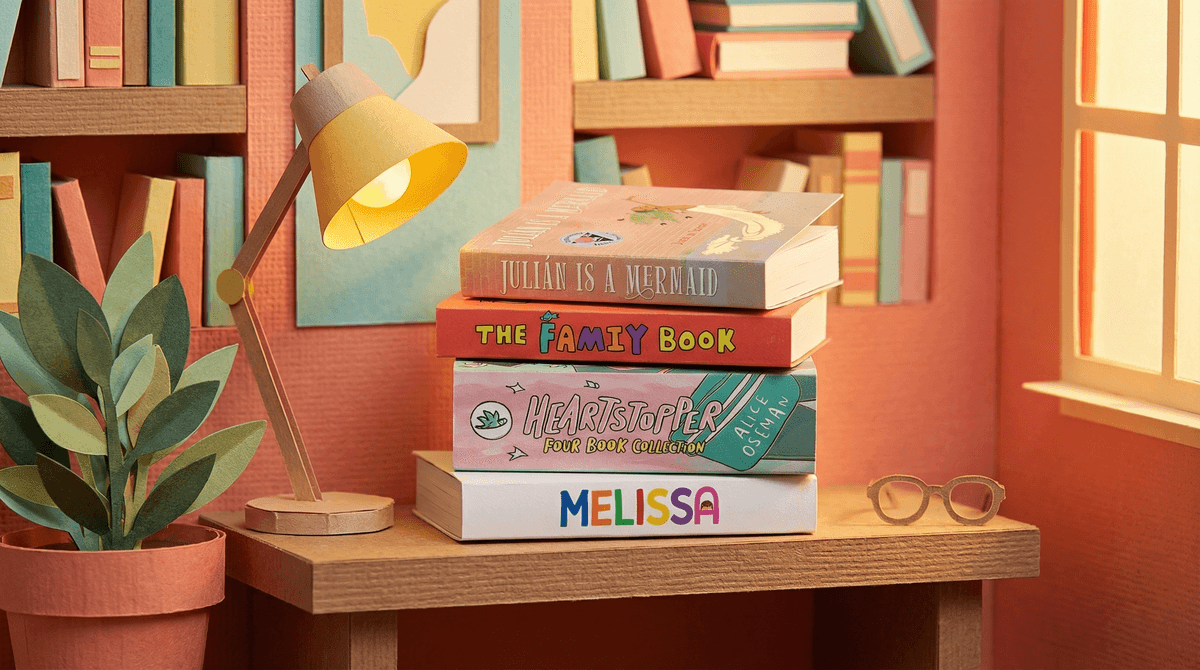
We're talking about books that include characters who are gay, lesbian, bisexual, transgender, queer, or part of families with LGBTQ+ parents. These range from picture books where a kid happens to have two moms (and that's just part of the story, not THE story) to YA novels where a teen is navigating coming out alongside all the other messy parts of growing up.
Here's the thing: representation in books isn't new, but it's definitely more visible now than it was even five years ago. You'll find LGBTQ+ characters in everything from board books about families to fantasy epics to contemporary realistic fiction. Sometimes the character's identity is central to the plot, sometimes it's just part of who they are while they're solving mysteries or fighting dragons or figuring out middle school drama.
For kids who are LGBTQ+ or questioning: Seeing yourself in books matters. Like, really matters. Research consistently shows that representation helps kids feel less alone, understand their own experiences, and imagine positive futures for themselves.
For kids with LGBTQ+ family members or friends: Books help normalize what they already know to be true—that families come in all configurations and love is love.
For all kids: Exposure to diverse characters builds empathy and understanding. It's basically the literary version of "different people exist in the world and that's completely normal."
The data is pretty clear: kids who read diverse books show increased empathy and reduced prejudice. It's not about pushing an agenda—it's about reflecting reality. LGBTQ+ people exist. LGBTQ+ families exist. Kids benefit from seeing that reflected in their reading.
Ages 3-7 (Picture Books)
At this age, books with LGBTQ+ characters usually focus on families and feelings—the same stuff all picture books cover, just with different family structures.
What works well:
- And Tango Makes Three - Based on a true story about two male penguins raising a chick
- Julián Is a Mermaid - A gorgeous book about a boy who loves mermaids and self-expression
- Stella Brings the Family - About a girl with two dads navigating Mother's Day at school
- The Family Book by Todd Parr - Simple, colorful celebration of all kinds of families
These books treat diverse families as completely normal (because they are). If your kid asks questions, answer them simply and move on. "Yep, some families have two dads. Some have a mom and a dad. Some have one parent. All kinds of families!" Done.
Ages 8-12 (Middle Grade)
This is where you start seeing more characters who are figuring out their own identities, not just kids with LGBTQ+ parents. The best middle grade books weave identity into larger stories about friendship, adventure, and growing up.
Strong choices:
- Melissa (formerly George) by Alex Gino - About a transgender girl who wants to play Charlotte in the school play
- The Best at It by Maulik Pancholy - A boy dealing with anxiety, family expectations, and his first crush (on another boy)
- Ivy Aberdeen's Letter to the World - A girl processing a tornado, family secrets, and her feelings for another girl
- Rick Riordan books - The Percy Jackson universe includes several LGBTQ+ characters (Nico di Angelo, Alex Fierro) as part of diverse casts
At this age, kids are starting to understand identity in more complex ways. These books show characters navigating real challenges—bullying, family acceptance, self-discovery—alongside the regular stuff of growing up.
Ages 13+ (Young Adult)
YA is where you get the full spectrum: romance, coming out stories, historical fiction, fantasy with queer characters, contemporary realistic fiction. The content gets more mature (because teens are dealing with more mature stuff), but there's still a huge range.
Worth reading:
- Heartstopper series by Alice Oseman - Sweet, affirming romance between two boys (also a great Netflix show)
- Cemetery Boys by Aiden Thomas - A transgender brujo trying to prove himself to his family
- Red, White & Royal Blue - Rom-com about the president's son falling for a British prince
- The House in the Cerulean Sea by TJ Klune - A cozy fantasy about found family and love
Check content ratings before handing these over—some YA deals with heavier themes (sex, violence, trauma) regardless of whether LGBTQ+ characters are involved.
"But my kid is too young to understand this stuff."
Kids understand families and feelings way earlier than we give them credit for. Picture books about two-dad families aren't teaching sex education—they're teaching that families look different. If your kid can handle Bluey talking about Bluey's family, they can handle a book about a different family structure.
"What if my kid has questions I don't know how to answer?"
Answer honestly and age-appropriately. For younger kids: "Some families have a mom and a dad, some have two moms, some have two dads, some have one parent. What matters is that families love each other." For older kids: "Some people are attracted to people of the same gender, some to different genders, some to multiple genders. That's normal human variation."
If you're genuinely stuck, say so: "That's a great question. Let me think about how to explain that" or "I'm not sure—let's look that up together."
"What about our family's religious beliefs?"
This is where you get to parent your own kids. You can choose not to include these books in your home library while still teaching your kids to treat everyone with kindness and respect. You can read these books and have conversations about your family's values alongside them. You can approach this however works for your family.
What you can't do is prevent your kids from encountering LGBTQ+ people and families in the world. They're classmates, teachers, neighbors, relatives, characters in media. Books are actually a pretty low-stakes way to introduce these conversations on your terms.
"How do I find these books?"
- Ask your librarian (seriously, they're incredible at this)
- Check out the Stonewall Book Awards
 for quality LGBTQ+ children's and YA literature
 - Look for Rainbow Book List recommendations
- Browse the "diverse books" sections at bookstores
- Check Common Sense Media for content details and age recommendations
Books with LGBTQ+ characters aren't "controversial reading material"—they're just books. Some are fantastic, some are mediocre, some are beautifully written, some are just okay. Judge them the way you'd judge any book: Is it well-written? Age-appropriate? Interesting to your kid?
The goal isn't to force every kid to read every book with LGBTQ+ characters. It's to make sure these books are available and accessible for kids who need them, want them, or would benefit from them. Which, honestly, is all kids—because all kids benefit from seeing the full spectrum of human experience reflected in their reading.
If your kid is LGBTQ+ or questioning, these books can be lifelines. If your kid has LGBTQ+ family or friends, these books validate their reality. If your kid doesn't personally know anyone who's LGBTQ+ (or doesn't know they know anyone), these books expand their understanding of the world.
Start simple: Pick one book that matches your kid's age and interests. Read it together if they're young, or let them read independently if they're older. See what questions come up. Have conversations. And remember—books are just one part of how kids learn about the world. They're a good part, but they're not the only part.
Want book recommendations for your specific kid? Tell our Get book recommendations about your child's age, interests, and reading level—it can suggest titles that fit.
Curious about how to talk about gender identity with kids? Start here for age-appropriate conversation starters.
Looking for more diverse reading options? Check out guides to books about race and racism, neurodivergent characters, and disability representation.