

If your kid came home from the theater humming "Defying Gravity" and asking deep questions about whether the villain was actually the hero all along, welcome to the Wicked effect. The movie (and the Broadway musical it's based on) tells the origin story of the Wizard of Oz's Wicked Witch of the West—except she's not actually wicked at all. She's Elphaba, a green-skinned outcast who gets scapegoated by a corrupt system while her popular blonde friend Glinda gets to be the "good" witch.
It's a story about propaganda, friendship, standing up for what's right even when it costs you everything, and how history gets written by whoever controls the narrative. Also there are flying monkeys and incredible songs. The book by Gregory Maguire (which is way darker and more adult than the musical) kicked off an entire genre of "villain origin stories" and "twisted fairy tales" that reimagine classic stories from a different perspective.
The underdog wins (sort of). Elphaba is different, misunderstood, and ultimately chooses to be labeled "wicked" rather than compromise her values. That's catnip for any kid who's ever felt like they don't fit in.
It flips the script. Kids who grew up with The Wizard of Oz suddenly get to see it from a completely different angle. The Wizard isn't magical—he's a con artist. Glinda isn't purely good—she's complicated and sometimes selfish. It's like finding out there's a secret level in your favorite game.
The friendship is real. The Elphaba-Glinda dynamic is one of the best "opposites attract" friendships in modern storytelling. They're not just friends—they challenge each other, hurt each other, and ultimately shape who the other becomes.
It asks big questions. Why do people believe lies? What does it cost to stand up for what's right? Can you be friends with someone whose values are totally different from yours? These are the kinds of conversations kids are ready for once they hit middle school.
If your kid loved Wicked, here's what to put in their hands next:
For Ages 10-13
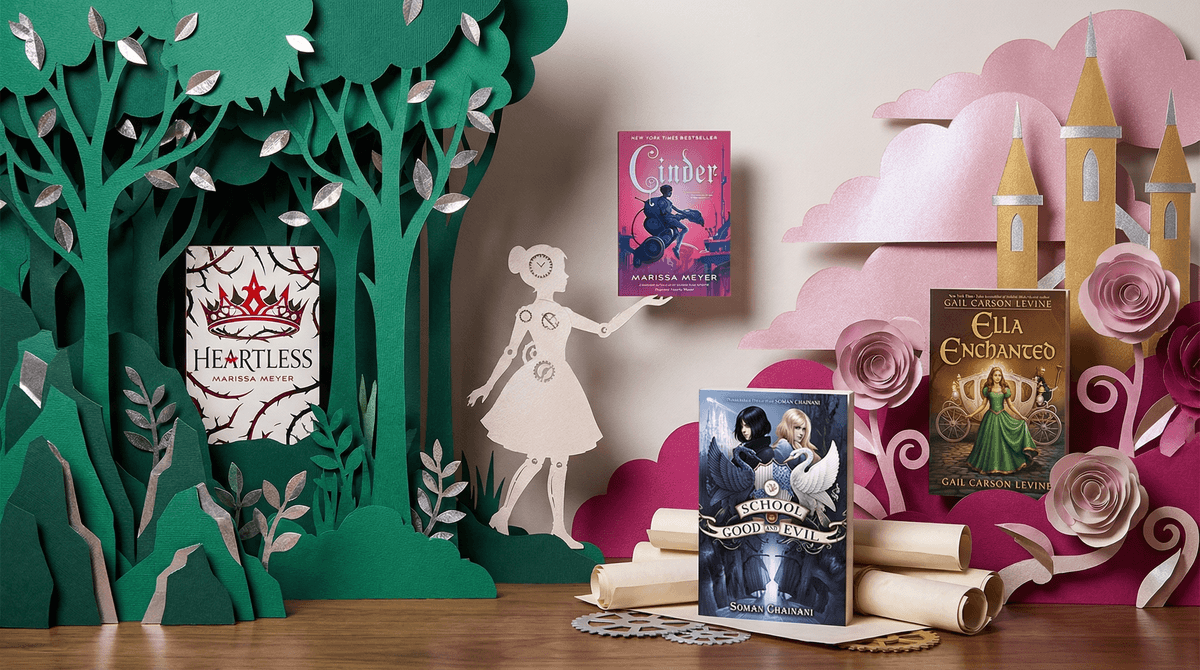
Ella Enchanted by Gail Carson Levine - The OG twisted fairy tale. Cinderella, but make it a curse of obedience that forces Ella to do whatever anyone tells her. It's clever, funny, and Ella is the kind of protagonist who solves her own problems. The movie exists but honestly, skip it and read the book.
The Land of Stories series by Chris Colfer - Twins fall into a book of fairy tales and discover all the characters are way more complex than the stories suggest. It's lighter than Wicked but has that same "what if the stories we know are incomplete?" energy.
A Tale Dark and Grimm by Adam Gidwitz - Hansel and Gretel, but they're the protagonists of their own epic journey through multiple twisted Grimm fairy tales. It's genuinely creepy in parts (heads get chopped off, kids get baked in ovens—you know, Grimm stuff), but it's also funny and surprisingly moving.
For Ages 12-15
Cinder by Marissa Meyer - Cinderella as a cyborg mechanic in futuristic Beijing dealing with a deadly plague and an evil lunar queen. The first book in The Lunar Chronicles, which reimagines Cinderella, Little Red Riding Hood, Rapunzel, and Snow White as a connected sci-fi series. It's addictive.
Fairest by Gail Carson Levine - Not a sequel to Ella Enchanted, but another twisted fairy tale by the same author. It's loosely based on Snow White, but it's really about a girl with an incredible singing voice who's convinced she's ugly. The "magic mirror" in this one is a literal magic mirror that lies. It gets dark.
The School for Good and Evil by Soman Chainani - Two best friends get kidnapped and sent to a school that trains fairy tale heroes and villains. Except Sophie (who's beautiful and expects to be a princess) gets sent to the Evil school, and Agatha (who's gloomy and expects to be a witch) gets sent to Good. The friendship dynamics are chef's kiss complicated, just like Elphaba and Glinda.
Geekerella by Ashley Poston - Okay, this is Cinderella meets fandom culture. Elle is a superfan of a sci-fi show, and she enters a contest to meet the actor playing the lead in the reboot. It's a rom-com, but it's also about who gets to be part of a fandom and what stories mean to us. If your kid is old enough to ship characters, they're old enough for this.
For Ages 14+
Wicked by Gregory Maguire - The actual book. Fair warning: it's way more adult than the musical. There's politics, philosophy, religion, sexuality, and some genuinely disturbing content. It's also brilliant. If your teen loved the themes of the musical and wants to go deeper, this is it—but maybe flip through it first.
Spinning Silver by Naomi Novik - A Jewish retelling of Rumpelstiltskin where the moneylender's daughter can literally turn silver into gold. It's about three women whose stories intertwine, and it's gorgeous and complex and the kind of book that makes you think about power and survival and what we owe each other.
Heartless by Marissa Meyer - The origin story of the Queen of Hearts from Alice in Wonderland. How did she become so cruel? Spoiler: it's a tragedy, and you will cry. If your kid loved watching Elphaba's transformation into the "Wicked Witch," this is that energy turned up to eleven.
The Cruel Prince by Holly Black - Not exactly a twisted fairy tale, but it's got that same vibe of a morally complicated protagonist navigating a world where the "good guys" aren't actually good. Jude is a human girl raised in Faerie, and she's determined to earn power in a court that despises her. It's dark, twisty, and the romance is complicated. Also, there's some violence and mature themes, so this is firmly for older teens.
These books get dark. That's kind of the point. Twisted fairy tales often go back to the original Grimm versions of stories, which were violent and weird. If your kid can handle Wicked (where the protagonist is hunted, her friends are experimented on, and she's ultimately scapegoated by society), they can probably handle most of these books—but it's worth skimming reviews on Common Sense Media if you want specifics about content.
They're asking grown-up questions. These books explore themes like systemic injustice, propaganda, the cost of integrity, and how power corrupts. That's actually a good thing—these are the kinds of stories that help kids develop critical thinking about the world around them. But it also means they might want to talk about heavy stuff.
The friendships are complicated. One of the best things about Wicked is that Elphaba and Glinda's friendship doesn't fit a neat template. They love each other and hurt each other and make different choices. A lot of these books explore similarly complex relationships, which is great modeling for the messy reality of real friendships.
Not all of them have happy endings. Wicked doesn't exactly end happily (depending on which version you're talking about). Some of these books are tragedies. Some are bittersweet. If your kid needs a guaranteed happy ending, check reviews first.
If your kid loved Wicked, they're ready for stories that complicate the narratives they grew up with. They want protagonists who are messy and morally gray. They want to think about why villains become villains and whether the heroes are actually heroic. They want friendships that feel real, not perfect.
These books deliver that. They're also just really, really good stories—the kind that stick with you long after you've finished reading.
And hey, if you end up reading any of these alongside your kid, even better. Because the conversations that come out of these books? Those are the good stuff.
Start with their age and reading level. If they're a strong reader who loved the musical, Ella Enchanted or The School for Good and Evil are great entry points. If they're older and ready for something darker, go straight to Cinder or Spinning Silver.
Check out our guide to age-appropriate fantasy books if you want more options organized by age.
Ask your librarian. Seriously, librarians are magic. Tell them your kid loved Wicked and they'll have a stack of recommendations in thirty seconds.
Read together if you can. Not in a forced "family book club" way, but just... having a copy of the same book floating around means you can talk about it naturally. And these books are genuinely fun to discuss.