

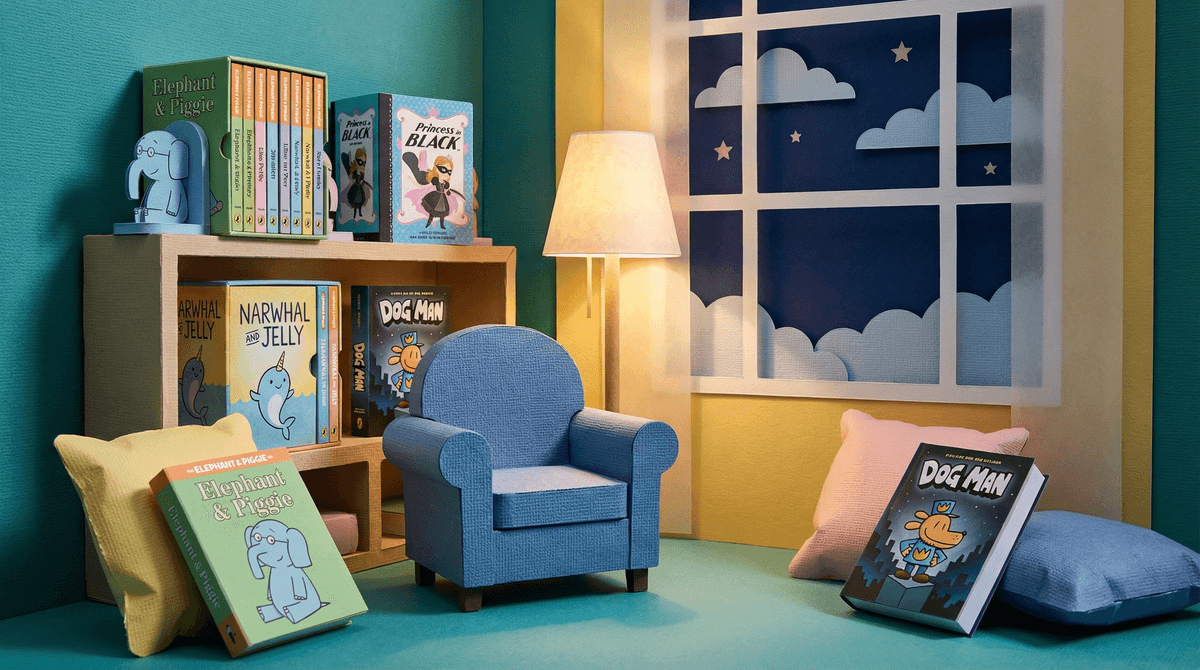
First grade is when reading goes from "sounding out words" to "wait, they're actually reading?" It's magical and messy and honestly kind of stressful because suddenly you're supposed to know if your kid should be reading Dog Man or Harry Potter or if letting them reread the same Elephant and Piggie book for the 47th time means they're falling behind.
Here's the thing: the best book for a first grader is the one they'll actually read. Full stop. But there's also legitimate value in understanding what makes a good first-grade book—not just for reading level, but for building the kind of relationship with reading that doesn't evaporate the second screens become an option.
First graders (ages 6-7) are in this wild transition zone. Some are still working through early readers while others are crushing chapter books. Most are somewhere in the middle, and all of them are forming opinions about whether reading is "fun" or "work." This year matters.
You picked up this guide because you're thinking about screen time, right? Here's the connection: kids who genuinely enjoy reading have a built-in alternative to screens. Not as a punishment or a "you should," but as something they actually want to do.
The research is pretty clear that kids who read for pleasure do better academically, have better focus, and yes—spend less time on screens without it being a battle. But "reading for pleasure" only happens if we don't kill it with books that are too hard, too boring, or too obviously educational.
First grade is when you're either building a reader or teaching a kid that reading is that thing they have to do for 20 minutes before they can have their tablet back.
Reading level matters, but engagement matters more. A book that's technically "too easy" but makes your kid laugh is infinitely better than a book at the "right level" that feels like homework.
Here's what to look for:
For early first grade (just starting to read independently):
- Repetitive text patterns
- Lots of pictures that support the story
- 1-3 sentences per page
- Familiar topics (pets, family, school)
- Books they can finish in one sitting (builds confidence)
For mid-to-late first grade:
- Simple chapter books (with pictures!)
- 2-5 sentences per page
- Humor (this is huge)
- Series (so they can keep going with characters they love)
- Mix of dialogue and description
For advanced first grade readers:
- Early chapter books without pictures
- More complex plots
- Books that still feel "age appropriate" even if reading level is higher
- Content that matches their emotional maturity (reading at a 4th grade level doesn't mean they're ready for 4th grade themes)
Early Readers (Just Starting Out)
Elephant and Piggie by Mo Willems - If your kid isn't into these yet, start here. They're funny, they're easy, and they teach emotional intelligence without being preachy. The entire series is solid gold.
Biscuit series by Alyssa Satin Capucilli - Simple, sweet, repetitive. Perfect for kids who need confidence builders.
Pete the Cat books by James Dean - The reading level varies across the series, but the early readers are great for kids who like music and repetition.
Bob Books - These aren't exciting, but they work. If your kid is really struggling and needs pure phonics practice in book form, these deliver.
Transitional Readers (Getting Confident)
Mercy Watson series by Kate DiCamillo - A pig who loves toast. Genuinely funny. Great illustrations. This series has converted many reluctant readers.
Fly Guy by Tedd Arnold - Gross humor, easy text, actually entertaining. Boys especially love these, but plenty of girls do too.
Princess in Black by Shannon Hale - Princesses who fight monsters in secret. Subverts princess tropes while still being accessible to princess-loving kids.
Narwhal and Jelly by Ben Clanton - Graphic novel format (easy to read, doesn't feel babyish), sweet friendship stories, ocean facts.
Strong Readers (Ready for Chapters)
Ivy and Bean by Annie Barrows - Two very different girls become best friends. The situations are realistic and funny. Great for kids navigating friendship dynamics.
The Magic Tree House series by Mary Pope Osborne - Yes, they're educational. Yes, kids still love them. Time travel, adventure, and sneaky history lessons. The series is long enough to keep them busy for months.
Junie B. Jones by Barbara Park - Controversial because Junie B. has attitude and uses incorrect grammar. But she's also hilarious and relatable and kids LOVE these books. (The grammar thing is overblown—your kid will be fine.)
Dog Man by Dav Pilkey - Graphic novels, potty humor, surprising heart. Some parents hate these. Kids are obsessed. If it gets your kid reading, it's worth it.
Ramona Quimby series by Beverly Cleary - Classic for a reason. Ramona is a real kid with real problems (annoying sisters, school stress, family money worries). The books are from the 1950s-90s but somehow still resonate.
Let's address this because it comes up constantly: graphic novels are real reading.
The visual literacy skills kids develop from reading graphic novels are legitimate and valuable. If your kid loves Dog Man, Narwhal and Jelly, or Babymouse, that's great. They're reading. They're following plots. They're building stamina.
Should they only read graphic novels? Probably not. But neither should they only read traditional chapter books. Mix it up.
Parents worry a lot about kids reading books that are "too easy." Here's the thing: rereading easy books builds fluency, confidence, and genuine love of reading.
If your first grader wants to reread Elephant and Piggie for the millionth time, let them. If they want to read books "below their level," that's fine. You want them associating reading with pleasure, not constant struggle.
Think about it like this: you're a strong reader, but do you only read challenging literary fiction? Or do you sometimes read beach reads, mysteries, or comfort rereads? Same principle.
Make books accessible. Keep them in the car, by the bed, in the bathroom, in the living room. The easier it is to grab a book, the more likely they'll read.
Read aloud still matters. Even if your kid can read independently, reading aloud together builds vocabulary, introduces complex stories, and keeps reading as bonding time rather than solo work.
Library trips are magic. Let them pick books—even if you think the choices are questionable. The autonomy matters. (Though you can absolutely veto anything genuinely inappropriate.)
Audiobooks count. If your kid loves listening to stories while drawing or building Lego, that's literacy too. Check out our guide to audiobooks for kids for more on this.
Don't weaponize reading. "You can have screen time after you read" turns reading into a chore. Better: "We have 30 minutes before dinner, want to read together or should I read to you?"
The best books for first graders are the ones they'll actually read. Prioritize engagement over level, humor over "educational value," and series over standalone books (because momentum matters).
Your goal this year isn't to create a kid who reads at a certain level. It's to create a kid who thinks reading is fun. Do that, and everything else follows—including a natural alternative to screens that doesn't require enforcement.
Next Steps:
- Hit the library this week and let your kid pick 5-10 books (yes, that many)
- Try at least one series from the list above
- Learn more about balancing screen time with other activities
- Stop stressing about reading level and start noticing what makes your kid laugh
And if all else fails, remember: a kid reading Dog Man is still reading. You're doing fine.