

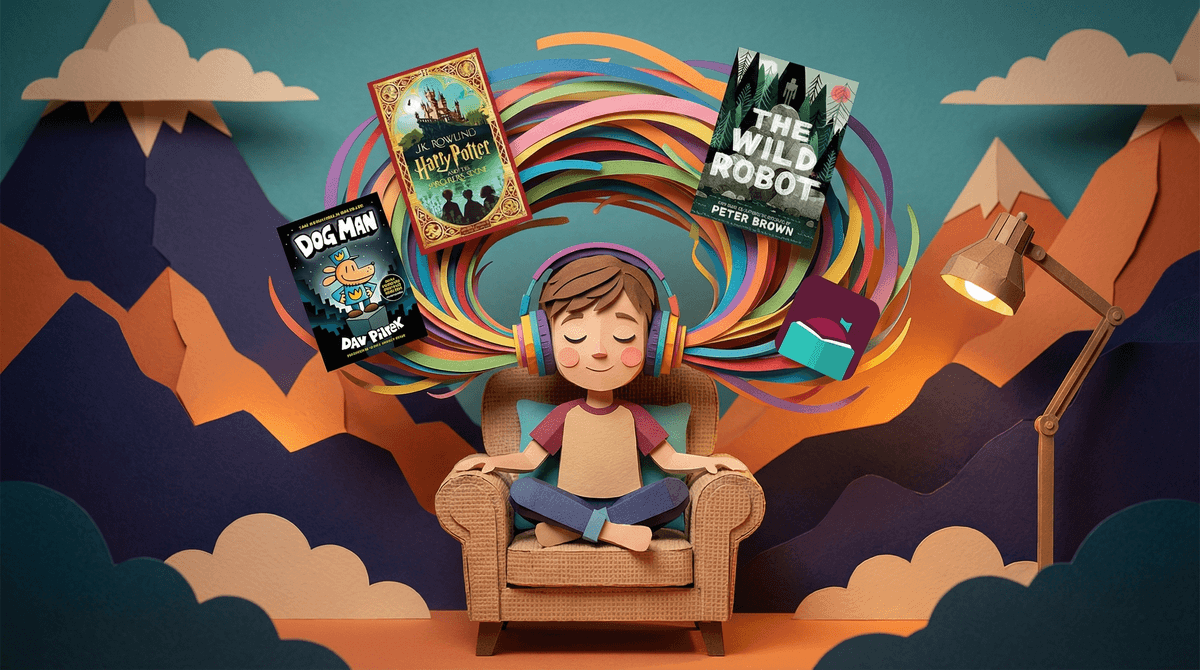
Let's get one thing straight: audiobooks are not the enemy. They're not "cheating" at reading, they're not rotting brains, and they're definitely not the same as scrolling TikTok for three hours.
Audiobooks are professionally narrated recordings of books that kids can listen to on devices, apps, or good old-fashioned CDs (remember those?). We're talking everything from Harry Potter read by Jim Dale to Dog Man with sound effects that make car rides slightly less chaotic.
The big question parents ask: Is listening to a book the same as reading it?
Short answer: It's complicated, but mostly yes—with some important nuances.
Here's the thing: we're living in a moment where kids are reading less than ever. Like, significantly less. But they're also more overscheduled, more anxious, and frankly, more exhausted than previous generations. Audiobooks offer a way to keep stories in their lives when sitting down with a physical book feels impossible.
The research here is actually pretty encouraging. Studies show that listening comprehension and reading comprehension activate very similar parts of the brain. When kids listen to a well-narrated story, they're building vocabulary, understanding narrative structure, developing empathy, and engaging with complex ideas—all the good stuff we want from reading.
But here's where it gets interesting: audiobooks can actually help struggling readers keep up with their peers. A third-grader who reads at a first-grade level can still enjoy age-appropriate stories through audio, which means they're not missing out on the vocabulary and concepts their classmates are getting. This is huge for maintaining confidence and interest in stories during those tough learning years.
Audiobooks are genuinely screen-free. Yes, you might use an app to play them, but once they're playing, kids can close their eyes, stare out the window, draw, build with Legos, or just exist without a screen in their face. This is not nothing in 2026.
They're perfect for long car rides, bedtime routines, and "rest time." That 45-minute drive to soccer practice? Suddenly it's three chapters of Percy Jackson instead of YouTube Kids rabbit holes.
They model fluent reading. Professional narrators show kids what expressive, well-paced reading sounds like. They do the voices, they nail the timing, they bring the story alive in ways that help kids understand how punctuation and dialogue actually work.
They can handle harder books. A fifth-grader might be able to listen to and fully comprehend a middle-grade novel that would frustrate them to read independently. This lets them access stories that challenge their thinking without overwhelming their decoding skills.
Audiobooks are not a replacement for learning to read. If your kid is in elementary school and still learning phonics, decoding, and reading mechanics, they absolutely need time with physical books too. Audiobooks are a supplement, not a substitute for the actual work of learning to read.
Not all listening is equal. There's a difference between actively listening to The Wild Robot and having it on as background noise while playing Roblox. Just like with physical books, comprehension requires attention. If your kid can't tell you what happened in the last chapter, they're not really listening.
Some kids will prefer reading, some will prefer listening, most will like both. And that's completely fine. We all consume stories differently. Some adults exclusively "read" via audiobooks during commutes. Some people need the physical page. Many of us do both depending on the situation.
The "cheating" concern is mostly adults projecting. Kids don't usually think audiobooks are cheating unless we tell them it is. They just think it's another way to enjoy a story. Let's not create guilt where none exists.
Ages 3-5: Audiobooks can be great for this age, but they work best when paired with pictures. Try books that come with physical copies so kids can follow along, or choose picture-book audiobooks where the narration is short enough to hold their attention. Elephant & Piggie audiobooks are perfect for this age.
Ages 6-8: This is the learning-to-read zone, so balance is key. Audiobooks are fantastic for car rides and quiet time, but these kids still need regular practice with physical books. Let them listen to harder chapter books while they're still working on decoding simpler ones independently.
Ages 9-12: Audiobooks can be a total game-changer here. Middle-grade novels like Wonder or The One and Only Ivan are beautifully narrated and can hook reluctant readers. Many kids this age will naturally start choosing between audio and physical based on the situation.
Ages 13+: Teens often rediscover reading through audiobooks. They can listen while doing chores, exercising, or commuting. The Hunger Games, Six of Crows, and other YA novels have incredible audio productions that rival podcasts for entertainment value.
Get a library card and download Libby. Seriously, this is step one. Free audiobooks, no commitment, easy interface. Your library probably has a huge collection.
Try audiobooks during specific times. Car rides, bedtime routine, "rest time" on weekends, while doing chores or building with Legos. Create contexts where listening makes sense.
Start with books they already love. If your kid has read Diary of a Wimpy Kid seventeen times, try the audiobook. Familiarity helps them understand what good listening comprehension feels like.
Check in about comprehension. Casually ask what's happening in the story. Not as a quiz, but as a conversation. If they can't tell you, they might need a more engaging book or a better listening environment.
Don't pit audiobooks against physical books. They're both reading. They're both valuable. Let kids choose based on the situation and their preference.
Audiobooks are a legitimate, valuable way for kids to engage with stories. They're not a cop-out, they're not lazy, and they're not destroying literacy. They're a tool—one that can make stories accessible during times when physical reading isn't practical or possible.
Should they be the only way your kid experiences books? No, especially not for younger kids still learning to read. But as part of a balanced media diet that includes physical books, audiobooks are genuinely great.
The goal isn't to create kids who only consume stories one specific way. The goal is to raise kids who love stories, period. However they get there is fine.
If you want to explore specific audiobook recommendations by age, check out our guide to the best audiobooks for kids. And if you're wondering how audiobooks fit into your family's overall screen time strategy, see how audiobooks fit into your specific situation .
.