

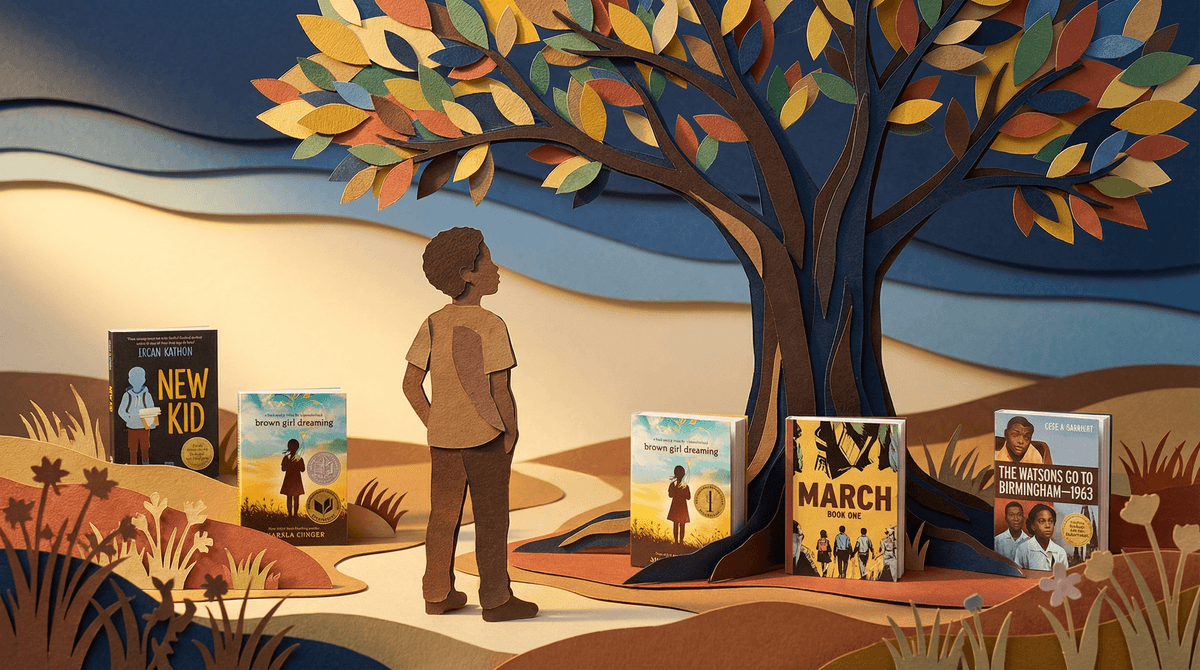
We're talking about books that go beyond the sanitized textbook version of Black history—stories that center Black voices, experiences, and perspectives in ways that resonate with middle schoolers. These are books that tackle complex topics like civil rights, systemic racism, identity, and resistance, but in formats that meet tweens where they are: graphic novels, historical fiction, memoirs, and contemporary stories that connect past to present.
The tween years (roughly ages 9-13) are when kids start developing more nuanced thinking about justice, fairness, and their own identities. They're old enough to handle harder truths but still need stories with hope and agency. The right books can spark conversations that matter—about history, yes, but also about the world they're growing up in right now.
Here's the thing: whether your child is Black, white, or any other identity, understanding Black history isn't optional extra credit. It's American history. It's world history. And for tweens specifically, these stories offer something crucial—examples of young people who stood up, spoke out, and made change happen.
For Black tweens, these books provide mirrors that reflect their experiences and heritage in ways that build pride and understanding. For non-Black tweens, they provide windows into experiences different from their own, building empathy and challenging assumptions. Either way, these stories combat the "single story" problem—the idea that any group of people can be understood through one narrow narrative.
Also, let's be real: tweens are already encountering conversations about race, justice, and inequality—on TikTok, in Roblox chat, at school, in the news. Books give you a chance to engage with these topics together, with context and nuance, rather than leaving them to figure it out through algorithm-fed social media.
Graphic Novels & Visual Storytelling
March trilogy by John Lewis (Ages 10+) — This is the gold standard. Congressman John Lewis's memoir of the civil rights movement in graphic novel form is powerful, accessible, and doesn't shy away from the violence and sacrifice involved. The visual format makes it engaging for reluctant readers while maintaining serious depth.
New Kid by Jerry Craft (Ages 8-12) — A lighter entry point that still tackles real issues. Jordan navigates being one of the few Black kids at a prestigious private school, dealing with microaggressions, code-switching, and finding his place. It's funny and relatable while addressing real experiences with racism.
Historical Fiction
The Watsons Go to Birmingham—1963 by Christopher Paul Curtis (Ages 9-12) — This one balances humor with heartbreak. A Black family from Michigan visits Alabama during the summer of the 16th Street Baptist Church bombing. It's a masterclass in making history feel immediate and personal.
One Crazy Summer by Rita Williams-Garcia (Ages 9-12) — Three sisters visit their estranged mother in Oakland in 1968 and end up at a Black Panther summer camp. It's a nuanced look at the Black Power movement through kids' eyes, full of humor and heart.
Memoir & Biography
Brown Girl Dreaming by Jacqueline Woodson (Ages 10+) — This verse memoir about growing up Black in the 1960s and 70s is absolutely gorgeous. It's accessible for tweens who might be intimidated by longer prose, and Woodson's writing is just stunning.
Stamped: Racism, Antiracism, and You by Jason Reynolds and Ibram X. Kendi (Ages 12+) — A remix of Kendi's "Stamped from the Beginning" specifically for young readers. Reynolds brings his signature voice to a comprehensive look at racist ideas in America. It's direct, conversational, and doesn't pull punches.
Contemporary Fiction
Ghost Boys by Jewell Parker Rhodes (Ages 10+) — This one's heavy but important. After a 12-year-old Black boy is shot by police, his ghost witnesses the aftermath and connects with the ghost of Emmett Till. It's a powerful way to talk about police violence and the continuum of racial injustice.
The Hate U Give by Angie Thomas (Ages 13+) — For older tweens/young teens. Starr witnesses her friend's death at the hands of police and must decide whether to speak out. It's raw, real, and has become a cultural touchstone for conversations about activism and code-switching.
Don't make it weird. The goal isn't to turn every book into a heavy discussion. Sometimes kids just want to read a good story. Let them.
But do be available. Create space for conversations by asking open-ended questions: "What did you think about that?" "How would you have felt in that situation?" "Does anything in this book remind you of things happening now?"
Acknowledge discomfort. Some of these books deal with violence, racism, and injustice. It's okay to say "This is hard to read about" or "I'm angry about this too." Kids need to know their feelings are valid.
Connect past to present. Help tweens see the through-lines between historical events and current issues. Why does the civil rights movement matter when thinking about Black Lives Matter? How do Jim Crow laws connect to current debates about voting rights?
Listen more than you lecture. Tweens are developing their own perspectives. Your job isn't to tell them what to think but to help them think critically and empathetically.
Ages 9-11: Focus on books with hopeful narratives and young protagonists. Graphic novels and historical fiction work well. Topics like the civil rights movement, school integration, and everyday experiences of Black kids navigating predominantly white spaces are accessible.
Ages 12-13: Older tweens can handle more complex topics including police violence, systemic racism, and the Black Power movement. They're ready for books that don't tie everything up neatly, that acknowledge ongoing struggles.
Content heads-up: Many of these books deal with racial violence, both historical and contemporary. Check Common Sense Media for specific content warnings if you want to preview, but also trust that these books are written specifically for this age group with appropriate framing.
Black history books for tweens aren't just for February. They're for building understanding, empathy, and critical thinking year-round. The best ones don't just teach history—they help kids understand how the past shapes the present and how they can shape the future.
Start with one book. Read it together or separately, then talk about it. Follow your tween's interests—if they love graphic novels, start there. If they're into contemporary stories, go that route. The goal isn't to check boxes but to open doors to conversations that matter.
And here's the thing: these are just good books. Powerful stories, compelling characters, beautiful writing. You don't need a special reason to read them beyond the fact that they're worth reading.
Pick one book from the list above that fits your tween's reading level and interests. If you're not sure where to start, New Kid or Brown Girl Dreaming are both accessible entry points that lead naturally to deeper conversations.
Consider reading the same book your tween is reading (or listening to the audiobook during your commute) so you can discuss it together. Even if they roll their eyes at the suggestion, they'll probably bring it up eventually.
And if you want more recommendations tailored to your specific kid, Find books that match their interests and reading level .
.