

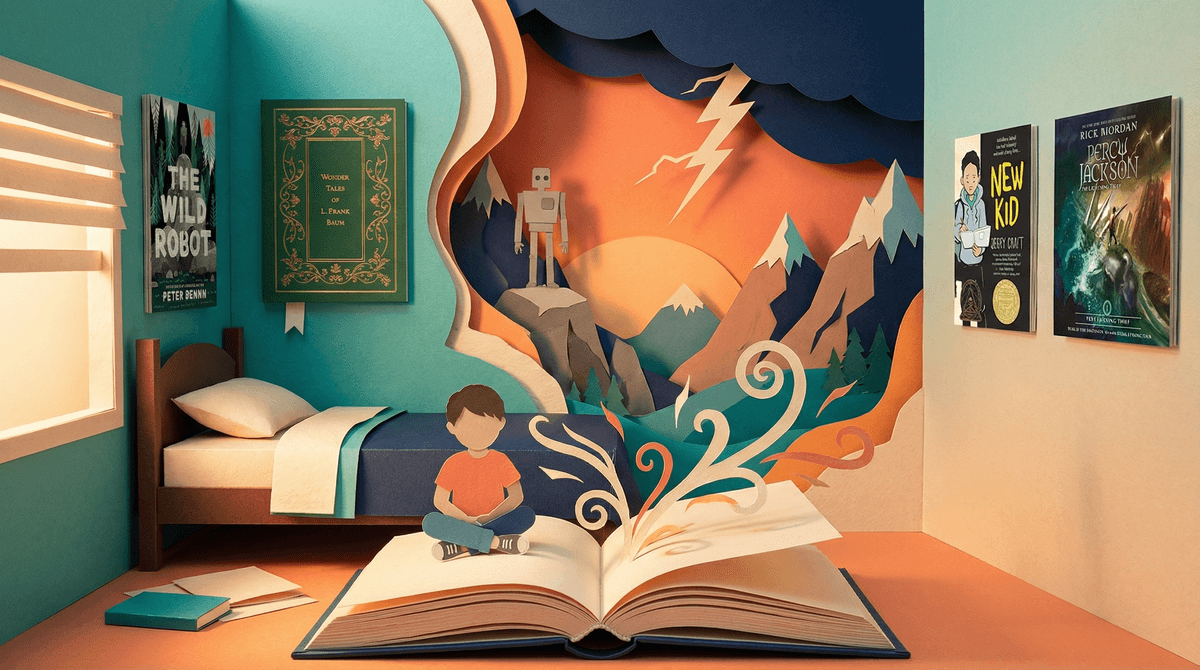
Fourth grade is this wild inflection point in reading development. Kids are transitioning from "learning to read" to "reading to learn," which sounds like educational jargon but actually matters a ton. Their brains are ready for more complex plots, nuanced characters, and bigger ideas—but they're also competing with YouTube, Roblox, and whatever the latest TikTok trend is (probably something involving Skibidi Toilet references).
The sweet spot? Books that feel like page-turners, not homework. Stories that make kids want to put down the tablet and find out what happens next. And yeah, books that actually build reading stamina and comprehension skills without feeling like a slog.
Here's the thing about 4th grade reading lists: they need to do double duty. They need to meet kids where they are developmentally (typically reading at a 3rd-5th grade level, with huge variation), while also being genuinely engaging enough to compete with screens. No pressure, right?
For the Fantasy-Obsessed
Percy Jackson and the Lightning Thief by Rick Riordan - This is the gateway drug to reading for so many reluctant 4th graders. Greek mythology meets middle school drama, with a protagonist who has ADHD and dyslexia. The chapters are short (perfect for building stamina), the humor lands, and there are five books in the series plus multiple spin-offs. Fair warning: once they start, they'll burn through these fast.
The Wild Robot by Peter Brown - A robot stranded on an island learning to survive and connect with animals. It's got heart, adventure, and raises questions about what it means to be alive without being preachy about it. The illustrations break up the text nicely for kids still building confidence with chapter books.
Nevermoor: The Trials of Morrigan Crow by Jessica Townsend - Think Harry Potter vibes but more whimsical and less dark. A cursed girl gets whisked away to a magical city. The worldbuilding is chef's kiss, and it's got that "just one more chapter" quality.
For the Realistic Fiction Crew
Wonder by R.J. Palacio - Yes, it's everywhere. Yes, it might feel obvious. But there's a reason: it works. A kid with facial differences starting mainstream school, told from multiple perspectives. It builds empathy, tackles bullying, and most 4th graders can handle the emotional weight. Great for discussions about kindness and perspective-taking.
Fish in a Tree by Lynda Mullaly Hunt - About a girl who's been hiding her dyslexia through humor and misbehavior. This one resonates hard with kids who struggle academically or feel different. It's hopeful without being cheesy.
The One and Only Ivan by Katherine Applegate - A gorilla living in a shopping mall (based on a true story) who finds hope and friendship. Short chapters, accessible vocabulary, but emotionally sophisticated. Makes kids think about captivity, friendship, and doing the right thing.
For the Laugh-Out-Loud Readers
Diary of a Wimpy Kid series by Jeff Kinney - Look, these aren't going to win literary awards, but they get reluctant readers reading. The cartoon format makes them feel less intimidating, and the humor is genuinely funny to 9-10 year olds. Think of them as a stepping stone.
The Terrible Two by Mac Barnett and Jory John - Two pranksters team up. It's silly, it's clever, and it moves fast. Good for kids who think reading is boring.
For the Mystery Lovers
From the Mixed-Up Files of Mrs. Basil E. Frankweiler by E.L. Konigsburg - A classic for a reason. Two kids run away to live in the Metropolitan Museum of Art and solve a mystery. It's got adventure, sibling dynamics, and that cozy feeling of hiding in a museum after hours.
The Westing Game by Ellen Raskin - A puzzle mystery that's genuinely challenging. Sixteen heirs, one will, lots of twists. This one rewards careful reading and makes kids feel smart when they pick up on clues.
For the Graphic Novel Readers (Yes, They Count)
Amulet series by Kazu Kibuishi - Siblings discover a magical amulet and enter a fantasy world. Gorgeous artwork, complex plot, legitimate character development. Don't let anyone tell you graphic novels aren't "real reading"—the visual literacy skills are valuable too.
New Kid by Jerry Craft - A Black kid navigating a predominantly white private school. Funny, honest, and tackles race and class without being heavy-handed. Won a Newbery Medal, which should shut up any skeptics about graphic novels.
Fourth graders are all over the map. Some are crushing 300-page novels, others are still struggling with early chapter books. Reading levels can vary by 3-4 years in a single classroom, which is totally normal but makes recommendations hard.
The other challenge? Screens are genuinely more stimulating in the short term. A book requires sustained attention and mental effort to visualize scenes and track plot. A YouTube video or game delivers instant dopamine hits. This doesn't mean books are doomed, but it does mean we need to be strategic about building reading habits.
Reading stamina is built gradually. If your kid can only focus for 15 minutes, start there. Don't force hour-long reading sessions—that's how you create reading aversion.
Series are your friend. Once a kid connects with characters, they'll often power through multiple books. The investment in getting to know a world pays off across books.
Audiobooks count. Seriously. If your kid listens to Percy Jackson on audiobook during car rides, they're still building vocabulary, comprehension, and narrative understanding. The gatekeeping around "real reading" is unhelpful.
Let them reread favorites. Rereading builds fluency and confidence. If they want to read Dog Man for the fifteenth time, that's fine.
Reading below grade level isn't a crisis. Unless there's a diagnosed learning difference requiring intervention, kids develop at different rates. A 4th grader reading at a 3rd grade level who's enjoying books and building stamina is on a good path.
Make it social. Can they read the same book as a friend and talk about it? Can you do a family read-aloud at dinner?
Remove barriers. Keep books everywhere—in the car, by the couch, in the bathroom. Make the library a regular stop. Let them stay up 15 minutes late if they're reading in bed.
Connect to their interests. Sports kid? Try books about athletes. Minecraft obsessed? There are surprisingly decent Minecraft novels. Into gross facts? There are books for that too.
Model reading. Kids who see adults reading for pleasure are more likely to read themselves. Put down your phone and pick up a book sometimes.
Don't make it a punishment. "You're on screens too much, go read!" creates a negative association. Reading should feel like a privilege, not a consequence.
The best 4th grade reading list is the one your specific kid will actually read. These recommendations are starting points, not prescriptions. Pay attention to what captures their interest—whether it's mythology, realistic school stories, mysteries, or graphic novels—and follow that thread.
The goal isn't to create a literary scholar by age 10. It's to help them discover that books can be as engaging as screens, that reading can be a source of joy and escape, and that they're capable of sticking with a story from beginning to end.
And if they want to read Dog Man or Captain Underpants instead of Newbery winners? That's genuinely fine. A kid reading "low-quality" books is still building skills, vocabulary, and a reading habit. You can nudge toward more challenging content gradually, but shaming their choices is a fast track to killing their interest entirely.
Start with one book that matches your kid's interests. Visit the library together and let them browse. Ask their teacher what's popular in the classroom right now—peer recommendations are gold at this age.
And if you want more personalized recommendations based on your specific kid's reading level and interests, Find recommendations for your kid about what might work for your family.