

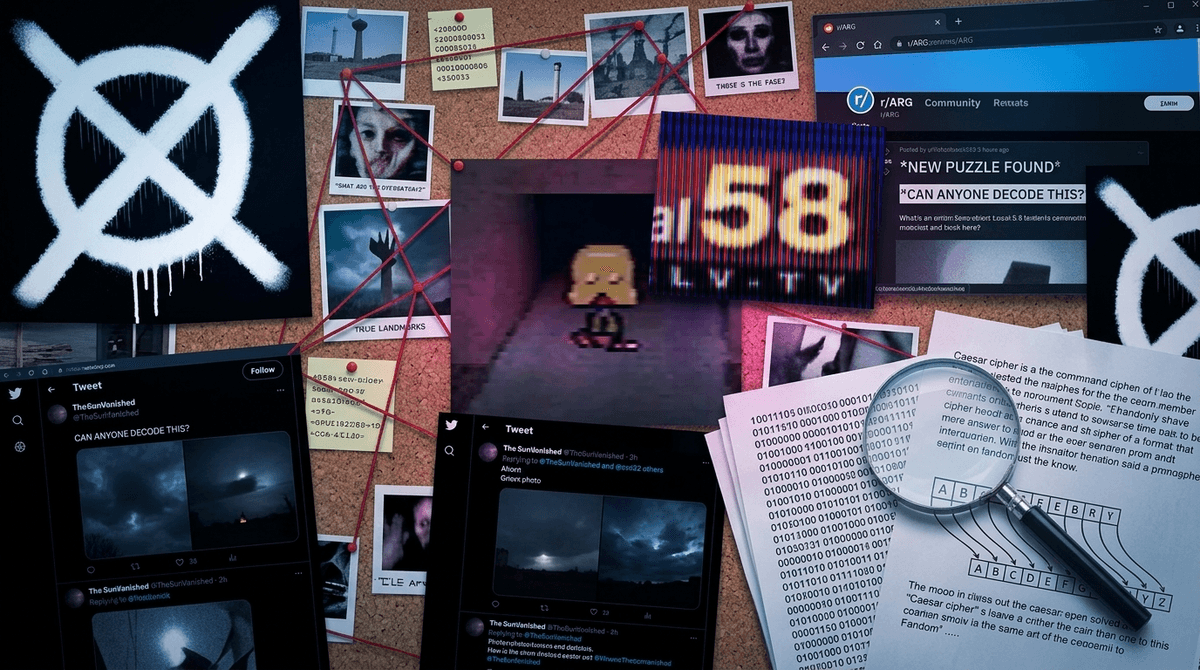
ARGs and Mystery Solving Communities: When Your Kid Becomes an Internet Detective
TL;DR: Your kid is staying up late solving puzzles with strangers on Discord, following cryptic YouTube videos, and connecting dots across multiple websites. They might be playing an ARG (Alternate Reality Game) or deep in an online mystery community. Here's what's actually happening, which communities are worth your attention, and how to keep them safe while they flex their detective muscles.
ARGs are interactive stories that blur the line between fiction and reality. They play out across multiple platforms—YouTube, websites, social media, even physical locations. Players work together to solve puzzles, decode messages, and uncover a narrative that unfolds in real-time.
Think of it like a massive, collaborative escape room that exists across the internet. A creator drops cryptic clues in a YouTube video. Players analyze every frame, discover hidden websites, decode ciphers, and share theories in forums. The story progresses based on what the community discovers.
Mystery solving communities are the hubs where this detective work happens—subreddits, Discord servers, YouTube comment sections, and dedicated forums where kids (and adults) collaborate to crack codes, solve puzzles, and theorize about everything from fictional mysteries to real-world enigmas.
The appeal is real: About 42% of kids in the Screenwise community use YouTube unsupervised, and a significant chunk of them are watching ARG content creators, mystery channels, and puzzle videos. These aren't just passive viewers—they're active participants in collaborative problem-solving.
It makes them feel smart. ARGs reward pattern recognition, critical thinking, and creative problem-solving. When your 12-year-old cracks a cipher that stumped hundreds of other players, that's a genuine achievement.
It's collaborative. Unlike traditional gaming where you might compete, ARGs are fundamentally cooperative. Players share discoveries, build on each other's theories, and celebrate wins together. For socially anxious kids or those who struggle to connect in traditional settings, this can be genuinely meaningful.
It's immersive. The boundary-blurring nature of ARGs creates engagement that traditional media can't match. When a fictional character leaves your kid a voicemail or updates a "real" social media account, it feels personal and urgent.
It teaches digital literacy. Kids learn to verify sources, spot fabricated content, analyze metadata, and think critically about what they see online—skills that are increasingly essential.
YouTube Mystery Channels
Game Theory (Ages 10+): MatPat's channel dissects games, movies, and internet mysteries with academic rigor. The production quality is high, the theories are well-researched, and while some content edges toward mature themes, it's generally appropriate for tweens and teens who can handle suspense.
Inside a Mind (Ages 12+): Deep dives into ARGs and internet mysteries. More atmospheric and occasionally creepy, but educational about how these narratives work.
Nexpo and Night Mind (Ages 13+): These channels explore darker internet mysteries and horror ARGs. The content can be genuinely unsettling, so preview before allowing younger viewers.
Active ARG Experiences
Cicada 3301 (Ages 14+): The legendary internet puzzle hunt from 2012 is now more of a case study than active game, but kids still attempt to solve it. Requires advanced cryptography and puzzle-solving skills.
Local58 and The Sun Vanished (Ages 13+): Horror-adjacent ARGs that unfold through social media and video. Atmospheric and creepy but ultimately fictional. Good for teens who enjoy horror but understand the boundaries.
The Game and Solving the Puzzle (Ages 10+): Lighter, more puzzle-focused ARGs without horror elements. Good entry points for younger mystery enthusiasts.
Mystery Communities
r/ARG and r/UnresolvedMysteries on Reddit (Ages 13+, with supervision): Active communities dissecting both fictional ARGs and real unsolved cases. The real-mystery forums can expose kids to genuinely disturbing content (true crime, missing persons, etc.), so this needs parental awareness.
Discord servers: About 4% of kids in the Screenwise community use Discord, and many ARG communities coordinate there. These servers can be well-moderated spaces for collaboration or chaotic free-for-alls depending on the community.
Blurred reality lines: The whole point of ARGs is that they feel real. Younger kids (under 12) can genuinely struggle to distinguish between fictional mysteries and reality. If your 10-year-old is convinced they're receiving messages from a ghost, that's a problem.
Stranger danger, but make it 2025: These communities require collaboration with strangers. While most ARG players are genuinely just puzzle enthusiasts, predators do exist in online spaces where kids congregate. The 4% of Screenwise families whose kids use Discord need to be especially vigilant about server moderation and privacy settings.
Disturbing content: Many ARGs incorporate horror elements, disturbing imagery, or mature themes. A mystery that starts with a quirky puzzle can escalate to simulated violence, psychological horror, or genuinely upsetting content. Preview content before your kid dives deep.
Time sink: ARGs are designed to be obsessive. New clues drop at unpredictable times. Your kid might feel pressure to stay online constantly or check Discord at 2 AM when a new puzzle drops. This can genuinely interfere with sleep and schoolwork.
Doxxing and privacy risks: Solving puzzles sometimes involves sharing discoveries, screenshots, or even geographic location data. Kids need to understand what information is safe to share and what isn't.
Real-world boundaries: Some ARGs incorporate physical locations or phone numbers. Your kid should never visit a location or call a number without your knowledge and permission.
Ages 8-10: Stick with puzzle games and mystery books rather than true ARGs. Escape room board games like Exit or Unlock! provide similar problem-solving satisfaction without internet risks.
Ages 11-12: YouTube mystery content like Game Theory is appropriate with supervision. Watch together and discuss how to distinguish fiction from reality. Avoid horror-focused content and real crime mysteries.
Ages 13-15: Can handle most ARG content with check-ins about what they're engaging with. Set clear boundaries about time spent, information shared, and which platforms are allowed. Discord use should be supervised with privacy settings locked down.
Ages 16+: Most teens can navigate these communities independently, but maintain open communication about what they're involved in and who they're interacting with.
Watch/play together: Ask your kid to show you what they're working on. Let them explain the puzzle, walk you through their theories, and teach you how to decode a cipher. This gives you visibility and validates their interest.
Set clear boundaries: Establish rules about which platforms are allowed, what information can be shared, and when participation needs to pause (bedtime, homework time, family time).
Talk about digital literacy: Use ARGs as a teaching opportunity. Discuss how creators fabricate "evidence," manipulate images, and create compelling fiction. This translates directly to spotting misinformation in other contexts.
Monitor for obsession: Healthy interest means your kid can disengage when needed. Unhealthy obsession means they're sacrificing sleep, schoolwork, or real-world relationships. If you're seeing the latter, it's time to intervene.
Respect the interest: Mystery-solving communities attract smart, creative kids. Don't dismiss this as "weird internet stuff." The skills they're building—critical thinking, collaboration, pattern recognition—are genuinely valuable.
- Your kid is sharing personal information (real name, location, school, photos) with community members
- They're visiting physical locations or calling phone numbers related to an ARG
- They're unable to distinguish between the fictional narrative and reality
- They're engaging with content that's causing genuine fear, anxiety, or sleep disruption
- They're being asked to keep community interactions secret from you
- Community members are trying to move conversations to private messages or less moderated platforms
- Your kid is spending money (some ARGs have monetization elements or scam offshoots)
ARGs and mystery communities can be genuinely enriching for the right kid at the right age. They build critical thinking, digital literacy, and collaborative problem-solving skills. They also create real risks around privacy, content exposure, and boundary-blurring between fiction and reality.
The sweet spot: engaged supervision. Know what your kid is participating in, who they're interacting with, and what content they're consuming. Set clear boundaries about time, platforms, and information sharing. And honestly? Consider joining them occasionally. Solving a puzzle together can be a surprisingly fun way to connect.
- Ask your kid what mystery content or ARGs they're following. Have them show you.
- Preview the content yourself before giving the green light.
- Set up Discord privacy settings if they're using it: Learn how to lock down Discord for kids

- Establish clear rules about information sharing and platform use
- Check in regularly about what they're working on and who they're talking to
Want to explore mystery content that's definitely age-appropriate? Or looking for offline puzzle alternatives? Screenwise can help you find the right fit for your family.