

Apps and Books Celebrating Latino Culture: A Parent's Guide
Look, I get it. You want your kids to see themselves in the stories they consume. Or maybe you want them to experience cultures beyond their own. Either way, the digital world can actually be pretty great for this—if you know where to look.
The thing is, representation in kids' media has come a long way, but it's still easy to default to whatever Netflix is pushing or whatever game all their friends are playing. So let's talk about some genuinely good apps, books, and digital resources that celebrate Latino culture without feeling like a homework assignment.
We're not talking about token representation or "special episode about heritage" vibes here. The best cultural content weaves traditions, language, and experiences into stories that are just... good. Kids don't need to be lectured about culture—they need to see it lived, celebrated, and normalized.
The resources I'm highlighting here do a few things well:
- Authentic voices: Created by or with Latino creators, not just about them
- Language options: Many offer Spanish, bilingual, or code-switching content (which is how a lot of families actually communicate)
- Everyday representation: Culture isn't just for holidays—it's in daily life, food, family dynamics, humor
- Age-appropriate: From picture books to YA novels, preschool apps to middle school reads
Canticos (Ages 0-5)
Canticos is basically the Latino Cocomelon, but actually good. Bilingual nursery rhymes and songs with adorable animation. The app has games, videos, and activities that teach Spanish naturally through music. My favorite part? It doesn't feel like a language learning app—it's just fun content that happens to be bilingual.
The catch: Some content is behind a paywall, but there's enough free stuff to see if your kid vibes with it.
Duolingo ABC (Ages 3-8)
While Duolingo itself is hit-or-miss for kids (that owl can be... intense), Duolingo ABC is genuinely solid for early literacy in both English and Spanish. It's free, ad-free, and doesn't guilt-trip your kid with push notifications.
Epic! (Ages 2-12)
Epic! is a digital library with thousands of books, and they've actually done a decent job curating Latino authors and stories. You can search by language (Spanish books are plentiful) or by theme. The app tracks reading time, which some kids love and others find stressful—know your child.
Real talk: Epic! is a subscription service ($10/month), but many schools provide free access. Check with your kid's teacher before paying.
Picture Books (Ages 3-8)
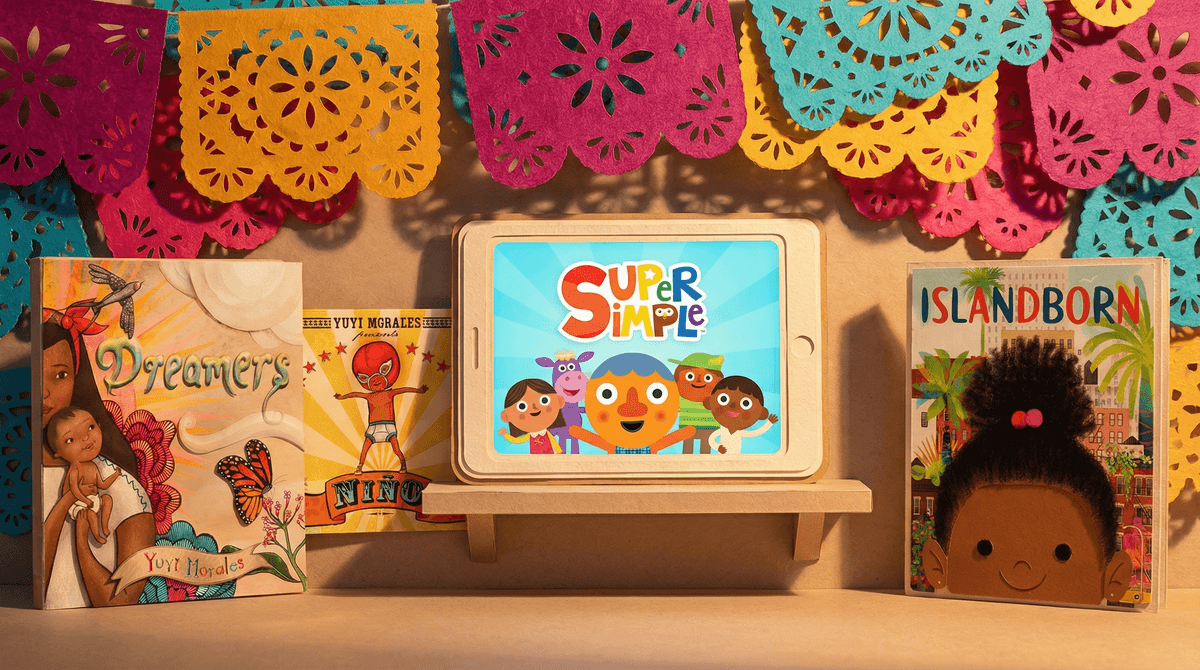
Dreamers by Yuyi Morales - This one will make you cry in the Target aisle. It's about an immigrant mother and child finding their way in a new country through the power of libraries and stories. Bilingual, gorgeous illustrations, just beautiful.
Islandborn by Junot Díaz - About a girl drawing on her community's memories of their island home. It captures that immigrant kid experience of knowing a place through stories rather than memory.
Niño Wrestles the World by Yuyi Morales - Lucha libre meets bedtime routine. It's silly, it's fun, and the illustrations are incredible.
Middle Grade (Ages 8-12)
The Total Tamale by Tanya Landman - Okay, this one is lighter fare, but it's a fun mystery series featuring a Mexican-American girl detective.
Ghost by Jason Reynolds - Not specifically about Latino culture, but Reynolds writes diverse characters naturally, and this track team series is beloved for good reason. The audiobook is especially great.
Sal and Gabi Break the Universe by Carlos Hernandez - Cuban-American kid, multiverse shenanigans, diabetes representation, and genuinely funny writing. This is the book that keeps reluctant readers up past bedtime.
Young Adult (Ages 12+)
The Poet X by Elizabeth Acevito - Dominican-American teen finding her voice through slam poetry. Deals with religion, first love, and family expectations. The audiobook (read by the author) is phenomenal.
I Am Not Your Perfect Mexican Daughter by Erika L. Sánchez - This one is heavier—grief, mental health, family secrets. But it's also funny and real and captures that experience of being caught between cultures.
Cemetery Boys by Aiden Thomas - Trans Latinx teen, Día de los Muertos, ghosts, romance. If your kid loved The Owl House, they'll probably dig this.
Disney+ has Encanto (obviously), but also check out:
- Coco - Still holds up, still makes everyone cry
- Elena of Avalor - For the princess-loving crowd (Ages 4-8)
- Diary of a Future President - Cuban-American middle schooler, very wholesome (Ages 8-14)
Netflix has Maya and the Three, which is visually stunning and based on Mesoamerican mythology. Fair warning: it gets intense—more appropriate for ages 10+.
A lot of parents ask: "Should I get the Spanish version even if we don't speak Spanish at home?"
Honestly? It depends. If you're trying to expose your kid to the language, bilingual books and apps are great. But if your kid is going to tune out because they don't understand, the English version with authentic cultural content is still valuable.
Code-switching content (mixing English and Spanish naturally) is often the sweet spot—it's how many bilingual families actually talk, and it normalizes hearing both languages without making it feel like "language learning time."
Representation isn't monolithic: Latino culture encompasses dozens of countries, hundreds of traditions, and millions of individual experiences. No single book or app will represent everyone—and that's okay. Variety matters.
Watch for stereotypes: Even well-meaning content can fall into tropes (the fiery Latina, the hard-working immigrant, the gang member). Look for stories where Latino characters are just... people. With problems and dreams that aren't only about their ethnicity.
Language ≠ culture: Spanish-language content isn't automatically culturally authentic, and English-language content can still be deeply rooted in Latino traditions. Pay attention to who's creating the content, not just what language it's in.
The best cultural content doesn't feel like eating your vegetables—it's just good storytelling that happens to reflect real experiences. Start with one book or app that fits your kid's interests (sports? fantasy? comedy?), and see where it goes.
And look, if your kid bounces off these recommendations, that's fine too. Not every book is for every kid. But having these options available—seeing these stories exist—that matters even if they don't become favorites.
If you want to explore more: Check out alternatives to screen time that celebrate culture, including podcasts, audiobooks, and activities.
If you're building a diverse library: Learn how to find age-appropriate books that reflect different experiences without relying on the same ten titles everyone recommends.
If your kid is resistant: Sometimes kids push back on "educational" feeling content. Here's how to introduce cultural media without making it feel like homework.