

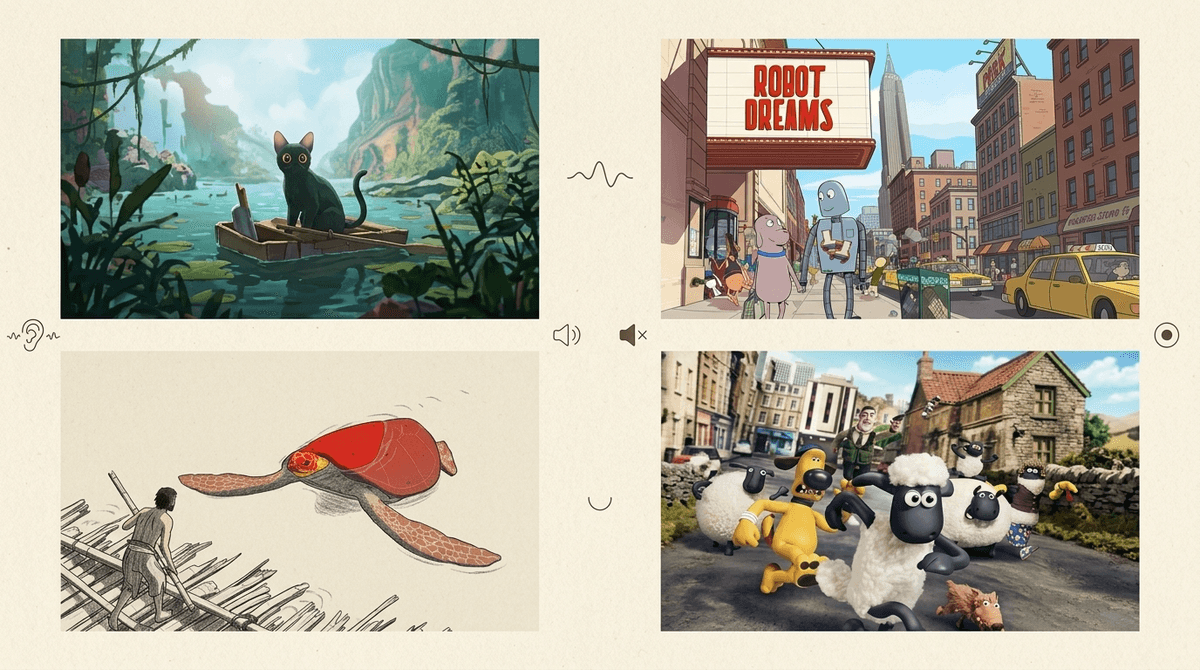
TL;DR: If your kid’s current media diet feels like a chaotic mix of Skibidi Toilet and high-decibel YouTube screamers, dialogue-free animated films are the "palate cleanser" you didn't know you needed. These movies replace chatter with visual storytelling, building deep focus and emotional intelligence.
Top Picks:
- The Modern Masterpiece: Flow
- The Emotional Powerhouse: Robot Dreams
- The Pure Comedy: Shaun the Sheep Movie
- The Artistic Journey: The Red Turtle
- The Nature Epic: Minuscule: Valley of the Lost Ants
We’ve all been there. You walk into the living room and the TV is blaring a show where neon-colored characters are narrating every single action they take. "I am jumping! Now I am eating a strawberry! Oh no, the strawberry is red!" It’s exhausting. It’s what we call "brain rot" adjacent—content that fills every silence with noise, leaving zero room for a kid to actually think, interpret, or breathe.
Enter the dialogue-free animated film.
I’m not talking about old-school silent movies with the flickering black-and-white film and the ragtime piano. I’m talking about high-end, modern animation that trusts your child’s brain enough to tell a story through movement, music, and expression. In a world of TikTok trends and 10-second attention spans, these films are a literal superpower for digital wellness.
When a movie doesn't have dialogue, it forces the viewer to do something most modern media doesn't: pay attention.
Research into visual literacy suggests that when kids can’t rely on a narrator telling them how to feel, they have to read "social cues" on the screen. They look at a character’s eyes, their posture, and the pacing of the music. They are practicing empathy and inference in real-time. It’s the difference between being spoon-fed a meal and learning how to cook one.
Plus, for the younger crowd (Ages 3-6), these films are incredibly inclusive. There’s no complex vocabulary to navigate, making the story accessible regardless of reading level or language processing speed. It’s "slow media" at its finest.
Find "slow media" recommendations for toddlers
Ages 7+ This is the one everyone is talking about right now. It follows a courageous cat in a world where humans seem to have vanished and a great flood is rising. The cat ends up on a boat with a diverse group of animals—a capybara, a lemur, a bird—and they have to learn to coexist to survive. Why it’s great: It is visually stunning. There is no "Disney-fied" talking. The animals act like animals. It teaches cooperation and resilience without a single "lesson" being preached through dialogue.
Ages 6+ Set in 1980s NYC, a lonely Dog builds a Robot friend. They become inseparable until a beach trip goes wrong and they are separated. The rest of the movie is about their separate journeys and the "dreams" they have of finding each other again. Why it’s great: Warning: You will cry. This movie handles the complexity of friendship, loss, and "moving on" better than almost any live-action drama. It’s a masterclass in emotional intelligence. If your kid is dealing with a friend moving away or a change in school, watch this together.
Ages 4+ From the creators of Wallace & Gromit, this is pure slapstick gold. Shaun and the flock head to the Big City to rescue their farmer. Why it’s great: It is genuinely funny for adults, too. The physical comedy is top-tier (think Buster Keaton but as a sheep). It’s a great "entry drug" to silent films because it’s fast-paced and hilarious, proving that "no talking" doesn't mean "boring."
Ages 8+ A co-production with the legendary Studio Ghibli, this tells the story of a man shipwrecked on a deserted island who encounters a giant red turtle. It’s more of a "fable" than a standard cartoon. Why it’s great: It deals with the cycle of life. It’s quiet, meditative, and beautiful. This is the perfect movie for a rainy Sunday when the kids are acting "wired" and need to downshift their nervous systems.
Ages 5+ Imagine a nature documentary mixed with a Star Wars battle, but with insects. A ladybug gets caught in the middle of a war between two tribes of ants over a tin of sugar cubes. Why it’s great: It uses real-life backgrounds with CGI insects. It’s incredibly clever and helps kids look at the "tiny world" in their own backyard with more curiosity.
If you’re not ready to commit to a 90-minute feature, there are some fantastic series and shorts that use the same "no-dialogue" philosophy:
- Pingu: The classic claymation penguin. They speak "Penguinese," which is basically gibberish, forcing kids to interpret tone and body language.
- Larva: Warning: This is definitely on the "gross-out" side of humor. It’s two larvae living under a storm drain. Very slapstick, very popular with the 6-9 age group.
- Oscar's Oasis: A lizard in the desert trying to find water and avoid predators. High energy, zero talking.
- Simon's Cat: Originally a YouTube series, these short clips perfectly capture the "dialogue-free" relationship between a cat and its long-suffering owner.
Check out our guide on the best YouTube channels for kids that aren't overstimulating
While most dialogue-free films are "cleaner" than your average PG-13 blockbuster, "silent" does not always mean "for little kids."
- Ages 3-5: Stick to Shaun the Sheep or Pingu. Their attention spans are still developing, and the clear physical comedy helps them follow the plot.
- Ages 6-9: This is the sweet spot for Robot Dreams and Minuscule. They can handle the emotional weight and the longer runtimes.
- Ages 10+: They might appreciate the artistry of The Red Turtle or the environmental themes in Flow.
Safety Note: Just because there's no talking doesn't mean there isn't intensity. Flow has some "peril" scenes involving drowning and predators that might be too much for very sensitive 5-year-olds. Always check the Screenwise WISE scores if you're unsure about intensity levels.
If your kids are used to the "Ohio" energy of MrBeast or the frantic pace of Roblox "obby" videos, they might complain that these movies are "boring" for the first ten minutes.
Don't pull the plug. Their brains just need a second to adjust to the lower dopamine hit.
Try asking these questions during or after the movie to engage them:
- "How do you think the Cat is feeling right now? How can you tell?"
- "What do you think they are saying to each other in their heads?"
- "If you had to add music to this scene, would it be fast or slow? Why?"
This turns "screen time" into an active exercise in visual literacy. You’re teaching them that stories aren't just things that happen to them—they are things they can interpret and understand.
Dialogue-free movies aren't just a gimmick; they are a vital tool in a parent's digital wellness kit. They provide a break from the noise, encourage deep focus, and build emotional intelligence in a way that "chatty" cartoons simply can't.
Next time the house feels too loud and the kids seem "fried" from a day of school and apps, dim the lights and put on Flow. You might find that the silence is exactly what everyone needed.
Next Steps:
- Audit your watchlist: Swap one "loud" show this week for a dialogue-free movie.
- Watch together: These films are often more rewarding for parents than standard kids' fare.
- Explore the genre: Check out our full list of visual storytelling gems for families.