

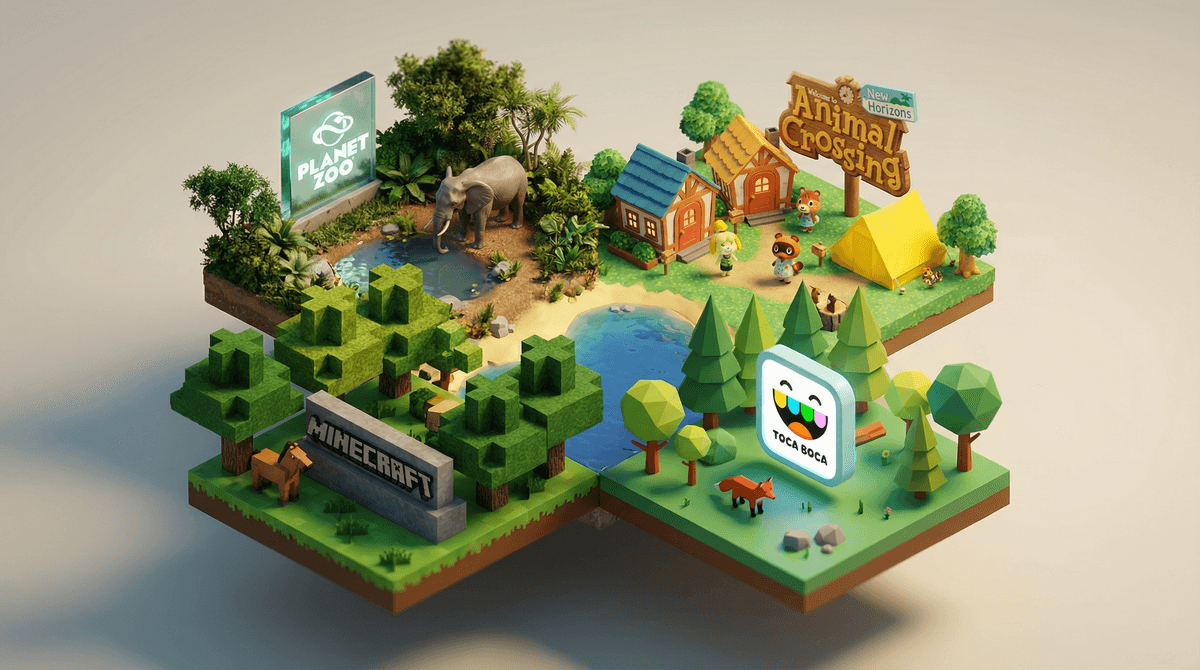
Animal games are exactly what they sound like—games where kids interact with virtual animals in some way. But the category is surprisingly vast. You've got everything from Minecraft mods where kids build elaborate horse stables, to Animal Crossing where they're managing an island full of anthropomorphic neighbors, to realistic wildlife simulators where they're literally controlling a wolf trying to survive in Yellowstone.
The appeal is universal and timeless—kids have always been obsessed with animals. But now instead of begging for a puppy or collecting plastic horses, they're raising virtual pets, running digital zoos, and role-playing as everything from house cats to apex predators.
Some of these games are educational goldmines. Others are basically just cute time-sinks. And a few—let's be honest—are thinly veiled cash grabs with adorable animal skins. Let's break down what's actually worth your kid's time.
The animal game obsession makes total sense when you think about it. Kids want agency and responsibility, but most families can't (or won't) get them the menagerie they're dreaming of. Virtual pets scratch that itch without the vet bills or litter box duties.
There's also something deeply satisfying about the nurture mechanic. Feeding, grooming, training—these games tap into the same caregiving instincts that make kids obsessed with baby dolls or playing house. Except now the baby is a dragon or a penguin colony.
And for older kids, animal games often offer complexity without the pressure. You're not saving the world or competing in ranked matches—you're just... existing as a fox. It's low-stakes, often beautiful, and surprisingly meditative.
The Actually Great Ones
Webkinz had its moment in the 2000s, but the modern equivalents are much better. Animal Jam (ages 7-12) is a solid choice—it's educational, has decent chat moderation, and actually teaches kids about ecosystems and conservation. Yes, there are membership upsells, but the free version is genuinely playable.
Wildcraft (ages 8+) lets kids play as wolves, foxes, or lynxes in a surprisingly realistic survival game. They're learning about food chains, territorial behavior, and ecosystem balance while thinking they're just running around as a cool wolf. The 3D environments are gorgeous, and there's actual educational content baked in.
For younger kids (ages 4-8), Toca Nature is a gem. It's a sandbox where they shape landscapes and see what animals show up. No ads, no in-app purchases, just pure creative play. This is the Toca Boca magic—simple, beautiful, and actually designed for kids rather than for extracting parental credit card numbers.
The Complicated Ones
Roblox has approximately seven million animal-themed games within it. Some are great (Adopt Me! is basically a virtual pet empire), others are... less great. The challenge with Roblox animal games is the same as all Roblox content—wildly variable quality, social features that need monitoring, and Robux pressure. If your kid is into Roblox animal games, learn how to set up proper parental controls and have regular conversations about spending.
Zoo Tycoon and Planet Zoo (ages 10+) are management simulators where kids run entire zoos. These are actually fantastic for teaching resource management, animal welfare concepts, and long-term planning. But they're complex, require decent reading skills, and work best on PC. Not great for quick iPad sessions, but excellent for a dedicated gaming setup.
The "Proceed With Caution" Category
Here's where I'm going to be blunt: a lot of mobile animal games are designed to be addictive first and fun second. If a game is free, has constant notifications, and is pushing you to check in every few hours or your virtual pet will be "sad"—that's not a game, that's a Skinner box with whiskers.
Watch out for games that:
- Require daily check-ins or animals "suffer"
- Have aggressive gacha mechanics (random boxes, breeding for rare colors)
- Push constant ads or premium currency
- Have unmoderated social features
I'm not naming names because these games come and go, but you'll know them when you see them. If your kid is having meltdowns about needing to "feed their pet" or is constantly asking for in-app purchases to get the "legendary sparkle unicorn," you're probably dealing with one of these.
Ages 4-7: Stick with contained apps like Toca Nature, Sago Mini animal games, or PBS Kids animal content. At this age, they don't need social features, they don't need complexity—they just need cute animals and simple interactions.
Ages 8-11: This is the sweet spot for games like Animal Jam, Wildcraft, or Minecraft with animal mods. They can handle more complexity and actually absorb educational content. Social features are okay with monitoring.
Ages 12+: They can handle the full simulation games like Planet Zoo or even Red Dead Redemption 2's hunting mechanics (if you're okay with the mature content otherwise). At this age, animal games can actually teach real skills—resource management, ecosystem thinking, even basic coding if they're modding.
The educational value is real—when it's actually educational. Games that teach about habitats, food chains, conservation, and animal behavior are genuinely valuable. But slapping a panda on a match-3 game doesn't make it educational.
Social features are the wild card. Some animal games have robust, well-moderated communities where kids trade pets and share zoo designs. Others have chat features that are basically unmoderated cesspools. Know what you're getting into .
.
The spending can add up fast. Virtual pets and rare animals are designed to be collectible. If your kid has access to in-app purchases, you need clear boundaries. Some families do a monthly gaming allowance, others ban all purchases, others allow spending of earned money only. Whatever works, but decide before the $200 charge for a virtual dragon shows up.
Screen time quality varies wildly. Thirty minutes building a thoughtful habitat in Planet Zoo is not the same as 30 minutes mindlessly clicking through gacha rolls trying to get a rare pet. Both are "animal games" but the engagement level is completely different.
Animal games can be wonderful—genuinely educational, creative, and engaging in ways that teach empathy and systems thinking. But the category is also full of manipulative garbage designed to extract maximum money and attention from kids who just want to play with a cute virtual dog.
Your job is to be the curator. Find the games that align with your family's values and your kid's interests. Set clear boundaries around spending and screen time. And maybe, occasionally, suggest they play with the actual dog who's been staring at them hopefully for the last hour.
- Check out our guide to the best educational games for kids for more recommendations
- If your kid is deep in the Roblox animal game world, read our Adopt Me! guide to understand what they're actually doing
- Looking for alternatives to screen-based animal content? Explore these nature documentaries and podcasts