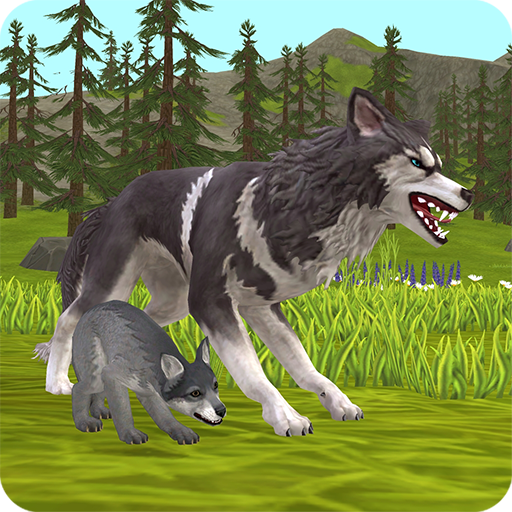
The core loop of Wildcraft is a digital version of playing "house," just with more fur and the occasional bear attack. You start as a single animal, find a mate, and eventually manage a pack of up to six cubs. On paper, it sounds like a nature documentary come to life. In practice, it’s a standard mobile RPG grind where you click on elk until they disappear and collect "essence" to level up your stats.
The customization trap
The real hook for most kids isn't the survival mechanics—which are fairly shallow—it’s the personalization. The game lets you tweak everything from eye color to the specific pitch of your wolf's bark. For a certain type of player, this is catnip. They aren't playing to "win"; they’re playing to inhabit a character. This is why you’ll see kids spending hours just standing around in the 3D world, chatting and showing off their rare skins rather than actually hunting.
This "hangout" vibe is exactly where the friction starts. Because the gameplay itself gets repetitive quickly, the community has pivoted toward heavy roleplaying. In a vacuum, roleplaying a wolf family is harmless. But in an unmoderated space, that "family" dynamic becomes a very easy way for strangers to build inappropriate rapport with children.
The KidSAFE paradox
You’ll see the KidSAFE Seal displayed prominently, which usually acts as a green light for parents. It’s important to understand what that badge actually covers: it generally means the app handles data privacy and advertising in a way that complies with safety standards. It does not mean a human being is watching the chat 24/7 to make sure a stranger isn't asking your ten-year-old for their Discord handle.
The community reports are consistent and alarming enough to ignore the "safe" branding. If your kid is dead-set on the animal lifestyle, you’re better off looking for animal games for kids that prioritize offline play or have much stricter, canned-response chat systems.
Better ways to scratch the itch
If the draw is "living as an animal," there are far more polished experiences out there. Wildcraft looks and feels like a 2018 mobile game—stiff animations, empty landscapes, and constant prompts to buy premium currency.
For parents looking at apps and games about animals and pet care, the goal is usually to find something that fosters empathy or teaches a bit of biology. Wildcraft doesn't really do that; it’s a combat game with a family skin. If you decide to let them play, the only move is to go into the settings and kill the chat entirely. Without the social element, the game becomes a mediocre, lonely hunting sim that your kid will likely get bored with in three days. That boredom is a much better outcome than the alternative.