

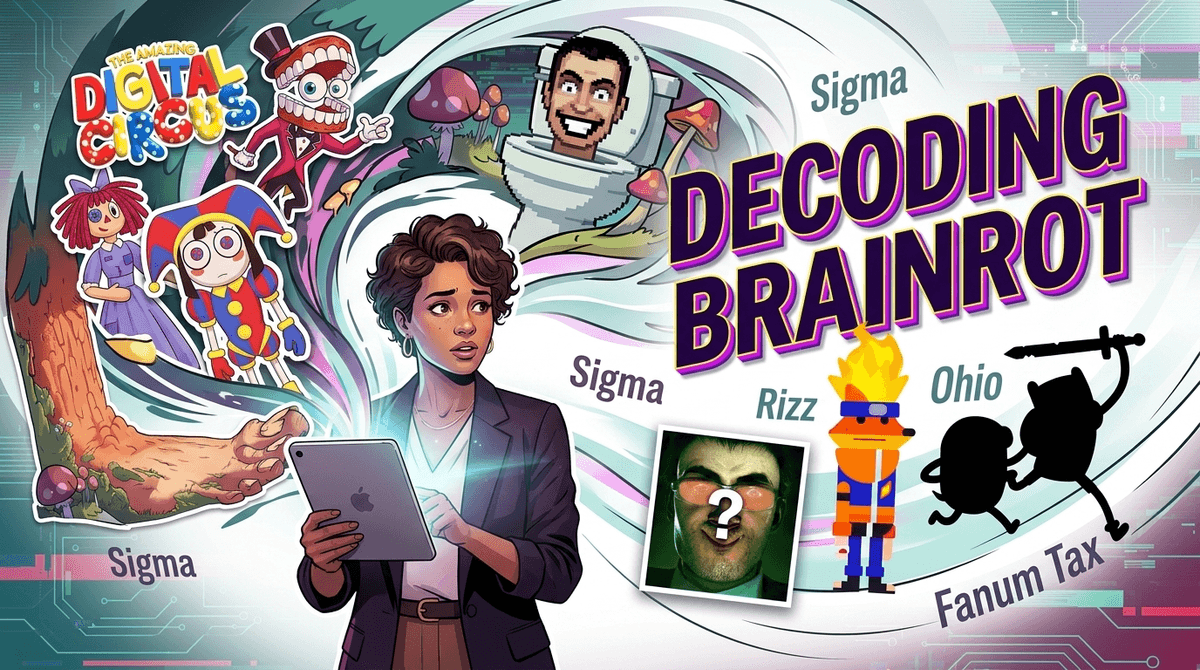
TL;DR
If your kid is shouting about "Skibidi," "Sigma," or "Ohio," don't panic—it’s likely just the Gen Alpha version of Dadaism. Most "brainrot" is harmlessly weird, but the line is crossed when absurdist humor turns into "edgelord" content that punches down or sexualizes topics.
Quick Recommendations:
- The "Safe Weird" (Ages 7+): The Amazing Digital Circus, Gravity Falls, and Adventure Time.
- The "Boundary" Content (Ages 13+): South Park, Family Guy, and unrestricted TikTok.
- Interactive Comedy: Exploding Kittens or Cards Against Humanity: Family Edition.
Get funny shows for a 10-year-old that aren't brainrot
We’ve officially entered 2026, and if you thought the "Skibidi Toilet" era was the peak of digital nonsensicality, I have some news for you. We are currently in the middle of what creators are calling the "Meme Reset."
For the last couple of years, "brainrot" became the catch-all term for the hyper-fast, low-context, and often bizarre content filling the feeds of Gen Alpha. It’s characterized by loud noises, repetitive catchphrases, and visuals that look like they were rendered on a toaster.
But as we kick off 2026, the humor is evolving. Kids are moving away from the pure chaos of early Skibidi Toilet and into a more "meta" phase. The humor is still weird, but it’s becoming more narrative-driven and, surprisingly, more creative. The "Reset" is a shift from consuming mindless loops to engaging with high-concept absurdity.
To a ten-year-old, saying "Only in Ohio" or calling someone a "Sigma" isn't just about the words—it's about the community. It’s an inside joke shared by millions of people their age.
- Identity and Belonging: Using the slang proves they are "in" on the joke. It’s no different than Gen X kids quoting Monty Python or Millennials saying "Wazzup."
- The Shock Factor: The visuals are intentionally "ugly" or "weird" because it creates a barrier between them and adults. If you don't "get it," that’s the point.
- Dopamine Looping: The short-form nature of TikTok and YouTube Shorts rewards quick, punchy, nonsensical payoffs.
Check out our guide on Gen Alpha slang and what it actually means
This is where things get tricky for us. How do you tell the difference between a kid being a harmless weirdo and a kid consuming content that is actually toxic?
The "Funny Weird" (Safe Zone)
This is absurdist humor. Think of it as modern-day Looney Tunes on steroids. It might be annoying to listen to, but it’s fundamentally harmless.
- Repetitive Catchphrases: "Rizz," "Fanum Tax," "Gyatt" (though this one is borderline—it refers to a physical reaction to someone's body, so use your judgment).
- Visual Non-sequiturs: Random characters appearing in places they don't belong (like the Garry's Mod style animations).
- Hyper-fixation on Niche Topics: Like the obsession with "Ohio" being a wasteland or "Grimace Shake" horror skits.
The "Crude & Toxic" (Danger Zone)
This is where the humor "punches down" or introduces adult themes under the guise of being a "meme."
- Edgelord Content: Jokes that rely on racism, sexism, or homophobia disguised as "dark humor" or "Sigma" culture.
- Brainless Consumerism: Channels that are just 10-minute ads for gambling-adjacent mechanics in Roblox.
- Sexualized Imagery: Some "brainrot" creators use characters from kids' games (like Digital Circus or Five Nights at Freddy's) in suggestive ways to bypass filters.
If you want to steer your kids toward comedy that has actual substance without losing that "weird" edge they crave, these are the gold standards for 2026.
Ages 9+ This is the poster child for the "2026 Meme Reset." It’s weird, it’s existential, and the animation is top-tier. It captures that "trapped in a digital world" vibe that kids love, but it actually has a plot and character development. It’s "brainrot" adjacent but with a high IQ.
Ages 7+ If your kid likes the mystery and "lore" of memes like Skibidi Toilet, they will love Gravity Falls. It’s the original "weird" show for kids, full of hidden codes and bizarre creatures. It’s smart, funny, and respects the audience's intelligence.
Ages 8+ The GOAT of absurdist comedy. It starts as a simple "boy and his dog" show and evolves into a complex, beautiful, and hilarious epic. It’s the perfect bridge between "this is just random" and "this is a masterpiece."
Ages 7+ If you want to move the humor off the screen, this is it. It’s chaotic, slightly gross, and very funny. It taps into that same "random" energy that drives YouTube trends but involves actual social interaction.
Learn more about why physical board games are the best tech-break for kids
We need to talk about the "Sigma" meme. Originally, it was a joke about being a "lone wolf." In 2025 and 2026, it has occasionally been co-opted by the "manosphere" to push some pretty regressive ideas about gender and power.
If your kid is saying "Sigma" because they did something cool or independent, it’s fine. If they start using it to justify being mean, dismissive of girls, or "alpha" in a toxic way, that’s your cue to step in. It’s a comedy-to-ideology pipeline that is very real on platforms like TikTok.
A lot of kid humor now lives inside Roblox. You’ll see "meme games" where the whole point is just to walk around as a giant toilet or a weird bird.
Is it teaching entrepreneurship? Sometimes. Some kids learn to code via Scratch and then move to Roblox to build their own funny games. But most of the time, these "comedy" games are just vehicles for "Fanum Taxing" your credit card. They use "funny" skins to get kids to spend Robux.
The Screenwise Take: If the "humor" in a game is locked behind a paywall, it’s not a joke—it’s a transaction.
- Ages 5-7: Stick to YouTube Kids and curated shows like Bluey. Even at this age, Bluey has some great meta-humor that parents and kids both get. Avoid "unboxing" or "surprise egg" videos—that’s the literal definition of brainrot.
- Ages 8-12: This is the "Brainrot Sweet Spot." They will find things funny that you find painful. As long as it isn't bullying or sexualized, let them have their "Ohio" jokes. Use this as a time to watch The Amazing Digital Circus with them to see where the line is.
- Ages 13+: They are going to see the crude stuff. The goal here isn't to block it all (you can't), but to build their "cringe-meter." Help them realize that "edgy" humor is often just a cover for lack of talent.
Gen Alpha humor is fast, weird, and often annoying, but it’s rarely "evil." The "2026 Meme Reset" shows that kids are looking for more than just flashing lights—they want stories, even if those stories are told through the lens of a surrealist nightmare.
Don't be the parent who bans "Skibidi" just because it's loud. Be the parent who asks, "Why is that funny?" If they can't explain it, or if the explanation involves putting someone else down, that’s when you set the boundary.
- Watch one "Brainrot" video with them. Don't roll your eyes. Just watch. Ask them to explain the "lore."
- Check their YouTube history. Look for "Sigma" compilations—that’s where the crude stuff usually hides.
- Introduce a "Smart-Weird" alternative. Swap a night of scrolling for a show like Gravity Falls or a game of Exploding Kittens.
Get a personalized Digital Wellness plan for your family's comedy habits