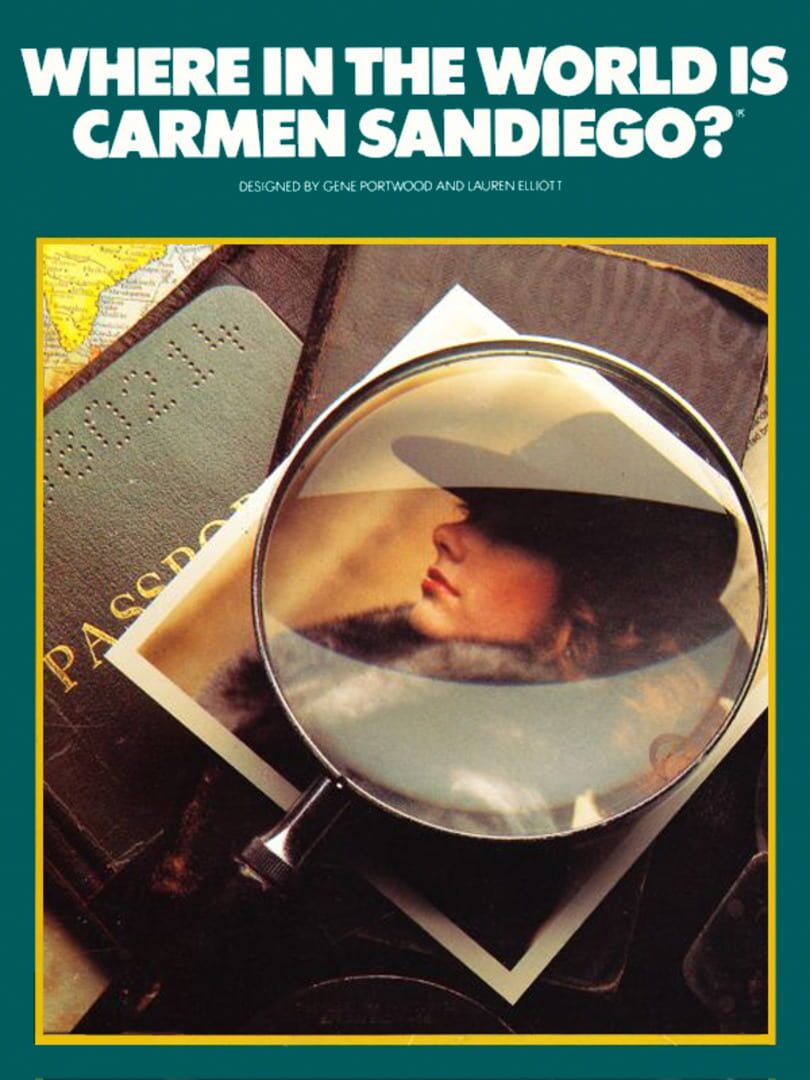
The Gold Standard of 80s Edutainment
Before educational games became glorified math drills disguised as platformers, Broderbund built Where in the World Is Carmen Sandiego? around a simple truth: research is fun when it feels like detective work. The original release shipped with a physical copy of the World Almanac and Book of Facts, effectively turning the game into a treasure hunt that spanned both the computer monitor and the living room table.
How the Loop Holds Up
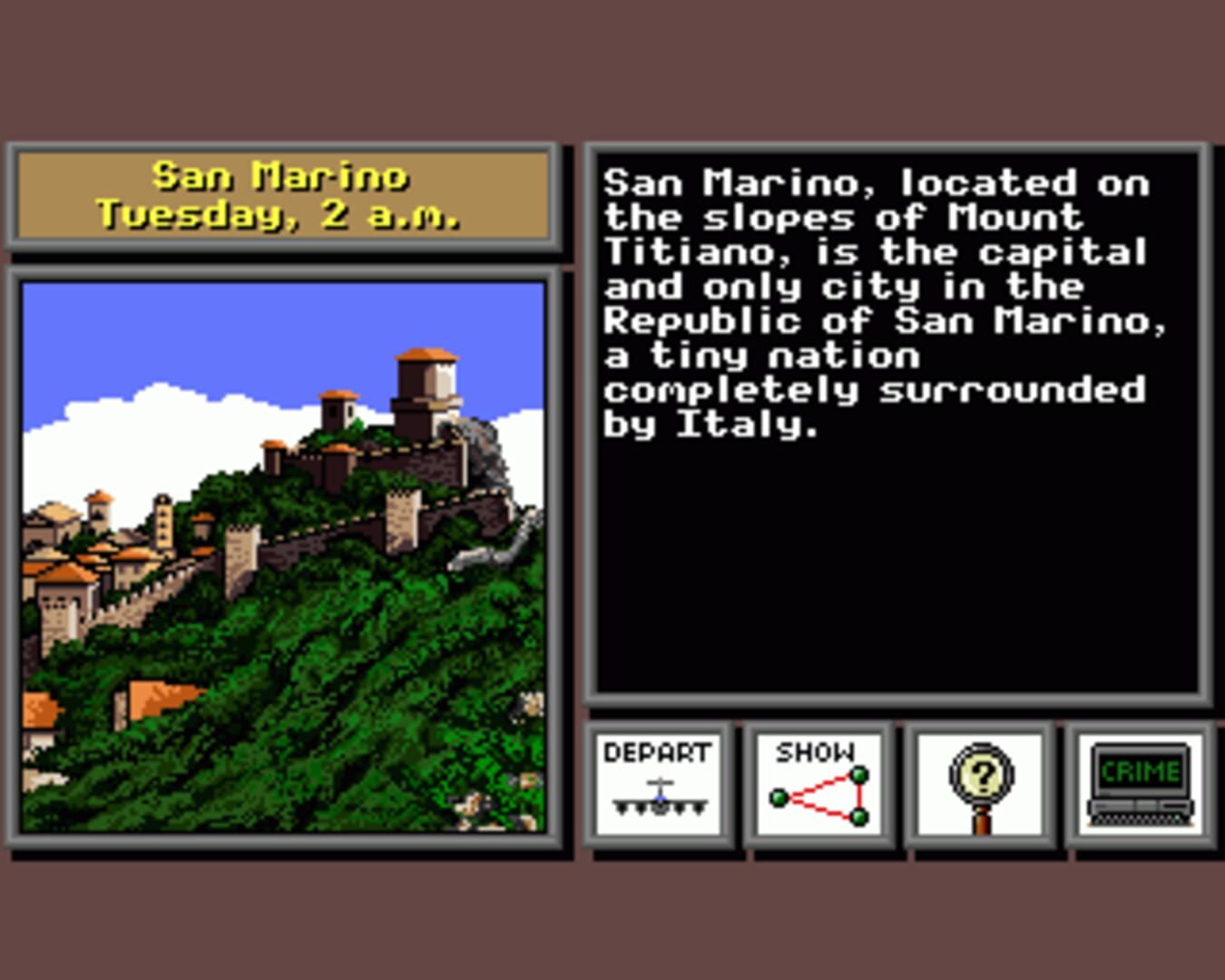
Players start as a rookie detective at the ACME agency, tasked with tracking a villain like Wonder Rat or Fast Eddie across the globe. Arriving in a city gives you three options: inspect locations, talk to witnesses, or head to the airport. Clues are explicitly research-based—a witness might tell you the suspect was looking at a flag with a yellow sun, or wanted to trade dollars for cruzeiros.
To make a valid arrest, you also have to compile traits (hair color, vehicle, feature) into the ACME computer to secure a warrant before the timer runs out. If you track down the thief without a warrant, they walk. It's a remarkably tight design loop for 1985 software.
Modern Friction Points
If you want your kid to experience it, you'll likely use an archive site running a browser-based DOS or Apple II emulator. Expect heavy friction with key commands and visual pacing. Modern kids used to fluid animation will find the static screen transitions painfully slow.
Rather than forcing extended solo play, treat it as a cooperative 15-minute history lesson. Sit together, handle the keyboard inputs, and let your kid be the researcher with an atlas or open tab to solve the clues.