

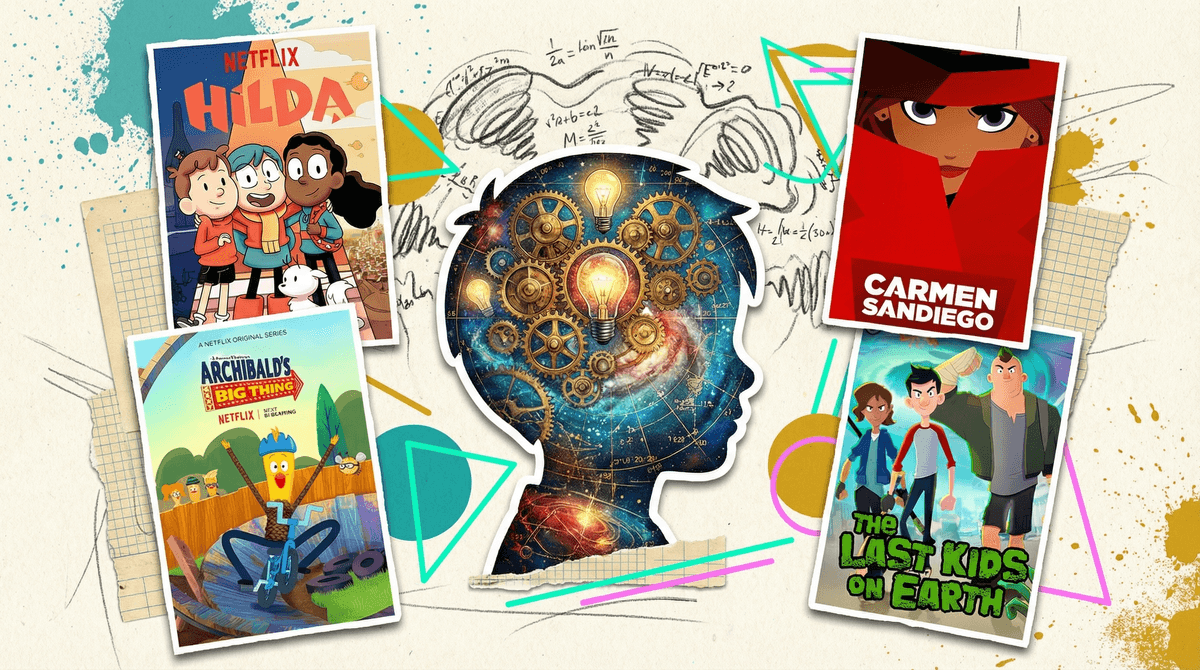
Five Netflix Shows That Secretly Make Your Kid Smarter
Look, we all know the guilt that comes with screen time. Your kid's been watching TV for an hour and you're wondering if their brain is slowly turning into mush. But here's the thing: not all screen time is created equal.
About 40% of families in our community use Netflix regularly, with another 40% having kids' profiles set up. And with the average kid in our data getting around 4.2 hours of screen time daily, what they're actually watching matters a lot more than we sometimes give it credit for.
So instead of fighting the "just one more episode" battle, what if you could feel genuinely good about what they're binging? These five shows aren't just entertaining—they're actually building cognitive skills while your kid thinks they're just having fun.
Before we dive in, let's talk about what we actually mean by educational content that works. The best shows for cognitive development:
- Build working memory by requiring kids to track multiple storylines, remember details, and make connections across episodes
- Develop problem-solving skills through characters who model thinking through challenges systematically
- Spark imagination with rich worlds that kids want to explore beyond the screen
- Encourage active viewing rather than passive consumption
The key is that kids don't realize they're learning. They're just invested in the story.
1. Hilda (Ages 6-12)
This gorgeously animated series follows a blue-haired girl navigating a world filled with magical creatures, mysterious forests, and urban adventures. What makes Hilda brilliant is how it models systematic problem-solving—Hilda approaches every challenge with curiosity, research (she's always consulting her creature guidebook), and creative thinking.
Cognitive benefits: Pattern recognition, cause-and-effect reasoning, emotional intelligence through complex character relationships
Parent bonus: The art style is stunning enough that you won't mind watching it for the 47th time.
2. The Who Was? Show (Ages 7-11)
Based on the popular book series, this sketch comedy show brings historical figures to life with humor and irreverence. Each episode covers multiple people and time periods, requiring kids to hold and compare information across different segments.
Cognitive benefits: Historical context building, connecting cause and effect across time, memory retention through humor (kids remember funny stuff better)
Real talk: This is the show that had my friend's 8-year-old randomly dropping facts about Harriet Tubman at dinner. It sticks.
3. Carmen Sandiego (Ages 8-14)
The reboot of the classic "Where in the World" franchise is a masterclass in working memory development. Each episode involves heists with multiple moving parts, red herrings, and plot twists that require kids to track details and revise their theories.
Cognitive benefits: Spatial reasoning (all that globe-trotting), deductive reasoning, understanding different perspectives (Carmen's backstory is genuinely complex)
Bonus: Kids actually learn geography and cultural details without realizing it. Want to know more about shows that sneak in real learning?
4. Archibald's Next Big Thing (Ages 5-9)
This one flies under the radar, but it's gold for younger kids. Archibald is a chicken who approaches every experience with enthusiasm and curiosity. What makes it cognitively valuable is how it models flexible thinking—when things don't go as planned (which is every episode), Archibald adapts and finds new solutions.
Cognitive benefits: Growth mindset, emotional regulation, creative problem-solving, perspective-taking
Why it works: The episodes are short (perfect for younger attention spans) but interconnected enough to build memory skills.
5. The Last Kids on Earth (Ages 8-13)
Post-apocalyptic kids fighting zombies and monsters might not sound educational, but hear me out. This show is essentially a continuous problem-solving exercise. The kids are constantly inventing solutions, building contraptions, forming alliances, and strategizing—all while the plot moves fast enough to keep even the most distractible kids engaged.
Cognitive benefits: Strategic thinking, understanding consequences, teamwork and collaboration, resilience
Parent note: There's mild cartoon violence (it's monsters, not realistic), but the tone is more adventure-comedy than scary. If you want to understand where this fits in the action-show spectrum, we can help you think through it.
Here's the thing about "smart" TV: it's not a replacement for reading, play, or conversation—but it's not the enemy either. When you're choosing between Cocomelon (which research suggests might actually hinder attention development) and shows that build cognitive skills, you're making a meaningful choice.
With 80% of families in our community having some level of Netflix usage, the question isn't really whether kids will watch TV—it's what they'll watch and how we frame it.
Pro tips for maximizing the benefits:
- Ask questions during or after episodes: "How do you think Carmen figured that out?" or "What would you have done differently?"
- Let them rewatch favorites: Repetition actually builds memory and lets kids catch details they missed
- Connect to real life: "That's like when you had to solve the problem with your LEGO tower, right?"
Screen time doesn't have to be a guilt trip. These shows prove that entertainment and cognitive development aren't mutually exclusive—in fact, the best learning happens when kids don't even realize they're doing it.
Are these shows going to turn your kid into a genius? No. But they're building real skills—working memory, problem-solving, flexible thinking—while keeping them entertained. And honestly, that's a pretty good deal.
Start with one: Pick the show that matches your kid's age and interests, watch an episode together, and see how they respond.
Track what works: Notice which shows spark conversation or imaginative play afterward—that's your sign they're actually engaging cognitively.
Need more recommendations? Find shows for your kid's age and interests—we can get way more personalized than a general list.
And remember: you're already doing the hard work by being intentional about this stuff. That matters more than getting every screen time decision perfect.