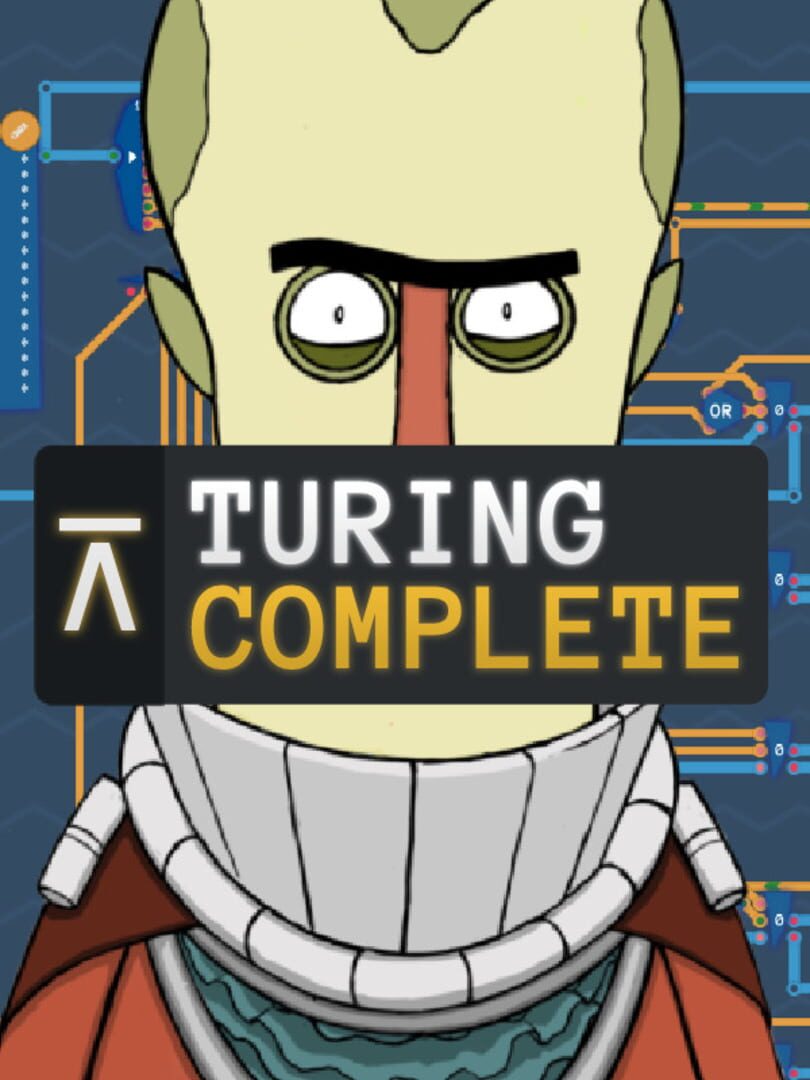
This is the game you wish existed when you were trying to explain to your kid why they should care about computer science.
Turing Complete takes the driest subject—how computers actually work—and makes it genuinely engaging through hands-on puzzle-solving. You're not memorizing facts; you're building the thing from the ground up. Logic gates become circuits, circuits become components, components become a computer you can program. It's brilliant.
The catch: this is not for everyone. If your kid wants Fortnite-style dopamine hits, they'll hate this. But if they're the type who takes apart electronics, loves engineering challenges, or keeps asking 'but how does it REALLY work?'—this is gold. The learning is real, the monetization is nonexistent, and the satisfaction of finally getting a complex circuit to work is genuine.
Adults who never took CS will learn a ton. Teens considering STEM paths will get a realistic preview. And that rare middle schooler with the patience and interest? They'll be building computers while their friends are still arguing about Roblox skins.
Age Fit
Best for ages 14+ with genuine interest in computer science, engineering, or programming. Younger gifted kids (11-13) with strong logical thinking could handle it, but the abstract concepts and patience required make this primarily a teen-to-adult game.
WISE Breakdown
Wholesome
88
Lighthearted sci-fi premise with aliens testing intelligence creates a playful, non-threatening frame. No violence, toxicity, or inappropriate content—just pure problem-solving. The tone is educational and encouraging, celebrating logical thinking without chaos or negativity.
Imaginative
94
Building a computer from scratch through layers of abstraction is wildly creative and intellectually ambitious. Players construct logic gates, circuits, and eventually a programmable computer—it's like digital Lego for computer science nerds. The puzzle design invites experimentation and deep exploration of how technology actually works.
Safe
95
No in-game purchases, no loot boxes, no online chat, and users interact only with the game mechanics. Zero monetization manipulation. The content is entirely educational puzzle-solving with no mature themes, violence, or inappropriate material. Clean as it gets.
Enriching
96
This is computer science education disguised as a game. Players learn Boolean logic, circuit design, assembly language, and computational thinking—skills that directly translate to real-world programming and engineering. The IGDB rating of 81 and Hacker News praise ('very accessible introduction to how computers work') confirm it delivers genuine learning while staying engaging.
Parent Info
✓
Why It Might Be Great
Teaches real computer science—logic gates, circuits, assembly language—through hands-on building rather than lectures
Zero monetization nonsense: no ads, no purchases, no manipulation, just pure learning
Hacker News crowd loves it as an 'accessible introduction to how computers work'
Perfect for the kid who wants to understand what's actually happening inside their devices
Satisfying progression from simple logic gates to a fully programmable computer
⚠
What to Watch For
This is slow, methodical puzzle-solving—kids expecting action or fast rewards will bounce off immediately
Requires genuine interest in how things work; not for casual gamers
Can be frustrating when stuck on complex circuits—some kids will need patience or a parent with engineering knowledge nearby
Conversation Starters
"What's the coolest thing you've built so far? Can you explain how it works?"
"If you could design a computer to do one specific thing, what would it be?"
"How is building these logic gates different from coding in Scratch or Python?"
"Do you think understanding how computers work at this level will help you with programming?"