A neuropsychologist and an SAT tutor saw the same stressed kids from two sides
Bill Stixrud is a clinical neuropsychologist outside Washington, D.C., who has spent decades testing kids with ADHD, learning disabilities and anxiety. Ned Johnson founded PrepMatters, a tutoring company that gets teenagers ready for the SAT and ACT. Both kept meeting kids, many of them high achievers, who were exhausted, anxious and unmotivated, and who said they had no control over their own lives. The Self-Driven Child is their argument that a sense of control is the missing piece, and their plan for giving it back without giving up being the parent. It has sold more than two million copies worldwide.
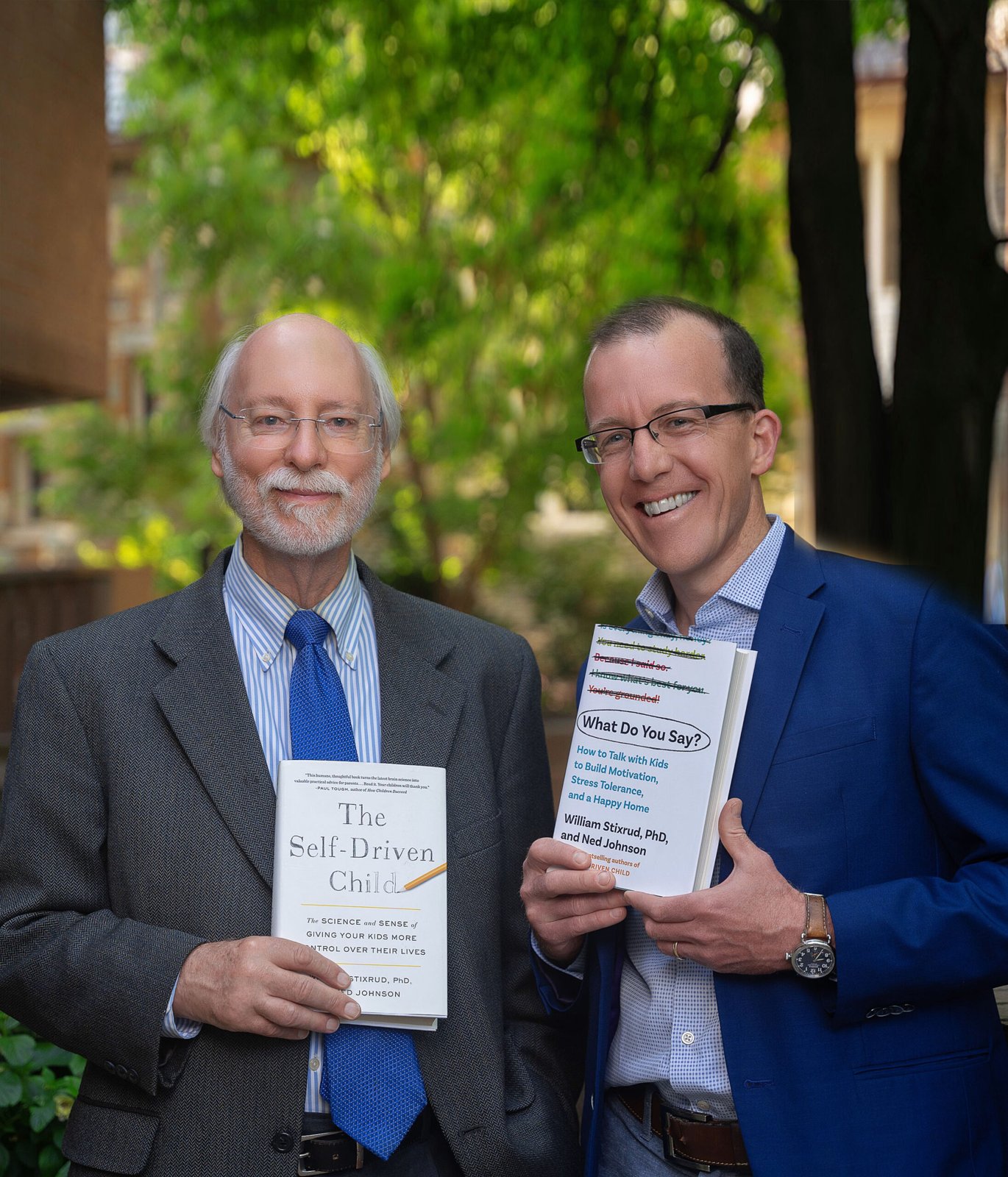 Bill Stixrud (left) and Ned Johnson with their two books. Photo from theselfdrivenchild.com.
"I love you too much to fight with you about your homework"
The book's central move is to switch roles: think of yourself as your child's consultant, not their boss or manager. Stixrud first said the line above to families whose evenings had turned into nightly homework wars. Instead of policing the work, the parent offers help ("How can I help?"), sets consulting hours, say 6:30 to 7:30, and accepts that the homework belongs to the kid. "A family just told me that the temperature went down in their house by 20 degrees," he told NPR.
The authors are clear about the limits. Parents still set rules, keep kids safe and make the calls a child cannot. And for some tasks, and for many kids with ADHD, rewards help a brain get going on boring work. The point is to hand over as many decisions as a child can handle, and more each year.
Sleep, downtime and a calm parent are part of the plan
Several chapters have little to do with schoolwork. The authors make the case for sleep (most teens get far less than the roughly nine hours they need), for what they call radical downtime with no phones or screens, and for the parent as a "non-anxious presence" whose calm helps a stressed kid settle. There is a chapter on technology too, aimed at helping kids learn to manage their own devices rather than leaving every limit to the parent.
Families in high-pressure schools will see themselves most
Kirkus called it "solid, timeless advice for parents who haven't read other books along these lines." Some reviewers found the stories drawn mostly from affluent, high-achieving families, where the pressure is about elite colleges. If your kid's stress comes from somewhere else, the core idea (more choices, a calmer home, a parent who helps rather than pushes) still applies; skip the college-admissions anecdotes.
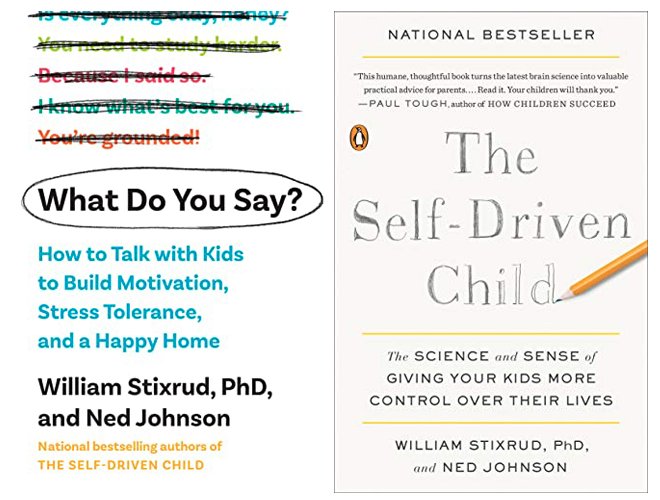 Their follow-up, What Do You Say?, is a book of scripts for the conversations this one recommends. Image from theselfdrivenchild.com.
Hear it from them
Stixrud's full talk on the book for the Family Action Network:
Both authors on KING 5 Seattle the month the book came out:
Read it with
How to Raise an Adult and The Gift of Failure make the same case for stepping back. For the homework fights, see supporting homework independence in elementary school.


