Our reviews and ratings are 100% unbiased. Screenwise is a Bookshop.org affiliate and an Amazon Associate, so if you buy a book through one of our links, we may earn a commission. Bookshop.org purchases also support independent bookstores.
Screenwise Verdict
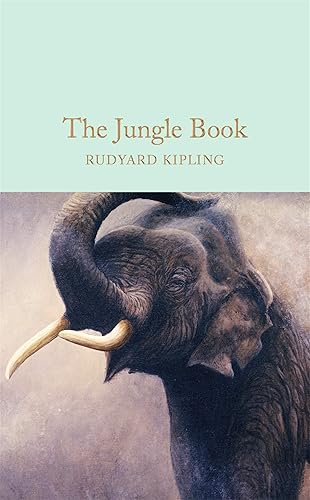
The original Jungle Book is a classic for a reason, but it's not 'easy' entertainment. It's a thick, atmospheric read that demands a lot more focus than a modern novel.
If you have a kid who loves animals and doesn't mind a bit of a challenge, it's a foundational text. But let's be real: for a lot of modern kids, this will feel like homework.
It gets a lower WISE score than its 'classic' status might suggest simply because the readability hurdle is so high in 2026. It's great, but it's work.
Age Fit
Best for 10 and up if they're reading solo because the Victorian English is a workout. If you're reading it aloud, 8-year-olds can usually follow the action just fine.
WISE Breakdown
Wholesome
72
The stories emphasize the 'Law of the Jungle'—a code of conduct based on duty, respect, and community. It's not the sugary Disney version; it deals with the harsh reality of nature, but the core message of finding your pack is solid.
Imaginative
90
Kipling built a complex, tiered society of animals with their own languages, customs, and mythologies. It's the ancestor of almost every talking-animal fantasy world we have today.
Safe
85
As a book from 1893, it's free of modern digital traps. However, it contains 'nature red in tooth and claw' violence—animals kill to eat and survive—and some 19th-century colonial-era attitudes that haven't aged perfectly.
Enriching
90
The vocabulary is incredibly sophisticated. It challenges kids to think about identity, the balance between nature and civilization, and the necessity of rules in a functioning society.
Parent Info
✓
Why It Might Be Great
The 'Law of the Jungle' is a fascinating way to talk to kids about why we have rules in the first place.
It's a collection of short stories, not one long slog, making it easier to digest in chunks.
Rikki-Tikki-Tavi is arguably the best 'brave underdog' story ever written.
The vocabulary is a massive step up from modern middle-grade fiction—great for word-nerd kids.
⚠
What to Watch For
The prose is dense. If your kid is used to fast-paced graphic novels, they're going to hit a wall with the 1890s sentence structure.
Shere Khan isn't a cartoon villain; he's a predator. There is blood, and animals do die.
Kipling's views on the 'civilized' vs. the 'lawless' (like the Bandar-log monkeys) reflect his colonial era and can be a bit 'yikes' if you look too closely.
Conversation Starters
"Why do the animals have so many rules? What would happen if Mowgli just did whatever he wanted?"
"Bagheera and Baloo teach Mowgli in very different ways. Which teacher would you want?"
"The monkeys (Bandar-log) don't have a leader or a memory. Why does that make them dangerous in this book?"
"Mowgli feels like he doesn't fully belong with humans or wolves. Have you ever felt like you were stuck between two different groups?"